

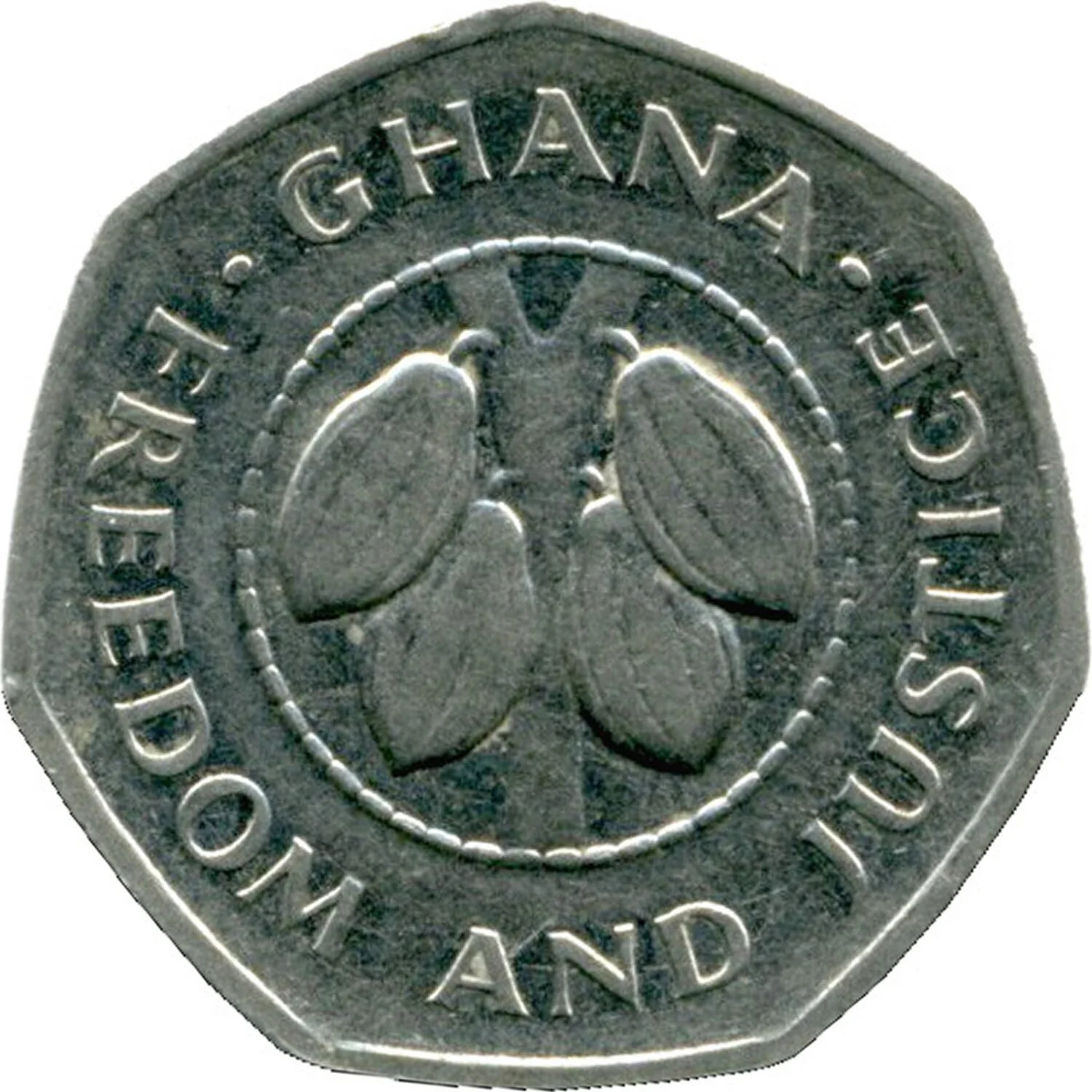
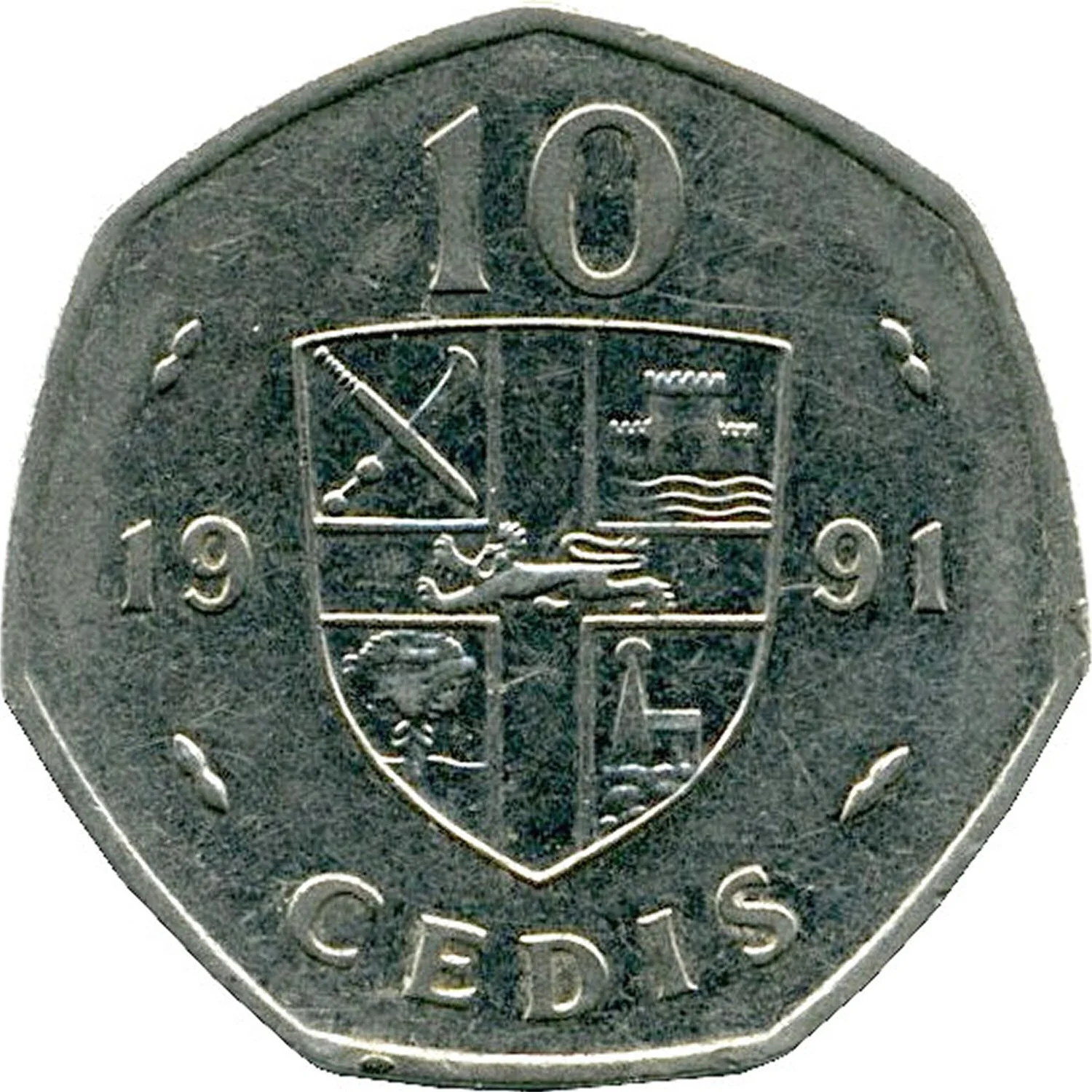
10 cedis – Ghana
Add to wishlist
Ghana
Context
Year: 1991
Issuer: Ghana
Period:
(since 1960)
Currency:
(1967—2007)
Demonetization: 31 December 2007
Material
Diameter: 21.8 mm
Weight: 3.5 g
Shape: Heptagonal
Technique: Milled
Alignment: Medal alignment
flip
References
KM: #
Numista: #6799
Value
Exchange value: 10 GHC
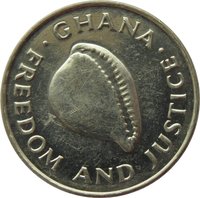
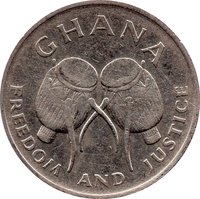
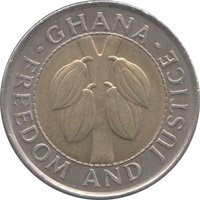
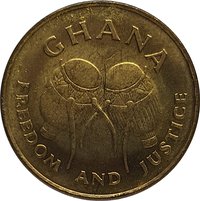
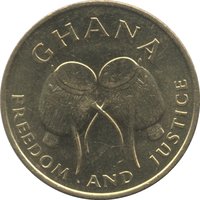
Obverse
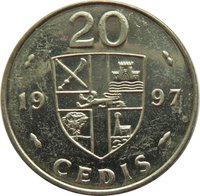
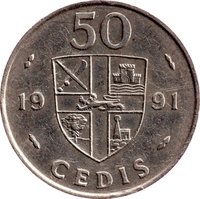
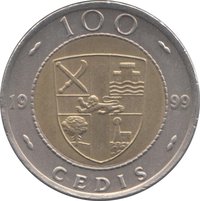
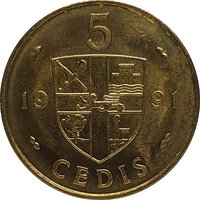
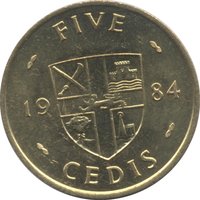
Reverse
Edge
Plain
Categories
| Animal> Feline |
| Building> Castle or fortification |
| Industry |
| Plant> Fruit |
| Plant> Tree |
| Symbols> Coat of Arms |
| Object> Cold weapons |
Mints
| Name | Mark |
|---|---|
| Royal Mint | — |
Mintings
| Year | Mint Mark | Mintage | Quality | Collection |
|---|---|---|---|---|
| 1991 | — | — |
Historical background
In 1991, Ghana's currency situation was defined by the ongoing implementation and challenges of the Economic Recovery Programme (ERP), initiated in 1983 under the Provisional National Defence Council (PNDC) government. A cornerstone of this reform was a managed floating exchange rate system, moving away from a fixed, overvalued cedi that had crippled the formal economy and fueled a rampant black market. The year operated under a dual-exchange rate regime: an official rate used for government transactions and essential imports, and a more market-driven "auction rate" determined through weekly foreign exchange auctions at the Bank of Ghana, which was the primary rate for most trade.
Despite significant devaluations since the mid-1980s, the cedi in 1991 continued to face substantial depreciation pressure. Inflation remained persistently high, eroding purchasing power and confidence in the local currency. The gap between the official and auction rates, while narrowed from previous years, still created distortions and opportunities for arbitrage. Furthermore, the country struggled with limited foreign exchange reserves, constraining the Bank of Ghana's ability to stabilize the currency and meet the high demand for imports needed for reconstruction and consumption.
Consequently, 1991 was a year of cautious consolidation within a fragile monetary environment. The government and the Bank of Ghana were walking a tightrope, attempting to maintain the discipline of the reform program to satisfy International Monetary Fund (IMF) and World Bank conditionalities for continued support, while managing the severe social costs of high inflation and a weakening cedi. The currency situation reflected the broader tensions of Ghana's structural adjustment: laying a foundation for future growth through market-oriented policies, but at a significant short-term cost to economic stability and living standards.
Despite significant devaluations since the mid-1980s, the cedi in 1991 continued to face substantial depreciation pressure. Inflation remained persistently high, eroding purchasing power and confidence in the local currency. The gap between the official and auction rates, while narrowed from previous years, still created distortions and opportunities for arbitrage. Furthermore, the country struggled with limited foreign exchange reserves, constraining the Bank of Ghana's ability to stabilize the currency and meet the high demand for imports needed for reconstruction and consumption.
Consequently, 1991 was a year of cautious consolidation within a fragile monetary environment. The government and the Bank of Ghana were walking a tightrope, attempting to maintain the discipline of the reform program to satisfy International Monetary Fund (IMF) and World Bank conditionalities for continued support, while managing the severe social costs of high inflation and a weakening cedi. The currency situation reflected the broader tensions of Ghana's structural adjustment: laying a foundation for future growth through market-oriented policies, but at a significant short-term cost to economic stability and living standards.
Series: 1991 Ghana circulation coins
🌱 Common