

Obverse
Description:
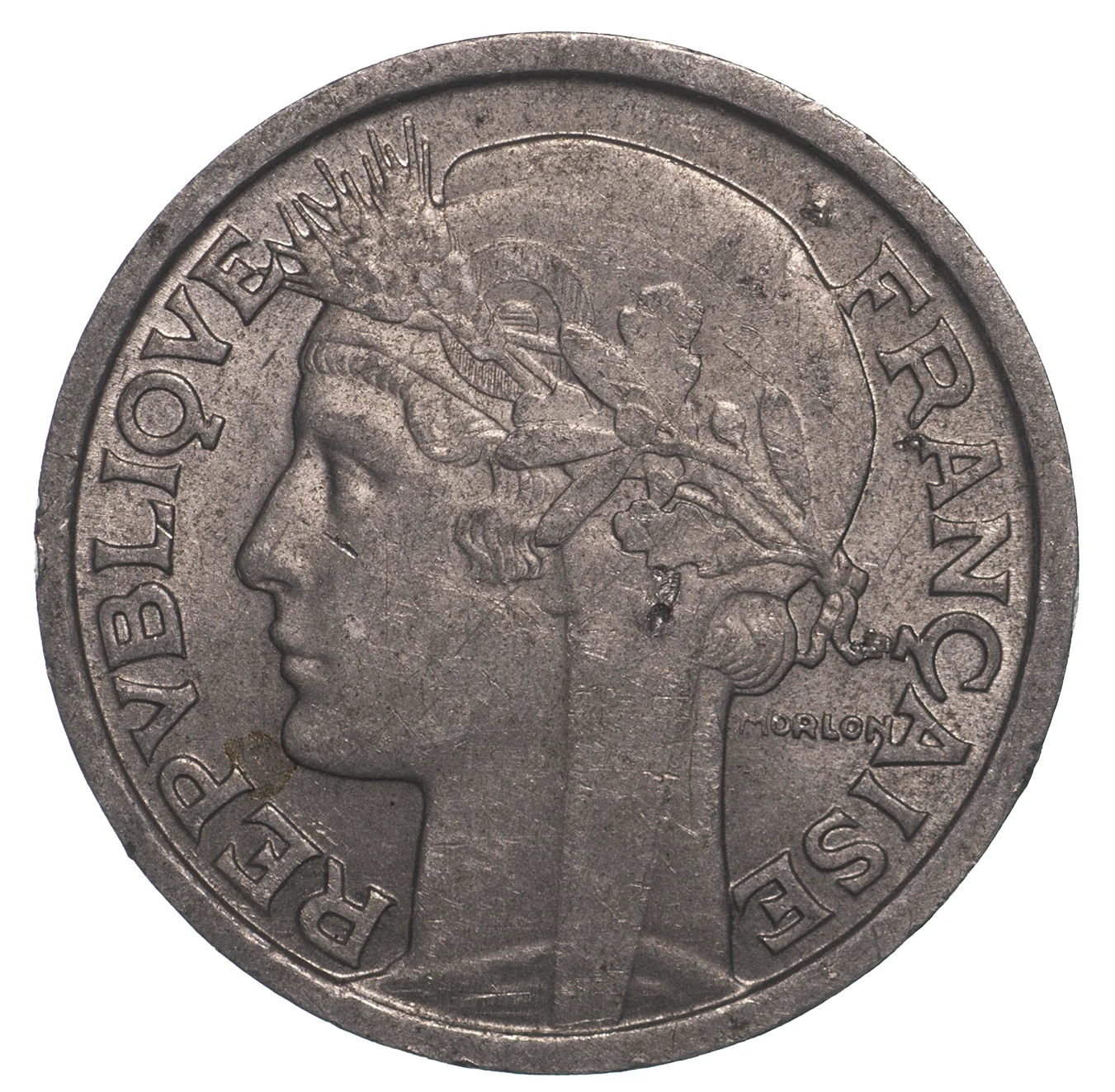
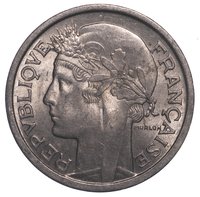
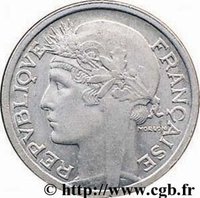
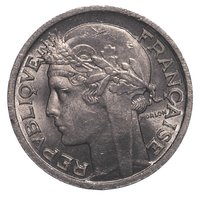
Female head left, lettering encircling, engraver’s name behind head.
Inscription:
REPUBLIQVE FRANÇAISE
MORLON
MORLON
Translation:
FRENCH REPUBLIC
MORLON
MORLON
Script: Latin
Language: French
Engraver: Pierre-Alexandre Morlon
Reverse
Description:
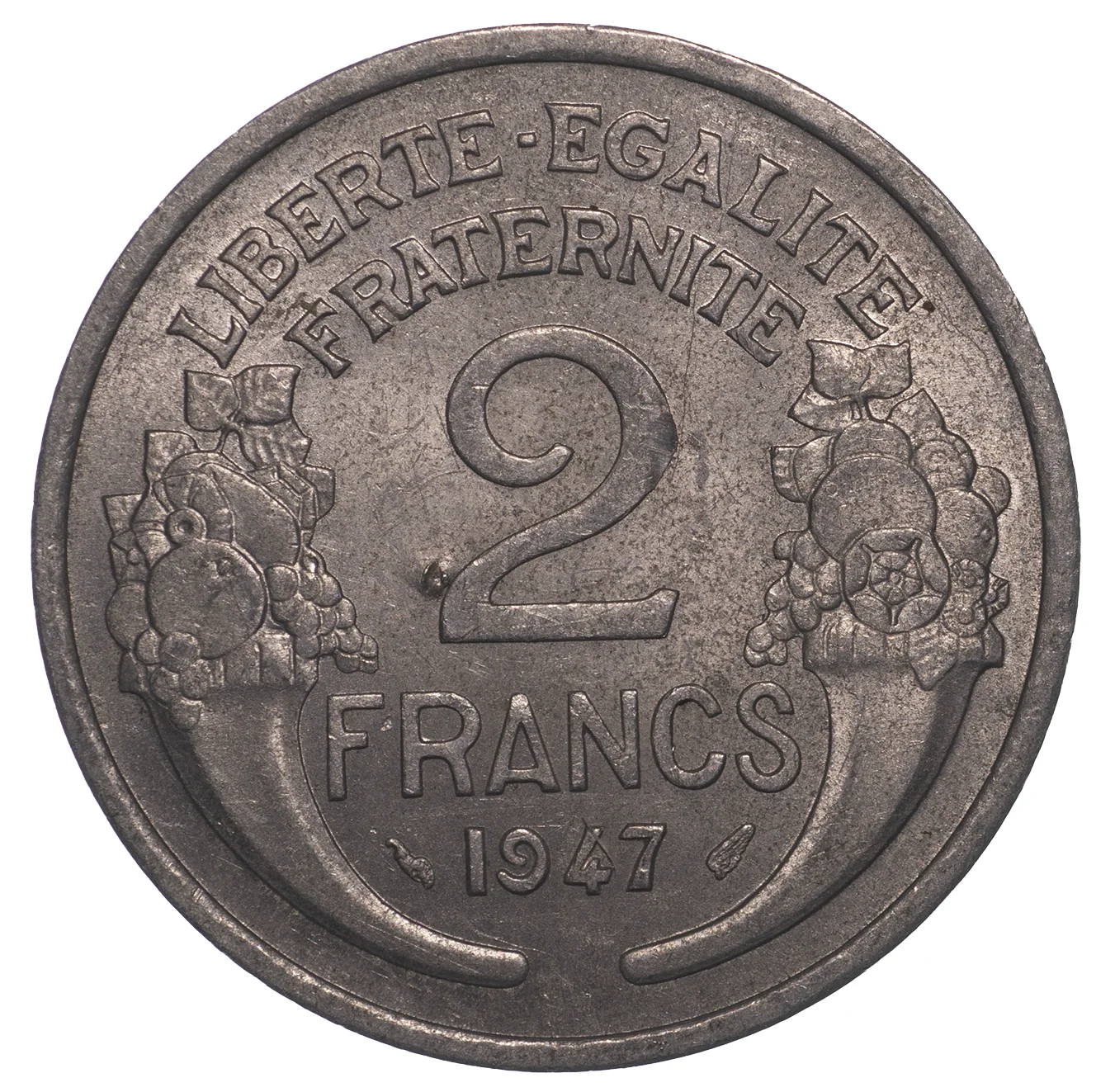
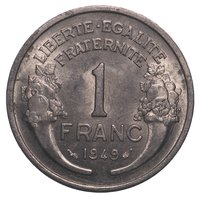
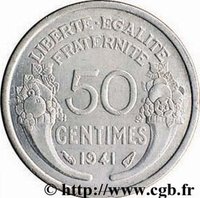
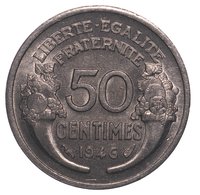
Cornucopias flanking central value, date below. Privy mark right of date. Mintmark (B or C) between cornucopia bases, under date.
Inscription:
LIBERTE-EGALITE
FRATERNITE
2
FRANCS
1958
FRATERNITE
2
FRANCS
1958
Translation:
LIBERTY-EQUALITY
FRATERNITY
2
FRANCS
1958
FRATERNITY
2
FRANCS
1958
Script: Latin
Language: French
Engraver: Pierre-Alexandre Morlon
Edge
Plain
Mints
| Name | Mark |
|---|---|
| Monnaie de Paris | — |
| Beaumont-le-Roger | B |
| Castelsarrasin | C |
Mintings
Historical background
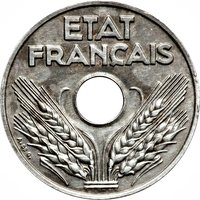
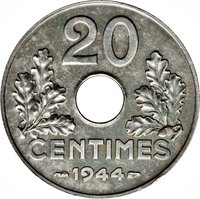
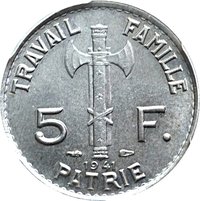
In 1941, France existed under a fractured and oppressive monetary regime, a direct consequence of its defeat in June 1940. The country was divided into multiple zones: the German-occupied zone in the north and west, the Italian-occupied zone in the southeast, and the so-called "Free Zone" governed from Vichy. Each zone had its own economic pressures, but the entire French economy was subordinated to German demands through a crippling financial mechanism: the occupation costs. The Nazis compelled France to pay exorbitant daily payments—set at 400 million francs per day in 1941—ostensibly for the upkeep of German troops, but in reality, this was systematic plunder to fund the German war effort.
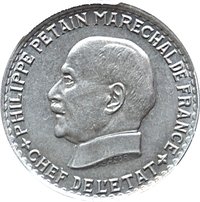
The Vichy government, led by Marshal Philippe Pétain, retained nominal control over the Banque de France and the franc, but its monetary policy was heavily constrained. To cover the occupation costs and its own deficits, Vichy was forced to engage in massive money creation, leading to significant inflation. The official exchange rate was fixed artificially by the Germans at 20 francs to the Reichsmark, a rate that vastly overvalued the German currency and facilitated the cheap purchase of French goods and resources. This, coupled with widespread shortages and a burgeoning black market, created a dual economy where official prices meant little and the real value of the franc eroded rapidly.
Beyond the official currency, alternative means of exchange emerged. Ration coupons dictated access to basic necessities, while barter became common in rural areas. Most significantly, a thriving black market operated with its own inflated prices, effectively creating a parallel currency system. For ordinary French citizens, this period was characterized by financial insecurity, the steady depreciation of their savings, and the daily struggle to navigate an economy designed for extraction by an occupying power. The currency situation of 1941 thus symbolized both the economic suffocation of France and the social fragmentation that accompanied it.
The Vichy government, led by Marshal Philippe Pétain, retained nominal control over the Banque de France and the franc, but its monetary policy was heavily constrained. To cover the occupation costs and its own deficits, Vichy was forced to engage in massive money creation, leading to significant inflation. The official exchange rate was fixed artificially by the Germans at 20 francs to the Reichsmark, a rate that vastly overvalued the German currency and facilitated the cheap purchase of French goods and resources. This, coupled with widespread shortages and a burgeoning black market, created a dual economy where official prices meant little and the real value of the franc eroded rapidly.
Beyond the official currency, alternative means of exchange emerged. Ration coupons dictated access to basic necessities, while barter became common in rural areas. Most significantly, a thriving black market operated with its own inflated prices, effectively creating a parallel currency system. For ordinary French citizens, this period was characterized by financial insecurity, the steady depreciation of their savings, and the daily struggle to navigate an economy designed for extraction by an occupying power. The currency situation of 1941 thus symbolized both the economic suffocation of France and the social fragmentation that accompanied it.
Series: 1941 France circulation coins
🌱 Very Common