

5 euro – Austria
Add to wishlist
Non-circulating coins
Commemoration: New Year: Operetta Bat and the Ball
Series: Monnaie du nouvel an
Austria
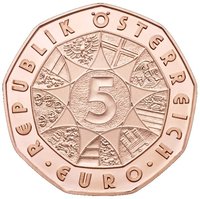
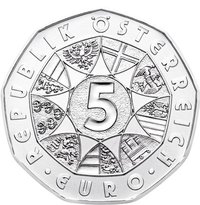
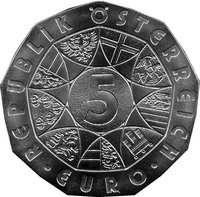
Obverse
Description:
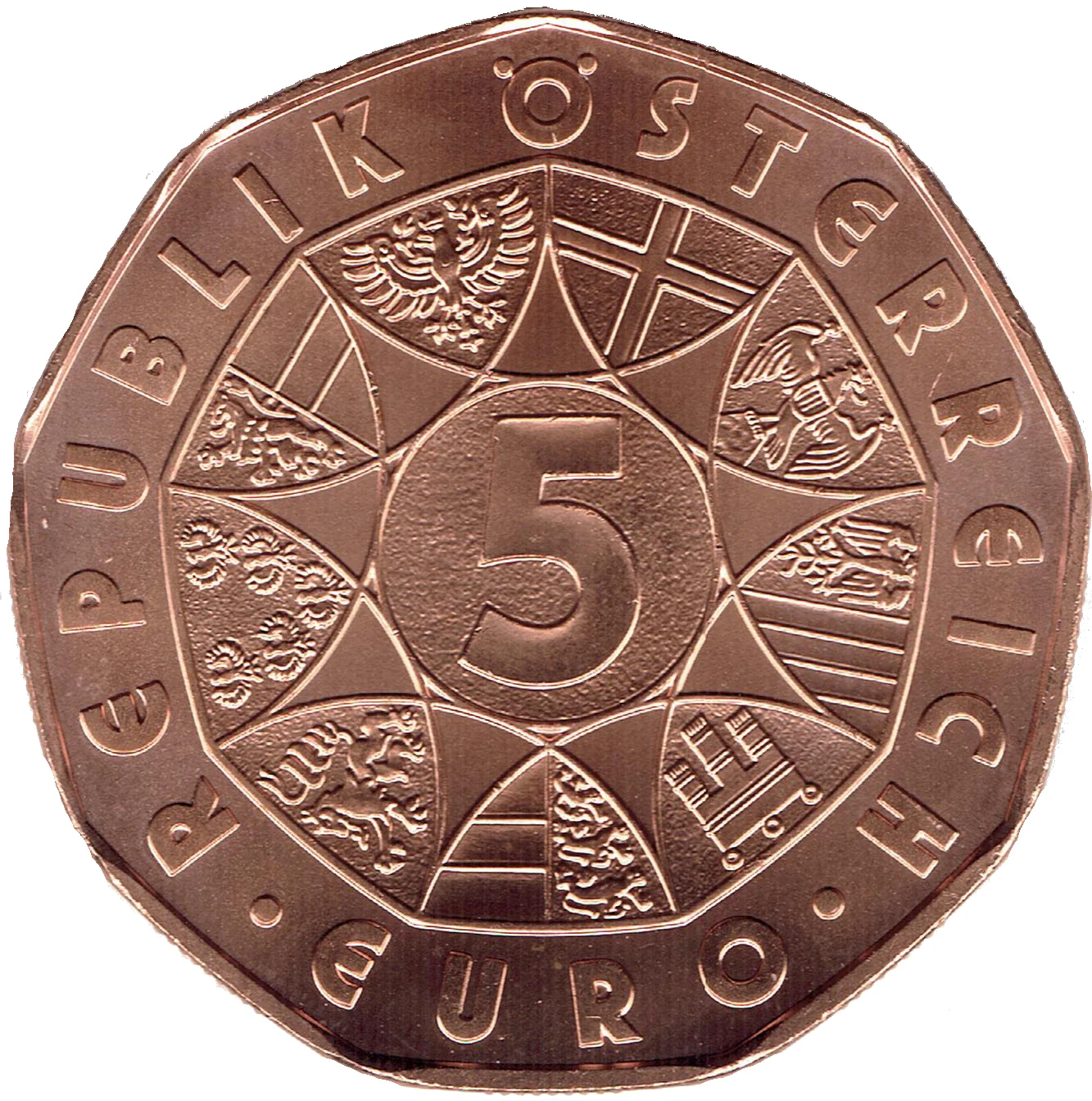
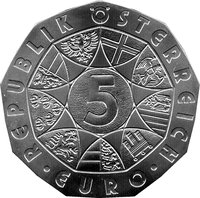
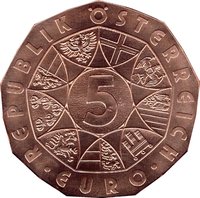
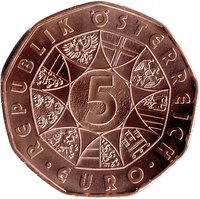
Shield of Austria's nine states.
Inscription:
REPUBLIK ÖSTERREICH
5
· EURO ·
5
· EURO ·
Translation:
REPUBLIC OF AUSTRIA
5
· EURO ·
5
· EURO ·
Script: Latin
Language: German
Engravers: Thomas Pesendorfer, Helmut Andexlinger
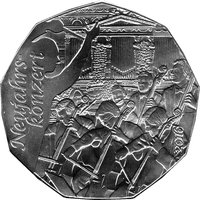
Reverse
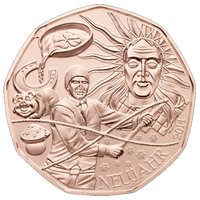
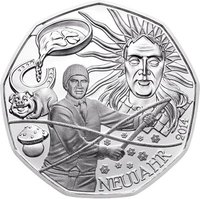
Description:
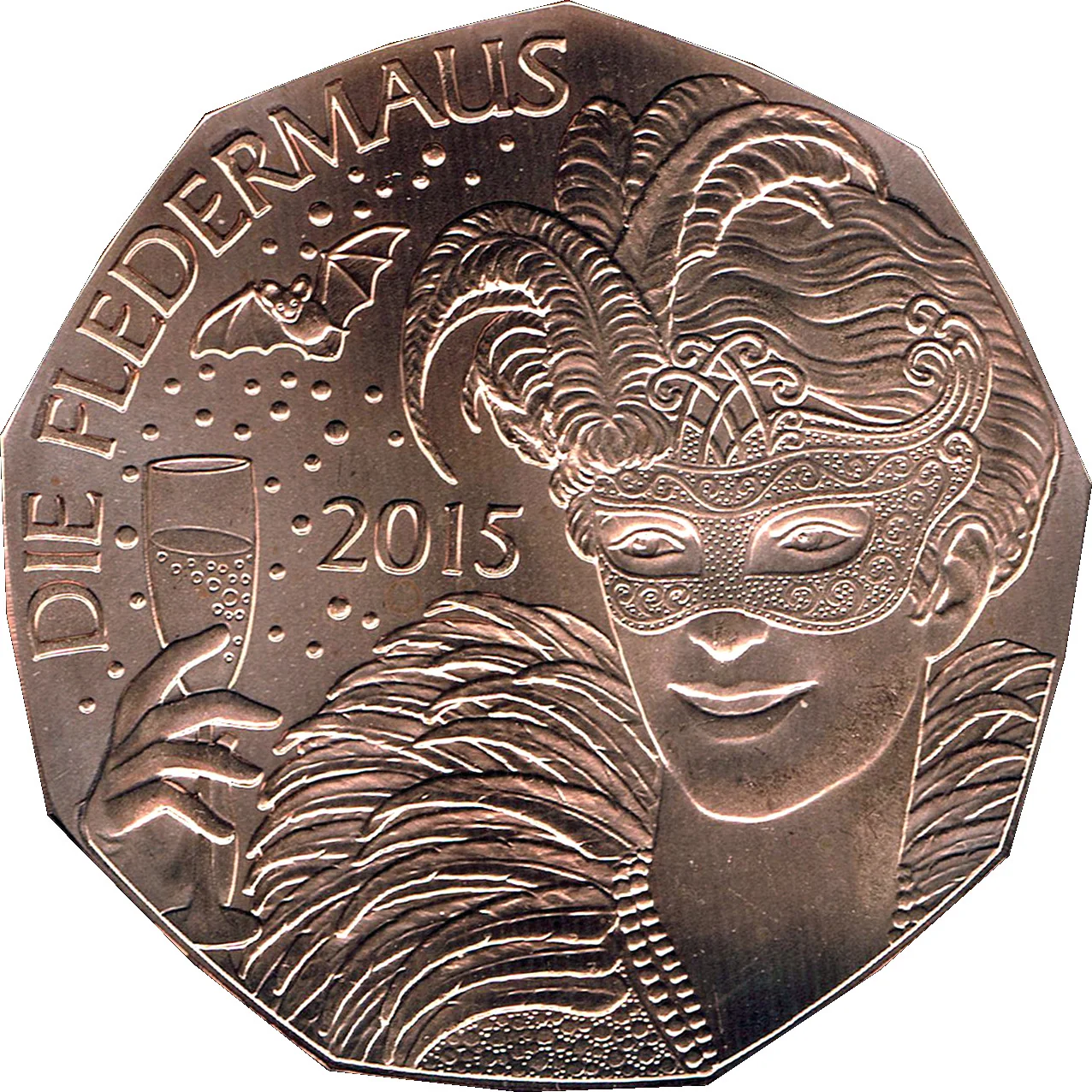
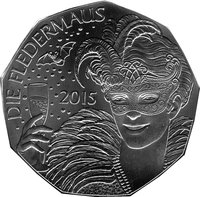
Operetta actor with mask and champagne glass.
Inscription:
DIE FLEDERMAUS
2015
2015
Script: Latin
Engravers: Thomas Pesendorfer, Helmut Andexlinger
Edge
Reeded and plain segments
Categories
| Symbols> Coat of Arms |
| Art> Music |
Mints
| Name | Mark |
|---|---|
| Münze Österreich | — |
Mintings
| Year | Mint Mark | Mintage | Quality | Collection |
|---|---|---|---|---|
| 2015 | — | 200,000 |
Historical background
In 2015, Austria was a fully integrated member of the Eurozone, having adopted the euro as its sole legal tender in 2002, replacing the Austrian schilling. The country's monetary policy was therefore set by the European Central Bank (ECB), which was in the midst of implementing unprecedented measures to combat low inflation and stimulate the euro area economy following the sovereign debt crisis. For Austria, a nation with a traditionally stable economy and conservative banking sector, the ECB's policies, particularly low interest rates and quantitative easing, presented a mixed picture: they supported export growth and borrowing but also pressured bank profitability and raised concerns about asset bubbles and pension fund returns.
Domestically, the Austrian economy was relatively stable, but the currency situation was indirectly impacted by significant geopolitical events. The year saw the peak of the European migration crisis, with Austria receiving a high number of asylum seekers per capita. This placed substantial fiscal pressure on the federal budget, influencing public debt levels and economic discourse, though it did not directly threaten Austria's standing within the Eurozone. The strong euro, influenced by ECB policy, also affected the important tourism sector, making Austria a slightly more expensive destination for some international visitors.
Furthermore, 2015 was marked by heightened political debate about the euro's future, fueled by the ongoing Greek government-debt crisis and the "Grexit" speculation. While Austria was a firm supporter of the single currency, there was growing public and political discussion about the need for stricter fiscal rules and risk-sharing mechanisms within the monetary union. These debates underscored Austria's position as a fiscally hawkish member advocating for stability, even as it remained fundamentally committed to the euro project and reliant on the ECB's accommodative stance to support broader European economic recovery.
Domestically, the Austrian economy was relatively stable, but the currency situation was indirectly impacted by significant geopolitical events. The year saw the peak of the European migration crisis, with Austria receiving a high number of asylum seekers per capita. This placed substantial fiscal pressure on the federal budget, influencing public debt levels and economic discourse, though it did not directly threaten Austria's standing within the Eurozone. The strong euro, influenced by ECB policy, also affected the important tourism sector, making Austria a slightly more expensive destination for some international visitors.
Furthermore, 2015 was marked by heightened political debate about the euro's future, fueled by the ongoing Greek government-debt crisis and the "Grexit" speculation. While Austria was a firm supporter of the single currency, there was growing public and political discussion about the need for stricter fiscal rules and risk-sharing mechanisms within the monetary union. These debates underscored Austria's position as a fiscally hawkish member advocating for stability, even as it remained fundamentally committed to the euro project and reliant on the ECB's accommodative stance to support broader European economic recovery.
Series: Monnaie du nouvel an
🌱 Fairly Common