

Obverse
Description:
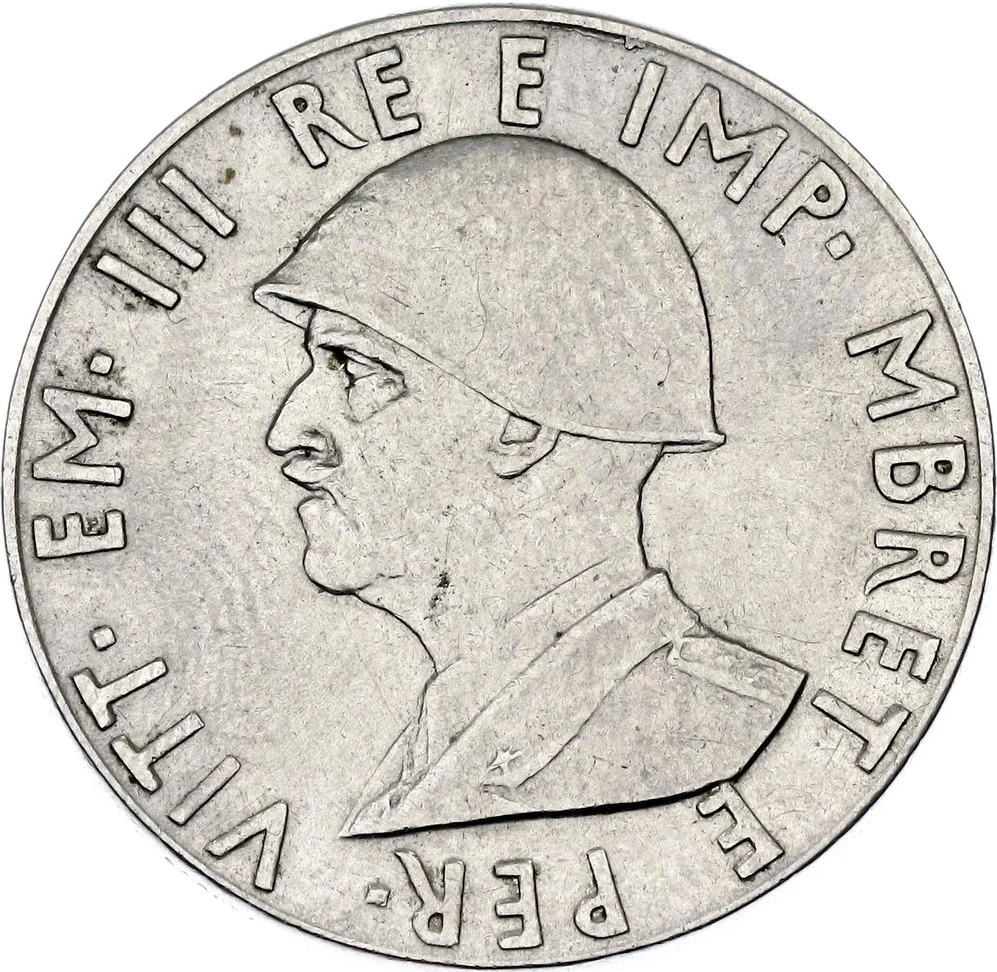
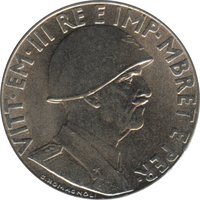
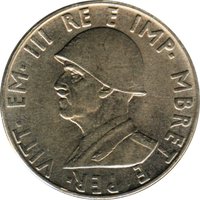
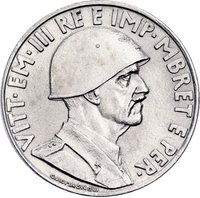
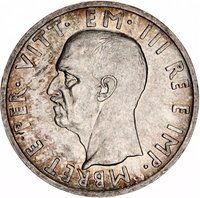
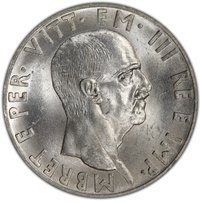
Victor Emmanuel III left-facing bust.
Inscription:
VITT· EM· III RE E IMP· MBRET E PER·
Translation:
By the Grace of God Victor Emmanuel III, King and Emperor, Protector of the Faith.
Script: Latin
Language: Latin
Engraver: Giuseppe Romagnoli
Reverse
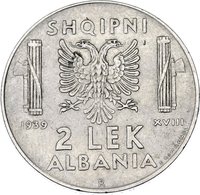
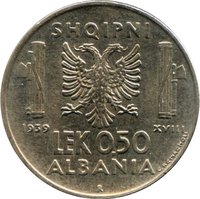
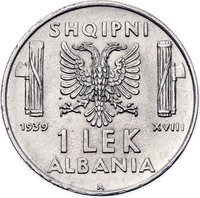
Description:
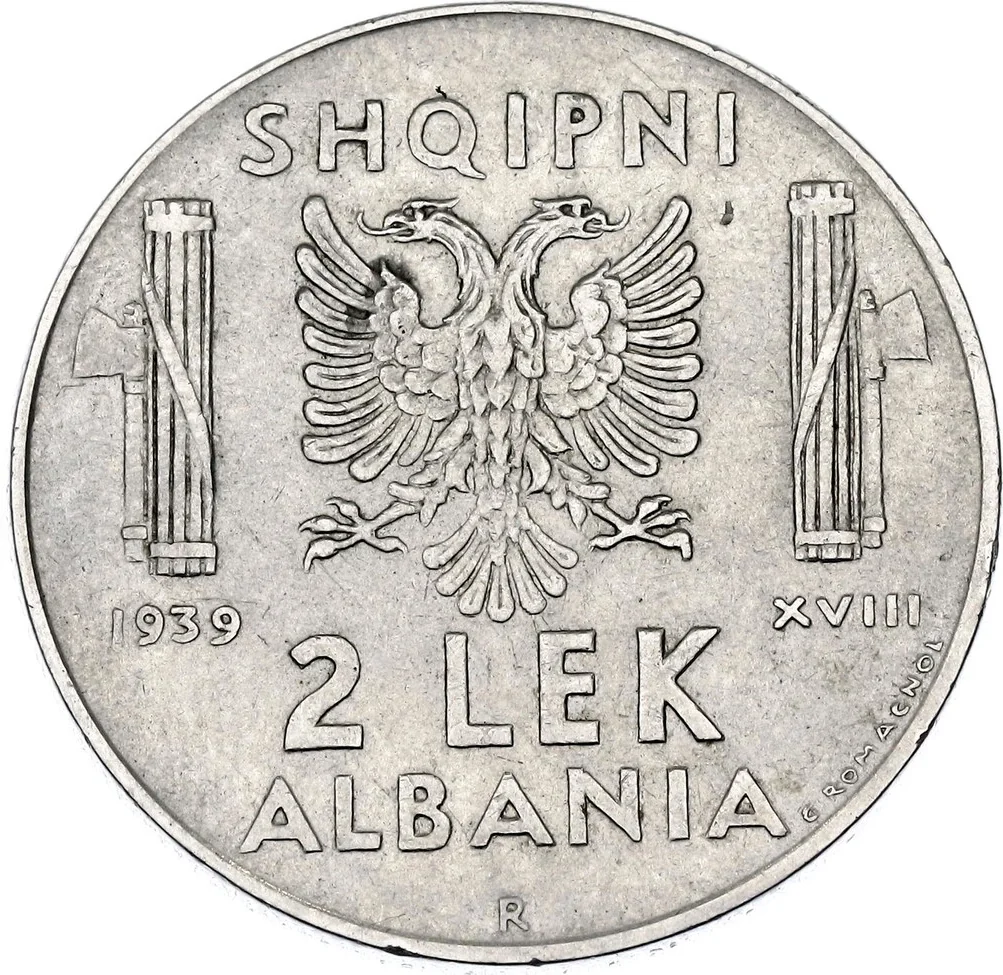
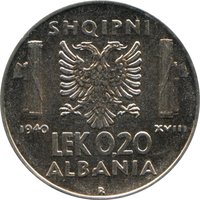
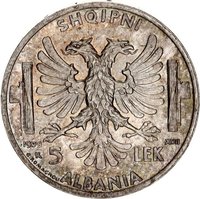
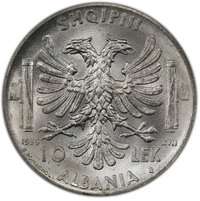
Eagle between axes.
Inscription:
SHQIPNI
1939 XVIII
2 LEK
ALBANIA
R
G. ROMAGNOLI
1939 XVIII
2 LEK
ALBANIA
R
G. ROMAGNOLI
Translation:
Albania
1939 XVIII
2 Lek
Albania
R
G. Romagnoli
1939 XVIII
2 Lek
Albania
R
G. Romagnoli
Script: Latin
Engraver: Giuseppe Romagnoli
Edge
Reeded
Mints
| Name | Mark |
|---|---|
| Rome | R |
Historical background
In 1939, Albania's currency situation was directly tied to its political fate, as the nation was invaded and annexed by Fascist Italy in April of that year. Prior to the invasion, the official currency was the Albanian franc (Franga), which had been introduced in 1926 under King Zog I. This currency was pegged to and backed by the Italian lira through the National Bank of Albania, an institution effectively controlled by Italian capital. This financial dependency was a deliberate tool of Italian economic imperialism, making Albania's monetary system vulnerable to Rome's influence even before the military occupation.
Following the complete occupation, the Italian authorities moved swiftly to fully integrate Albania into Italy's economic and monetary sphere. The Albanian franc remained in circulation but was officially fixed at a rate of 1.25 francs to 1 Italian lira, a rate highly favourable to Italy. The legal framework was altered to make the Italian lira legal tender within Albania, effectively creating a dual-currency system dominated by the occupying power. This move facilitated the exploitation of the Albanian economy, as Italian businesses and the state could now operate without exchange barriers, extracting resources and financing the costs of occupation.
The primary goal of this monetary policy was to bind Albania irrevocably to Italy, treating it not as a colony but as an integral part of the Italian Empire. The currency integration was a key step in Mussolini's plan for a "Greater Italy," aiming to erase Albanian economic sovereignty. Consequently, by the end of 1939, Albania's monetary policy was no longer set in Tirana but in Rome, with its currency reserves and circulation entirely subject to the needs and inflationary pressures of the Italian war economy as Europe moved toward broader conflict.
Following the complete occupation, the Italian authorities moved swiftly to fully integrate Albania into Italy's economic and monetary sphere. The Albanian franc remained in circulation but was officially fixed at a rate of 1.25 francs to 1 Italian lira, a rate highly favourable to Italy. The legal framework was altered to make the Italian lira legal tender within Albania, effectively creating a dual-currency system dominated by the occupying power. This move facilitated the exploitation of the Albanian economy, as Italian businesses and the state could now operate without exchange barriers, extracting resources and financing the costs of occupation.
The primary goal of this monetary policy was to bind Albania irrevocably to Italy, treating it not as a colony but as an integral part of the Italian Empire. The currency integration was a key step in Mussolini's plan for a "Greater Italy," aiming to erase Albanian economic sovereignty. Consequently, by the end of 1939, Albania's monetary policy was no longer set in Tirana but in Rome, with its currency reserves and circulation entirely subject to the needs and inflationary pressures of the Italian war economy as Europe moved toward broader conflict.
Series: 1939 Albania circulation coins
🌱 Common