

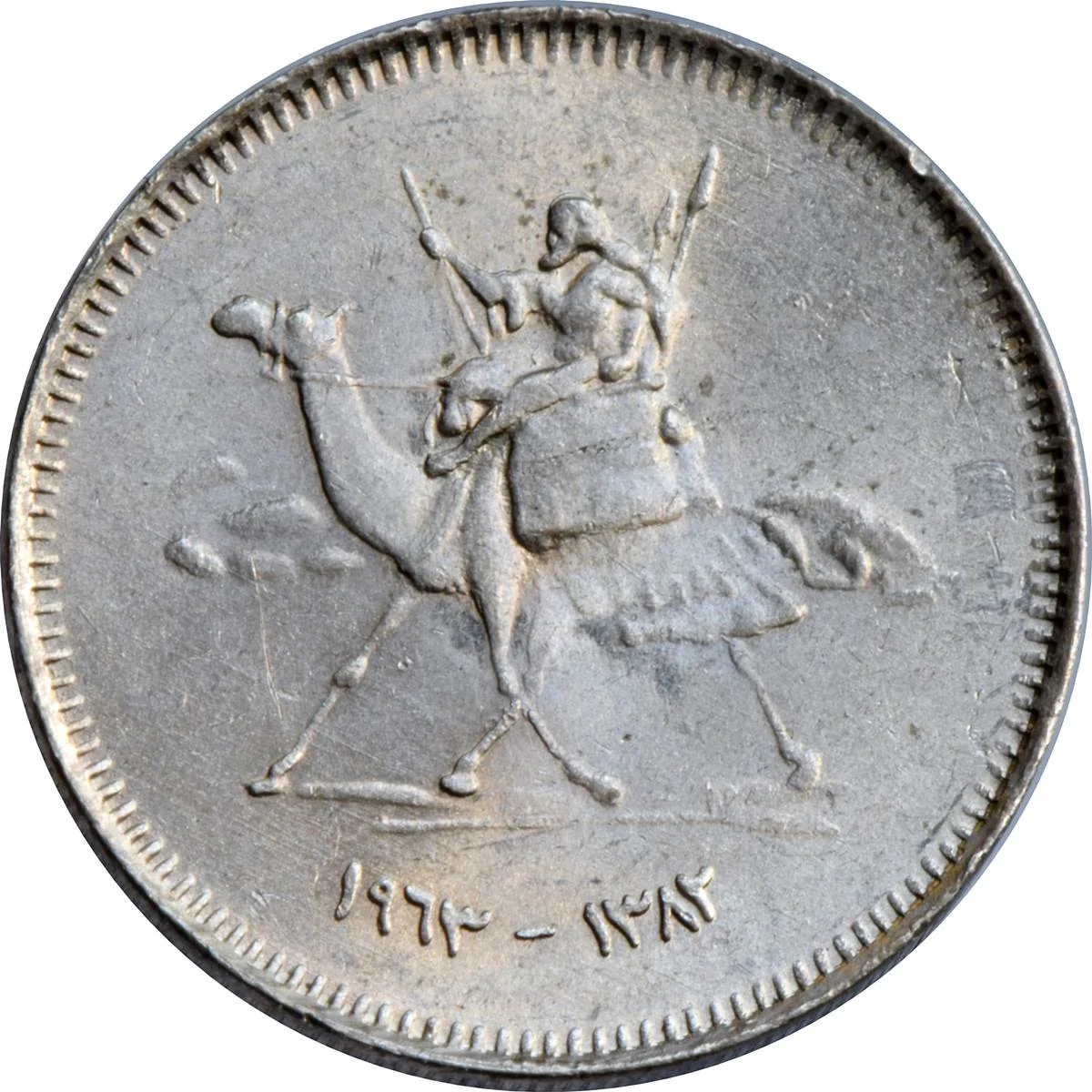
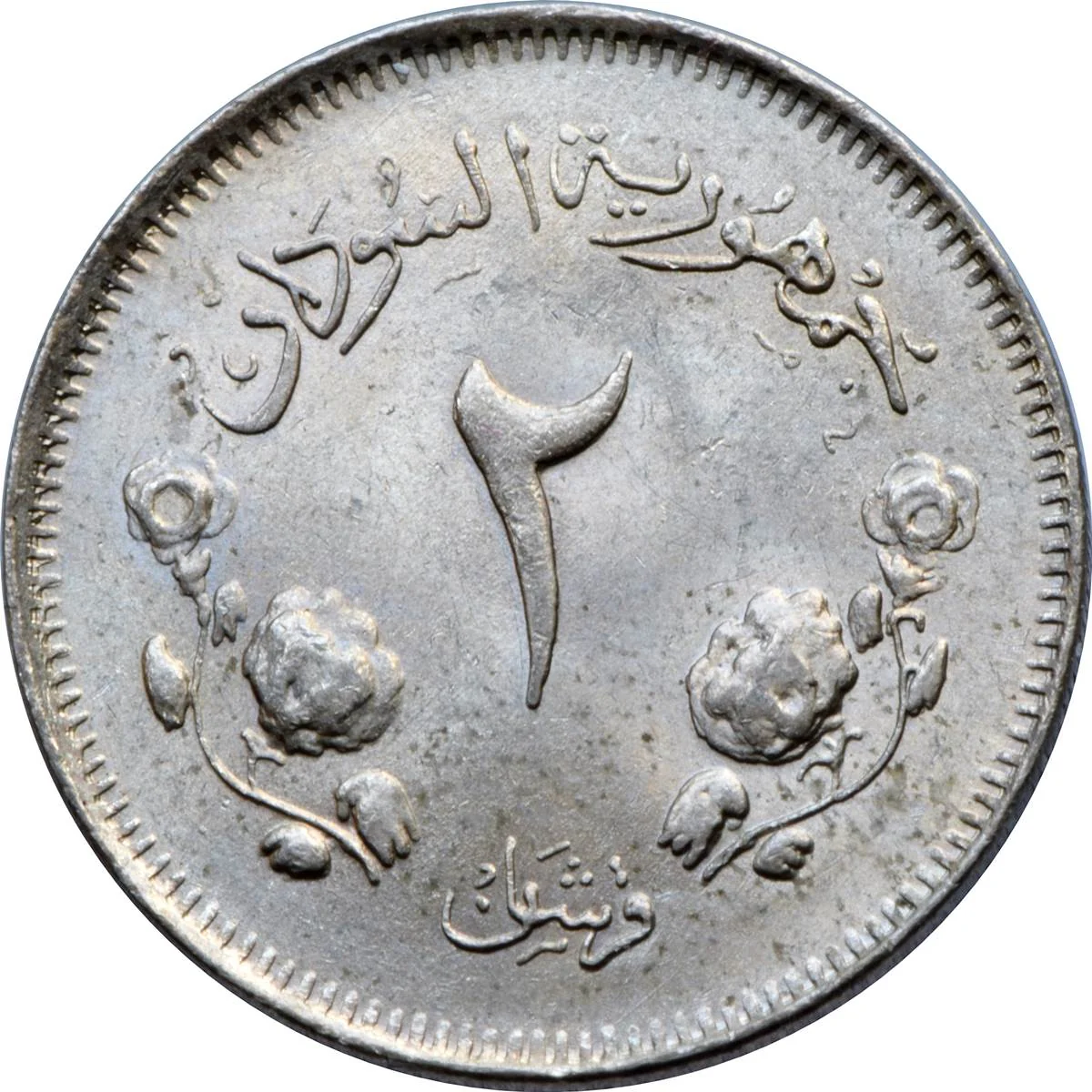
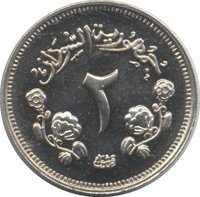
2 piastres – Sudan
Add to wishlist
Sudan
Context
Year: 1963
Islamic (Hijri) Year:: 1382
Issuer: Sudan
Period:
(1956—1969)
Currency:
(1956—1992)
Demonetization: 8 June 1992
Total mintage: 1,250,000
Material
Diameter: 20 mm
Weight: 3 g
Shape: Round
Composition: Copper-nickel
Technique: Milled
Alignment: Medal alignment
flip
References
KM: #
Numista: #67331
Value
Exchange value: 0.02 SDP
Obverse
Reverse
Edge
Reeded
Mintings
| Year | Mint Mark | Mintage | Quality | Collection |
|---|---|---|---|---|
| 1963 | — | 1,250,000 |
Historical background
In 1963, Sudan's currency situation was intrinsically linked to its political evolution. The nation had gained independence from Anglo-Egyptian rule in 1956, and the Sudanese pound (SDG), introduced in 1957, replaced the Egyptian pound as the official currency. This new currency, issued by the newly established Bank of Sudan, was a symbol of sovereignty and was initially pegged to sterling, reflecting Sudan's primary trade ties and membership in the sterling area. The system aimed to provide monetary stability for a young nation whose economy was heavily dependent on cotton exports.
However, this period was marked by significant underlying strain. The First Sudanese Civil War (1955-1972) between the central government and southern separatists was intensifying, creating immense fiscal pressure. Military expenditures soared, diverting funds from development and creating budget deficits. While the currency itself remained stable on the foreign exchange market in the early 1960s, the war's economic burden was mounting, leading to inflationary pressures and setting the stage for future financial challenges. The government's reliance on agricultural export revenues made the economy—and by extension, currency stability—vulnerable to volatile global commodity prices.
Furthermore, the monetary system was still in a formative stage, with the Bank of Sudan consolidating its role as the central monetary authority. The period was one of establishing foundational frameworks rather than major crisis or reform for the currency itself. The primary threats to monetary stability were not yet devaluation or hyperinflation, but the long-term political and fiscal pressures of a costly civil war and an undiversified, agrarian-based economy. These factors would increasingly test the resilience of the Sudanese pound in the years following 1963.
However, this period was marked by significant underlying strain. The First Sudanese Civil War (1955-1972) between the central government and southern separatists was intensifying, creating immense fiscal pressure. Military expenditures soared, diverting funds from development and creating budget deficits. While the currency itself remained stable on the foreign exchange market in the early 1960s, the war's economic burden was mounting, leading to inflationary pressures and setting the stage for future financial challenges. The government's reliance on agricultural export revenues made the economy—and by extension, currency stability—vulnerable to volatile global commodity prices.
Furthermore, the monetary system was still in a formative stage, with the Bank of Sudan consolidating its role as the central monetary authority. The period was one of establishing foundational frameworks rather than major crisis or reform for the currency itself. The primary threats to monetary stability were not yet devaluation or hyperinflation, but the long-term political and fiscal pressures of a costly civil war and an undiversified, agrarian-based economy. These factors would increasingly test the resilience of the Sudanese pound in the years following 1963.
🌟 Uncommon