

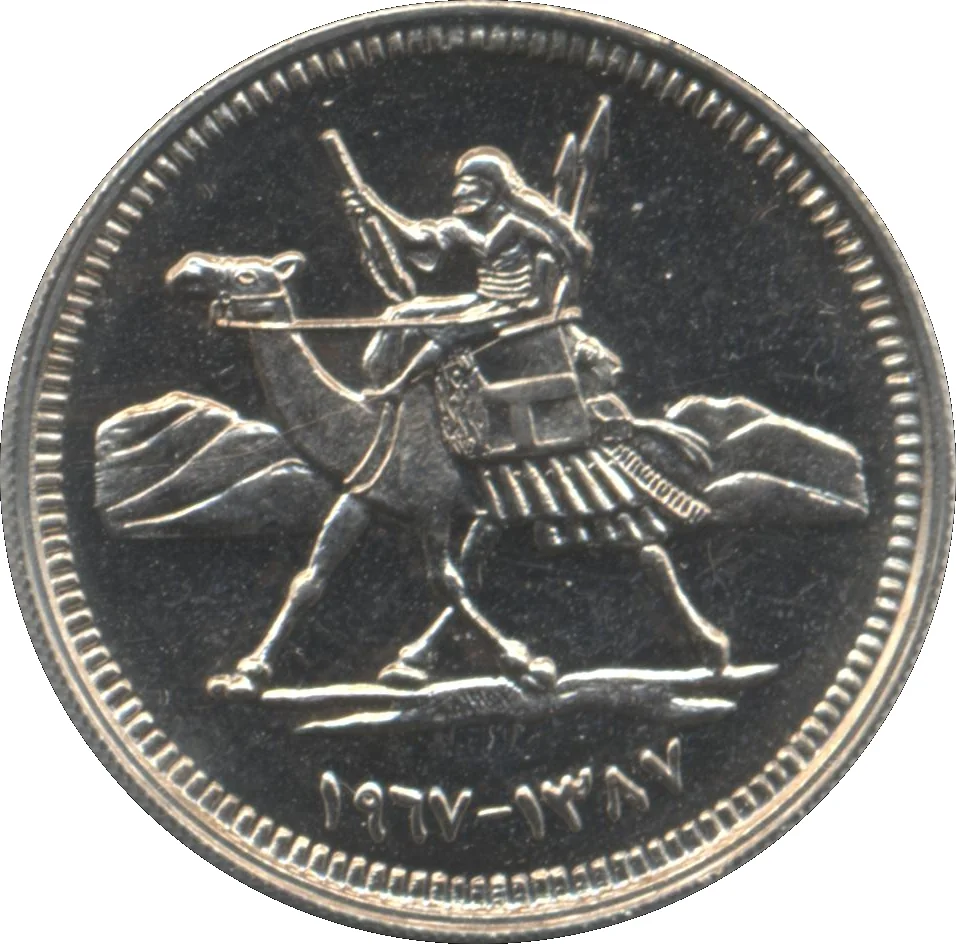
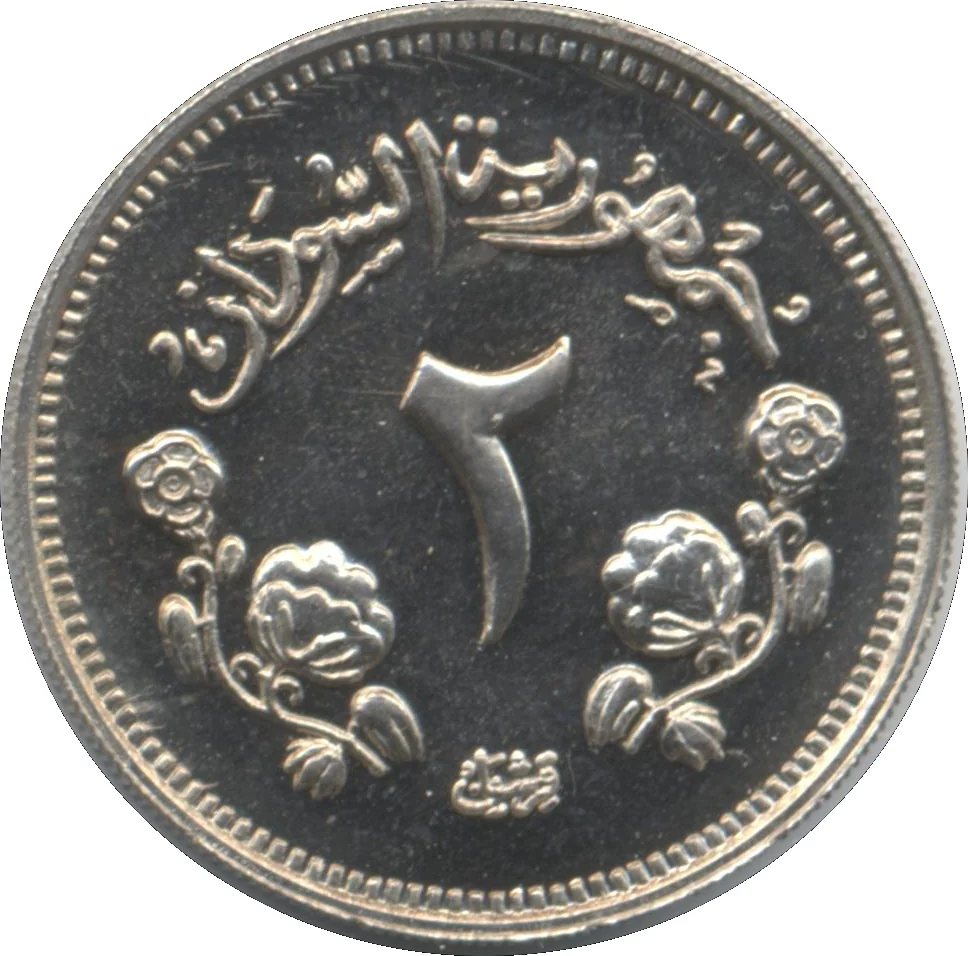
2 piastres – Sudan
Add to wishlist
Sudan
Context
Years: 1966–1969
Issuer: Sudan
Period:
(1956—1969)
Currency:
(1956—1992)
Demonetization: 8 June 1992
Total mintage: 15,234
Material
Diameter: 20 mm
Weight: 3 g
Shape: Round
Composition: Copper-nickel
Technique: Milled
Alignment: Medal alignment
flip
References
KM: #
Numista: #15215
Value
Exchange value: 0.02 SDP
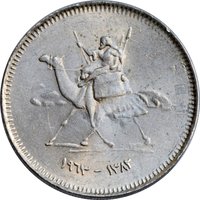
Obverse
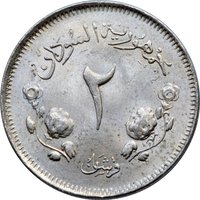
Reverse
Edge
Milled
Mintings
| Year | Mint Mark | Mintage | Quality | Collection |
|---|---|---|---|---|
| 1966 | — | — | Proof | |
| 1967 | — | — | ||
| 1967 | — | 7,834 | Proof | |
| 1968 | — | — | ||
| 1968 | — | 5,251 | Proof | |
| 1969 | — | 2,149 | Proof | |
| 1969 | — | — |
Historical background
In 1966, Sudan's currency situation was characterized by relative stability but was underpinned by structural economic weaknesses inherited from its colonial past. The nation operated under a fixed exchange rate system, with the Sudanese pound (£Sd) pegged to sterling as a member of the Sterling Area. This peg provided a degree of predictability for foreign trade, which was heavily reliant on cotton exports. However, the economy was narrowly based and vulnerable to fluctuations in global commodity prices, creating underlying pressures.
The primary challenge was a persistent balance of payments deficit. While the currency itself was not in a state of hyperinflation or crisis in 1966, the country's export earnings were insufficient to cover the cost of needed imports and development projects. This deficit was financed by drawing down foreign exchange reserves and accumulating external debt. The government of Prime Minister Sadiq al-Mahdi, leading a fragile coalition, faced the difficult task of managing these fiscal pressures while navigating the political demands of a newly independent nation.
Consequently, monetary policy was constrained. The Bank of Sudan, established just six years earlier in 1960, had limited tools to independently manage the currency. The sterling peg prioritized external stability over domestic flexibility, meaning money supply was largely dictated by the flow of foreign exchange from exports. This period represented a calm before the storm; the structural imbalances would intensify in the following decades, eventually leading to severe devaluations, currency separation, and chronic inflation, but in 1966, the system was still formally intact though showing signs of strain.
The primary challenge was a persistent balance of payments deficit. While the currency itself was not in a state of hyperinflation or crisis in 1966, the country's export earnings were insufficient to cover the cost of needed imports and development projects. This deficit was financed by drawing down foreign exchange reserves and accumulating external debt. The government of Prime Minister Sadiq al-Mahdi, leading a fragile coalition, faced the difficult task of managing these fiscal pressures while navigating the political demands of a newly independent nation.
Consequently, monetary policy was constrained. The Bank of Sudan, established just six years earlier in 1960, had limited tools to independently manage the currency. The sterling peg prioritized external stability over domestic flexibility, meaning money supply was largely dictated by the flow of foreign exchange from exports. This period represented a calm before the storm; the structural imbalances would intensify in the following decades, eventually leading to severe devaluations, currency separation, and chronic inflation, but in 1966, the system was still formally intact though showing signs of strain.
🌟 Uncommon