

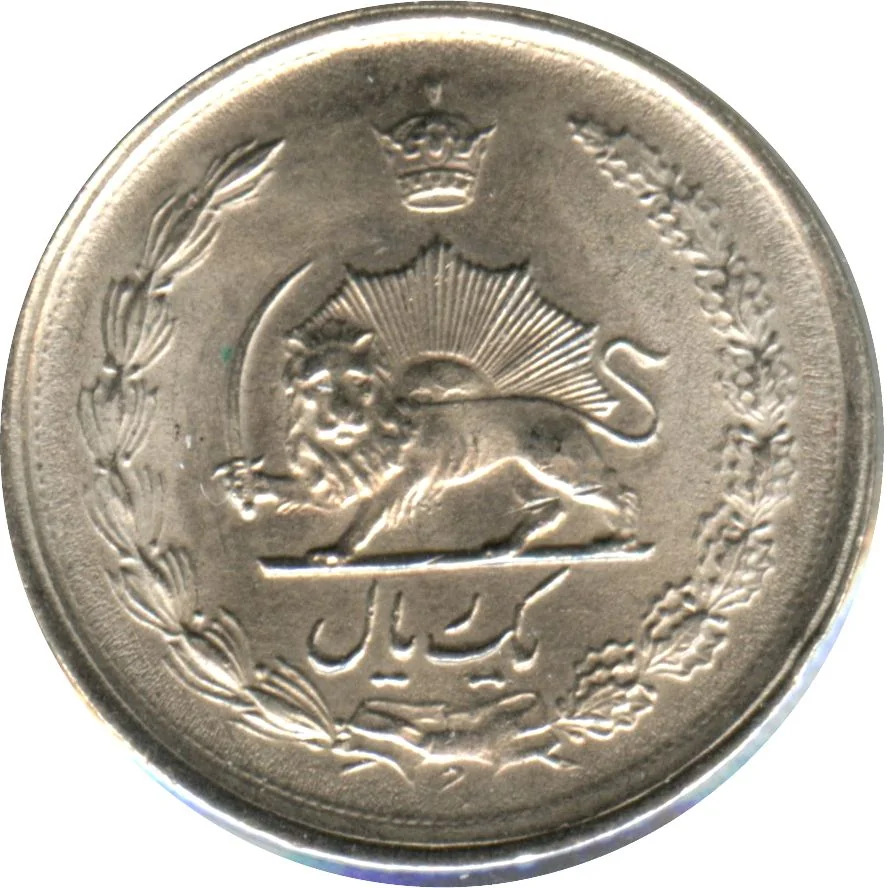
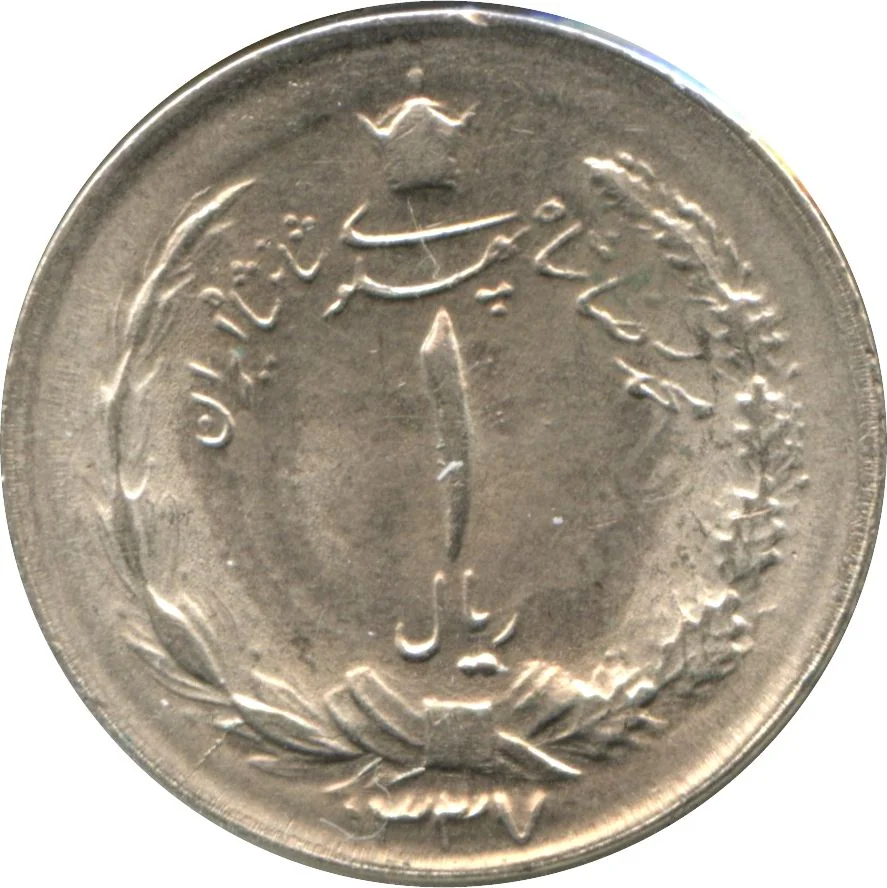
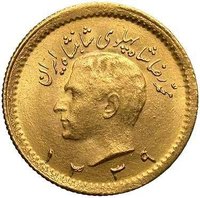
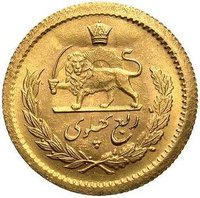
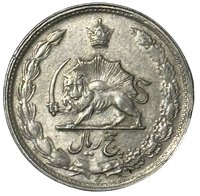
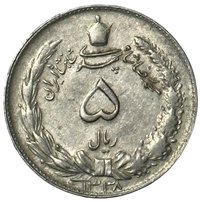
1 rial – Iran
Add to wishlist
Iran
Context
Year: 1958
Iranian - Persian Year:: 1337
Issuer: Iran
Ruler: Mohammad Reza
Currency:
(since 1932)
Demonetized: Yes
Total mintage: 8,005,000
Material
References
KM: #
Numista: #11207
Value
Exchange value: 1 IRR
Reverse
Edge
Reeded
Mints
| Name | Mark |
|---|---|
| Tehran | — |
Mintings
| Year | Mint Mark | Mintage | Quality | Collection |
|---|---|---|---|---|
| 1958 | — | 8,005,000 |
Historical background
In 1958, Iran's currency situation was characterized by relative stability under the monetary system established by the Pahlavi dynasty, yet it operated within a framework of centralized control and external economic pressures. The national currency, the rial, was managed by Bank Melli Iran (the National Bank of Iran), which acted as the country's central bank. The rial was officially pegged to the U.S. dollar at a fixed rate of 75.75 rials per dollar, a parity established in 1945 and maintained through strict exchange controls. This fixed rate provided a veneer of stability for international trade and government accounting but often masked underlying economic realities.
The stability of the rial was heavily dependent on Iran's oil revenues, which were the lifeblood of the state budget and foreign exchange reserves. Following the 1953 coup and the subsequent oil consortium agreement of 1954, oil income was steadily increasing, financing Mohammad Reza Shah's ambitious development plans and import-heavy industrialization. However, this created a vulnerability; any fluctuation in global oil prices or production could directly pressure the currency's fixed peg. Furthermore, the economy experienced persistent inflation, driven by government spending and a growing money supply, which led to a disparity between the official exchange rate and the currency's real purchasing power domestically.
Internally, the currency system faced challenges from a growing black market for foreign exchange, where the dollar traded at a premium, reflecting the artificiality of the official rate and the demand for hard currency beyond what the controls allowed. The government's focus on large-scale industrial projects, often funded by oil revenues and foreign loans, did little to develop a broad-based export sector that could earn foreign exchange independently. Consequently, while the 1958 currency picture appeared orderly on the surface, it was fundamentally tied to the volatile fortunes of the oil sector and the state's centralized economic management, setting the stage for future pressures that would become more acute in the following decades.
The stability of the rial was heavily dependent on Iran's oil revenues, which were the lifeblood of the state budget and foreign exchange reserves. Following the 1953 coup and the subsequent oil consortium agreement of 1954, oil income was steadily increasing, financing Mohammad Reza Shah's ambitious development plans and import-heavy industrialization. However, this created a vulnerability; any fluctuation in global oil prices or production could directly pressure the currency's fixed peg. Furthermore, the economy experienced persistent inflation, driven by government spending and a growing money supply, which led to a disparity between the official exchange rate and the currency's real purchasing power domestically.
Internally, the currency system faced challenges from a growing black market for foreign exchange, where the dollar traded at a premium, reflecting the artificiality of the official rate and the demand for hard currency beyond what the controls allowed. The government's focus on large-scale industrial projects, often funded by oil revenues and foreign loans, did little to develop a broad-based export sector that could earn foreign exchange independently. Consequently, while the 1958 currency picture appeared orderly on the surface, it was fundamentally tied to the volatile fortunes of the oil sector and the state's centralized economic management, setting the stage for future pressures that would become more acute in the following decades.
🌱 Fairly Common