

2 rufiyaa – Maldives
Add to wishlist
Maldives
Context
Material
Diameter: 25 mm
Weight: 11.7 g
Thickness: 3.3 mm
Shape: Round
Composition: Nickel brass
Magnetic: No
Technique: Milled
Alignment: Medal alignment
flip
References
KM: #
Numista: #6724
Value
Exchange value: 2 MVR
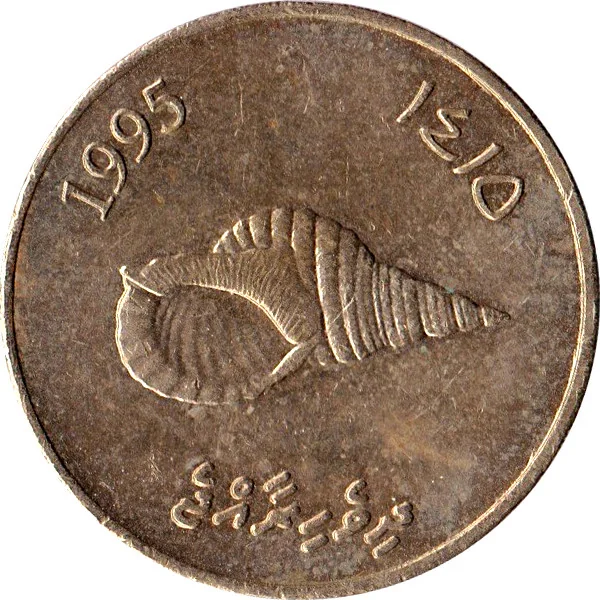
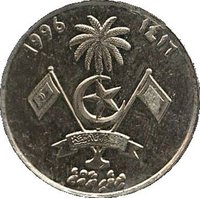
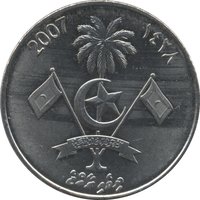
Obverse
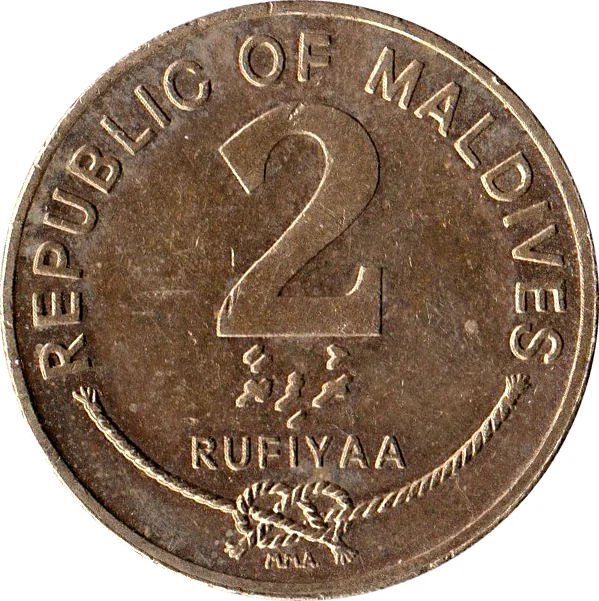
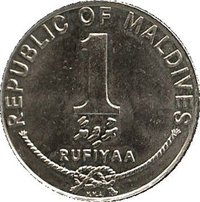
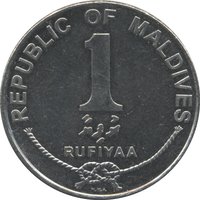
Reverse
Description:
Charonia tritonis conch
Inscription:
1995 ١٤١٥
ދިވެހި ރާއްޖޭ
ދިވެހި ރާއްޖޭ
Translation:
1995 1415
Republic of Maldives
Republic of Maldives
Languages: Dhivehi, Arabic numerals
Edge
Reeded with incuse lettering
Legend:
REPUBLIC OF MALDIVES
Mintings
| Year | Mint Mark | Mintage | Quality | Collection |
|---|---|---|---|---|
| 1995 | — | — | ||
| 2007 | — | — |
Historical background
In 1995, the Maldivian currency, the Rufiyaa, operated under a managed exchange rate regime, pegged to a basket of currencies dominated by the US Dollar. This system, administered by the Maldives Monetary Authority (MMA), the nation's central bank, provided a crucial anchor for economic stability in a country heavily reliant on imports and foreign exchange earnings from its burgeoning tourism sector. The peg helped control inflation for essential goods and provided predictability for the key tourism industry, where pricing was often in US dollars.
The economy was experiencing strong growth, driven almost exclusively by the rapid expansion of luxury tourism on resort islands. This generated the necessary foreign exchange reserves to support the currency peg. However, this growth model also created underlying vulnerabilities. The economy was highly dollarized, with many major transactions, especially in tourism and real estate, conducted in US dollars, which sometimes marginalized the domestic currency. Furthermore, the narrow economic base—overwhelmingly dependent on a single sector—made the Rufiyaa's stability sensitive to any shocks in global travel or shifts in tourist demographics.
While no major currency crisis occurred in 1995, the period highlighted the inherent tensions of the Maldivian economic model. The fixed exchange rate required careful management of foreign reserves by the MMA, as any sustained trade deficit (with high import costs for construction and consumer goods) could have pressured the peg. The situation underscored a quiet reliance on continued tourism revenue to maintain monetary stability, setting the stage for future policy discussions about diversification and exchange rate flexibility that would arise in subsequent decades.
The economy was experiencing strong growth, driven almost exclusively by the rapid expansion of luxury tourism on resort islands. This generated the necessary foreign exchange reserves to support the currency peg. However, this growth model also created underlying vulnerabilities. The economy was highly dollarized, with many major transactions, especially in tourism and real estate, conducted in US dollars, which sometimes marginalized the domestic currency. Furthermore, the narrow economic base—overwhelmingly dependent on a single sector—made the Rufiyaa's stability sensitive to any shocks in global travel or shifts in tourist demographics.
While no major currency crisis occurred in 1995, the period highlighted the inherent tensions of the Maldivian economic model. The fixed exchange rate required careful management of foreign reserves by the MMA, as any sustained trade deficit (with high import costs for construction and consumer goods) could have pressured the peg. The situation underscored a quiet reliance on continued tourism revenue to maintain monetary stability, setting the stage for future policy discussions about diversification and exchange rate flexibility that would arise in subsequent decades.
🌱 Very Common