

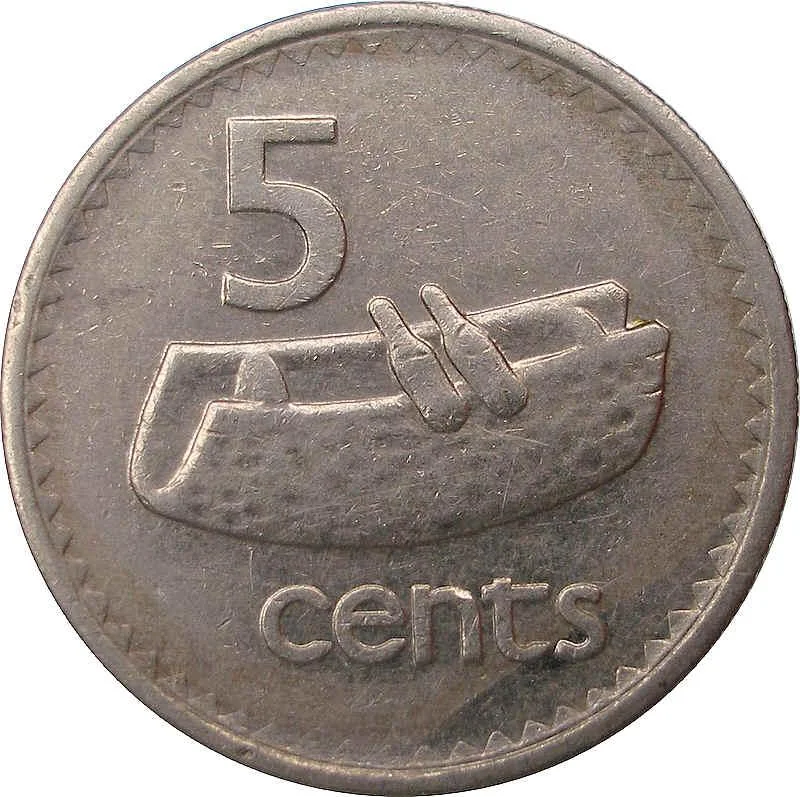
5 Cents – Fiji
Fiji
Context
Years: 1986–1987
Issuer: Fiji 
Ruler: Elizabeth II
Currency:
(since 1969)
Demonetization: 30 June 2009
Total mintage: 2,400,000
Material
Diameter: 19.35 mm
Weight: 2.83 g
Thickness: 1.35 mm
Shape: Round
Composition: Copper-nickel
Technique: Milled
Alignment: Medal alignment
flip
References
KM: #Click to copy to clipboard51
Numista: #6710
Value
Exchange value: 0.05 FJD
Obverse
Description:
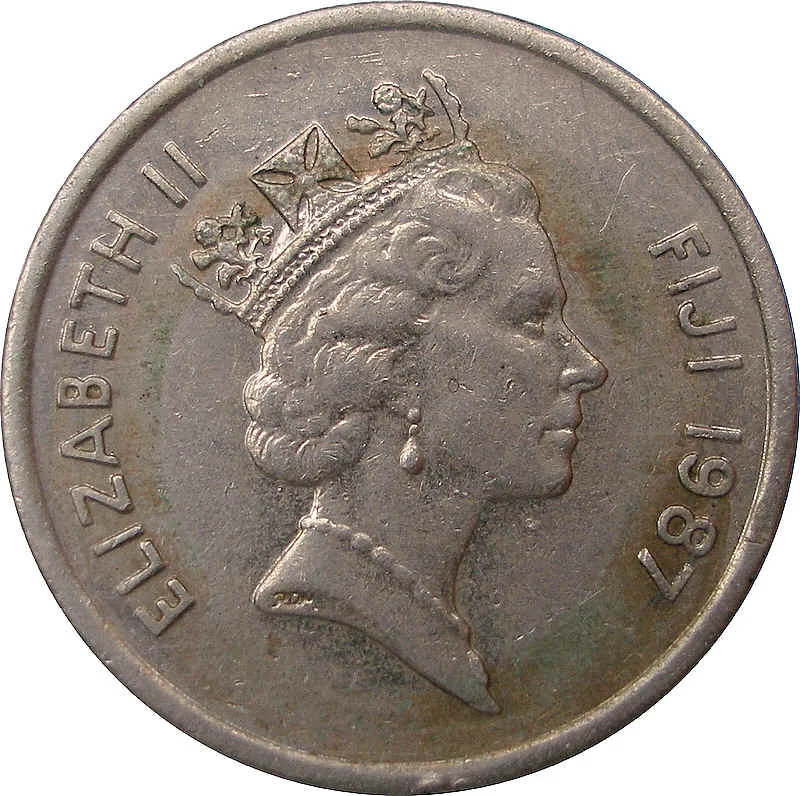
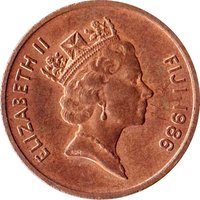
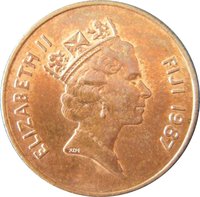
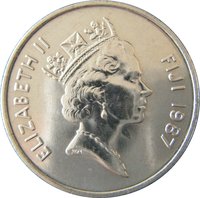
Young Queen Elizabeth II facing right.
Inscription:
ELIZABETH II FIJI 1987
RDM
RDM
Translation:
ELIZABETH II FIJI 1987
RDM
RDM
Script: Latin
Language: English
Engraver: Raphael David Maklouf
Edge
Reeded
Mints
| Name | Mark |
|---|---|
| Royal Australian Mint | — |
Mintings
| Year | Mint Mark | Mintage | Quality | Collection |
|---|---|---|---|---|
| 1986 | — | 1,200,000 | ||
| 1987 | — | 1,200,000 |
Historical background
In 1986, Fiji’s currency situation was defined by the aftermath of political and economic turbulence. The country operated on the Fijian dollar (FJD), which had been pegged to a basket of currencies of its major trading partners since 1975, a system managed by the Central Monetary Authority (a precursor to the Reserve Bank of Fiji). This peg provided relative stability but came under pressure. The economy was still recovering from the deep recession triggered by the 1973 oil crisis and a series of devastating cyclones, which had strained foreign reserves and highlighted vulnerabilities in Fiji’s import-dependent, sugar- and tourism-based economy.
A significant event shaping the 1986 context was the devaluation of the Fijian dollar by approximately 17% in 1984, a decisive move by the government to address a chronic balance of payments deficit and boost export competitiveness. By 1986, the effects of this devaluation were still unfolding. The goal was to make Fijian sugar, garments, and emerging gold exports cheaper on the world market while discouraging expensive imports. However, this also made imported goods and machinery more expensive, contributing to domestic inflation and placing a burden on consumers and businesses reliant on foreign inputs.
Overall, the currency situation in 1986 was one of cautious stabilization within a managed float system. Authorities were navigating the trade-offs between devaluation’s short-term inflationary pains and its intended long-term benefits for economic correction and growth. The period was a critical juncture, setting the stage for the establishment of the more independent Reserve Bank of Fiji in 1987 and the further economic shocks that would follow the coups d'état later that decade, which led to renewed currency instability and a second major devaluation in 1987.
A significant event shaping the 1986 context was the devaluation of the Fijian dollar by approximately 17% in 1984, a decisive move by the government to address a chronic balance of payments deficit and boost export competitiveness. By 1986, the effects of this devaluation were still unfolding. The goal was to make Fijian sugar, garments, and emerging gold exports cheaper on the world market while discouraging expensive imports. However, this also made imported goods and machinery more expensive, contributing to domestic inflation and placing a burden on consumers and businesses reliant on foreign inputs.
Overall, the currency situation in 1986 was one of cautious stabilization within a managed float system. Authorities were navigating the trade-offs between devaluation’s short-term inflationary pains and its intended long-term benefits for economic correction and growth. The period was a critical juncture, setting the stage for the establishment of the more independent Reserve Bank of Fiji in 1987 and the further economic shocks that would follow the coups d'état later that decade, which led to renewed currency instability and a second major devaluation in 1987.
Series: 1986 Fiji circulation coins

🌱 Common