

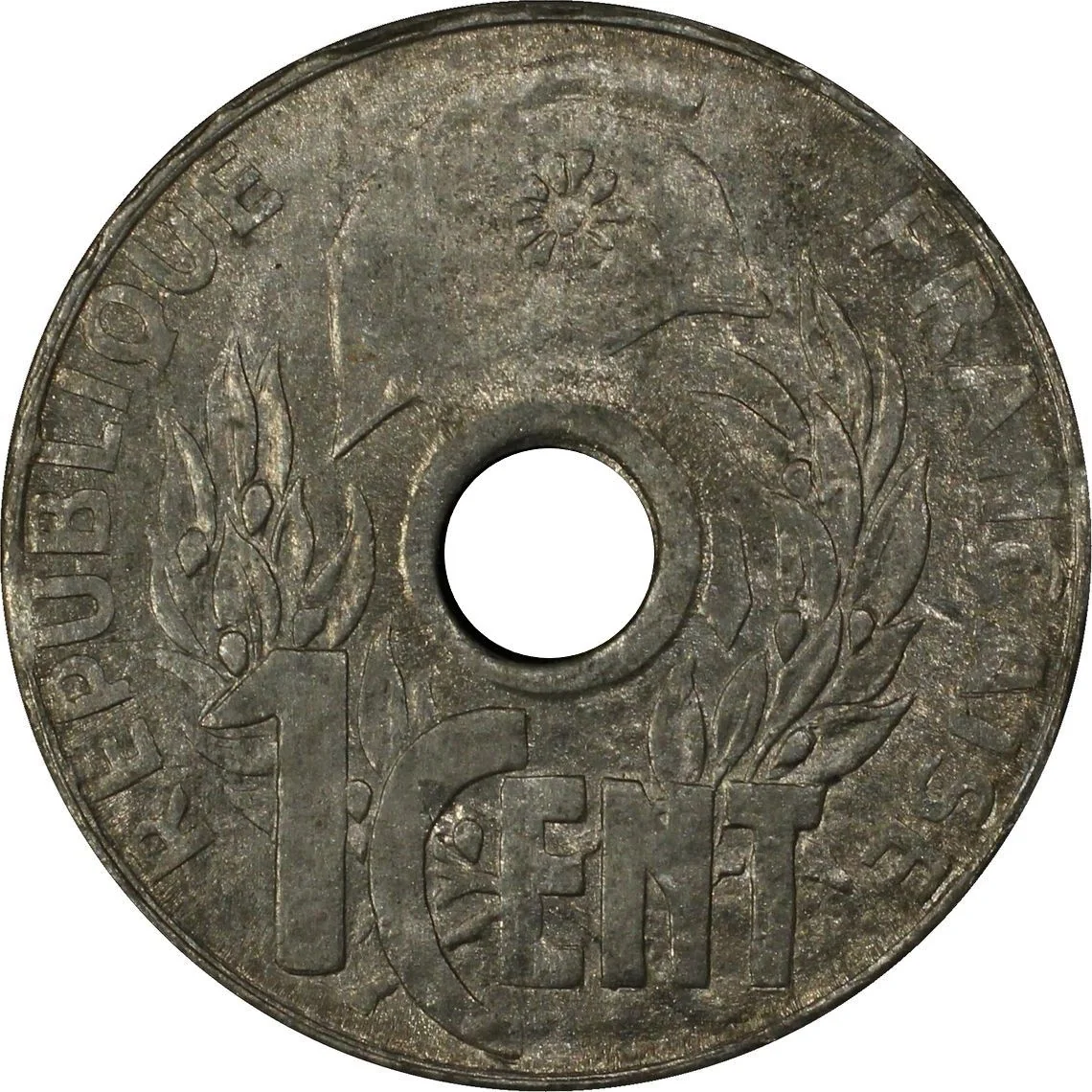
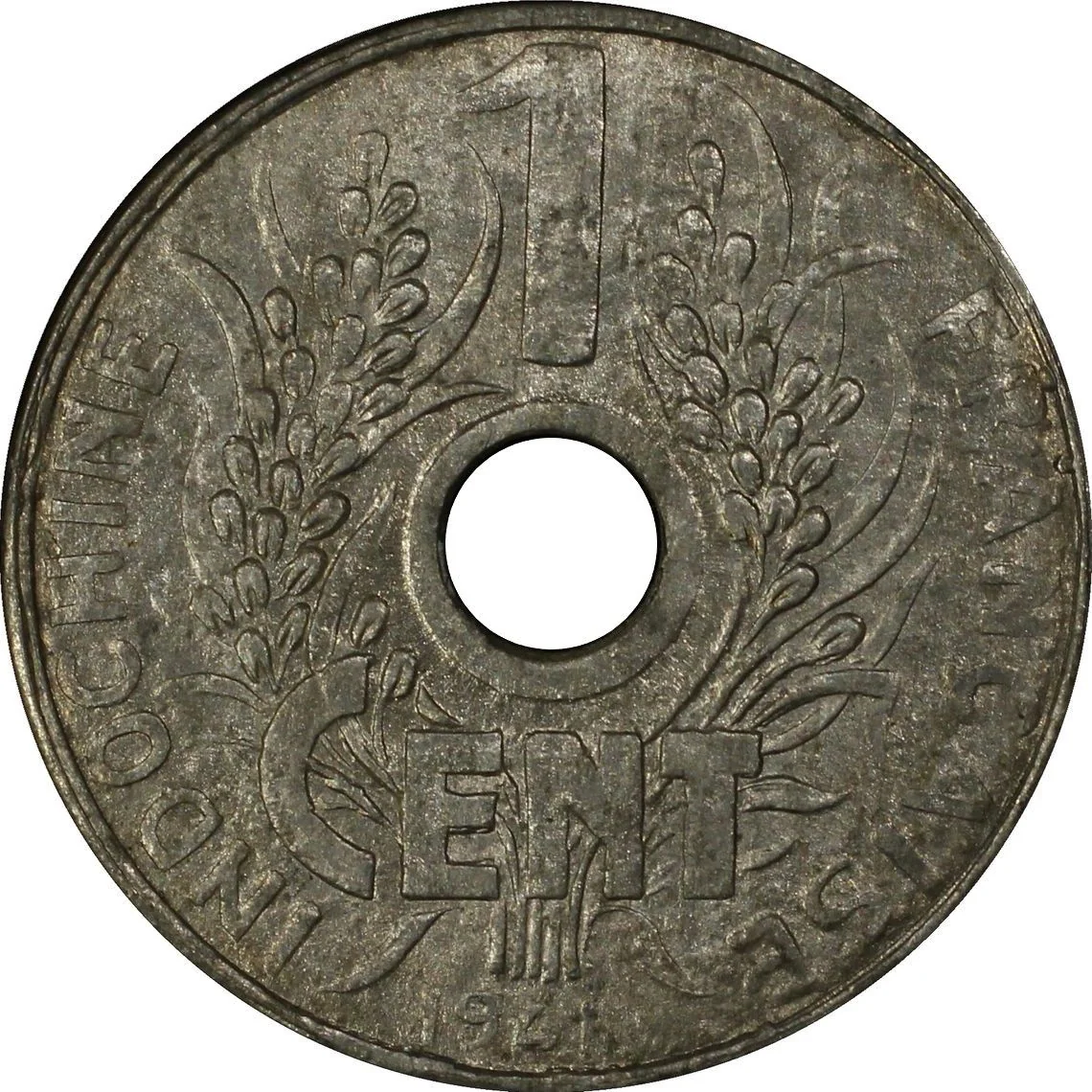
1 cent – French Indochina
Add to wishlist
Context
Years: 1940–1941
Issuer: French Indochina
Period:
(1940—1944)
Currency:
(1880—1952)
Demonetized: Yes
Total mintage: 4,490,000
Material
Diameter: 27.5 mm
Weight: 6 g
Thickness: 1.85 mm
Shape: Round with a round hole
Composition: Zinc
Magnetic: No
Technique: Milled
Alignment: Coin alignment
flip
References
KM: #
Numista: #6675
Value
Exchange value: 0.01 ICFP
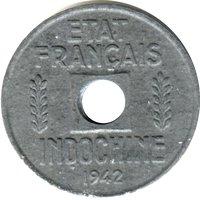
Obverse
Description:
Hole below denomination.
Inscription:
REPUBLIQUE FRANÇAISE
1 CENT
1 CENT
Translation:
FRENCH REPUBLIC
1 CENT
1 CENT
Script: Latin
Language: French
Engraver: Edmond-Émile Lindauer
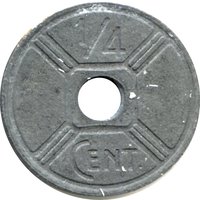
Reverse
Description:
Denomination above hole, date below.
Inscription:
INDOCHINE FRANÇAISE
1 CENT
1941
1 CENT
1941
Translation:
French Indochina
1 Cent
1941
1 Cent
1941
Script: Latin
Language: French
Engraver: Edmond-Émile Lindauer
Edge
Plain
Categories
| Symbol> Phrygian cap |
| Symbol> Wreath |
Mintings
| Year | Mint Mark | Mintage | Quality | Collection |
|---|---|---|---|---|
| 1940 | — | 1,990,000 | ||
| 1941 | — | 2,500,000 |
Historical background
By 1940, the currency situation in French Indochina was defined by the Piastre, a silver-based currency issued by the Banque de l'Indochine. This institution, though privately owned, held the exclusive right of note issue and functioned as a central bank for the colony. The Piastre was notably overvalued by French authorities, pegged at a fixed rate of 10 French Francs, which was far above its market value. This policy benefited French exporters and the colonial administration but severely disadvantaged local populations and Asian merchants, creating persistent economic tensions and fostering a lucrative illegal exchange market.
The outbreak of World War II in Europe and the Fall of France in June 1940 dramatically destabilized this system. Cut off from Metropolitan France and now under the authority of the Vichy regime, the colony faced intense pressure from both Japan and neighboring Thailand. Japan, seeking resources and military access, forced the Indochinese authorities to pay for the costs of its occupying forces and supply purchases in Piastres. This was facilitated through a series of unequal financial agreements, starting in the summer of 1940, which required the Banque de l'Indochine to provide massive advances to the colonial government, effectively monetizing the Japanese occupation.
Consequently, the colony was compelled to finance two conflicting masters: the Vichy French administration and the Japanese military. This led to a rapid, unchecked expansion of the money supply to cover these imposed expenditures, planting the seeds for severe inflation. While price controls and rationing initially masked the full effects, the foundational monetary stability of the Piastre had been critically compromised by 1940, setting the stage for the rampant hyperinflation and economic collapse that would characterize the region in the final years of World War II.
The outbreak of World War II in Europe and the Fall of France in June 1940 dramatically destabilized this system. Cut off from Metropolitan France and now under the authority of the Vichy regime, the colony faced intense pressure from both Japan and neighboring Thailand. Japan, seeking resources and military access, forced the Indochinese authorities to pay for the costs of its occupying forces and supply purchases in Piastres. This was facilitated through a series of unequal financial agreements, starting in the summer of 1940, which required the Banque de l'Indochine to provide massive advances to the colonial government, effectively monetizing the Japanese occupation.
Consequently, the colony was compelled to finance two conflicting masters: the Vichy French administration and the Japanese military. This led to a rapid, unchecked expansion of the money supply to cover these imposed expenditures, planting the seeds for severe inflation. While price controls and rationing initially masked the full effects, the foundational monetary stability of the Piastre had been critically compromised by 1940, setting the stage for the rampant hyperinflation and economic collapse that would characterize the region in the final years of World War II.
🌱 Common