

20 centesimi – Italy
Add to wishlist
Italy
Context
Material
References
KM: #
Numista: #11200
Value
Exchange value: 0.20 ITL
Obverse
Description:
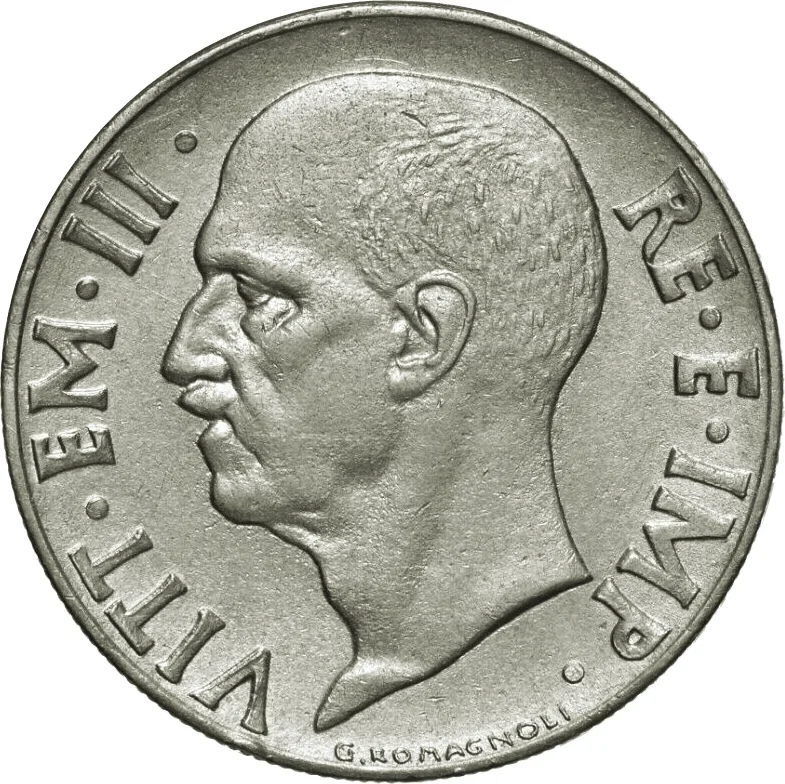
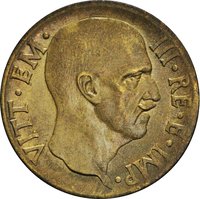
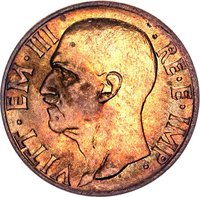
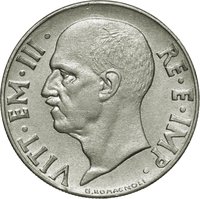
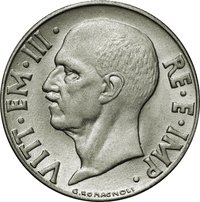
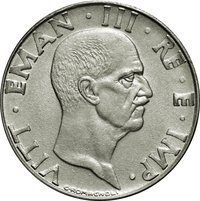
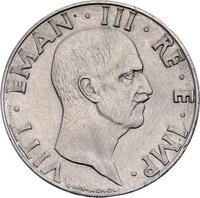
King Vittorio Emanuele III, left-facing portrait. Engraver's name below.
Inscription:
VITT·EM·III· RE·E·IMP·
G.ROMAGNOLI
G.ROMAGNOLI
Translation:
To the Victory of Emperor, by Decree of the Senate, Imperator.
G. Romagnoli
G. Romagnoli
Script: Latin
Language: Latin
Engraver: Giuseppe Romagnoli
Reverse
Description:
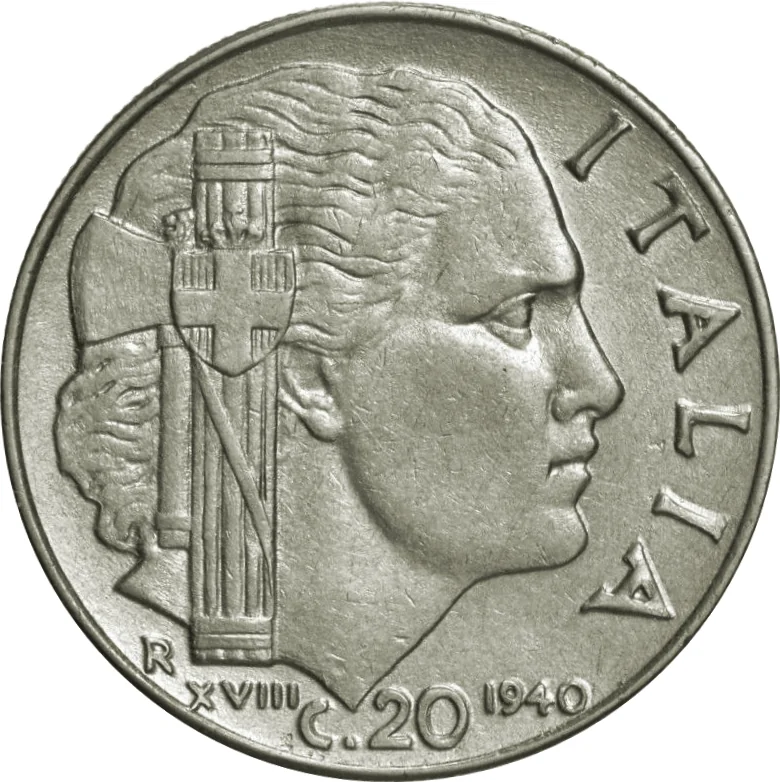
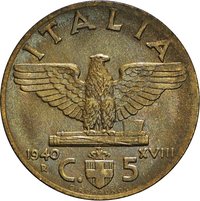
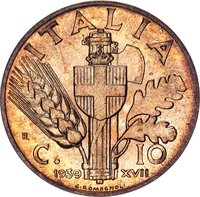
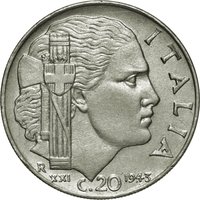
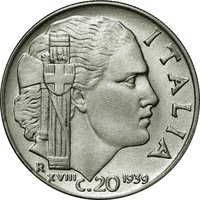
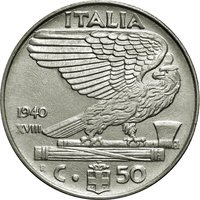
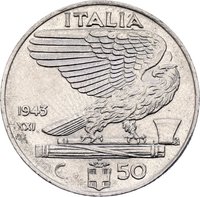
A right-facing female head (Italy) behind a fasces adorned with a Savoy shield. The value is below, between the date and the mintmark with the Fascist Era year.
Inscription:
ITALIA
R
XVIII 1940
C. 20
R
XVIII 1940
C. 20
Translation:
Italy
Year
18 1940
L. 20
Year
18 1940
L. 20
Script: Latin
Language: Italian
Engraver: Giuseppe Romagnoli
Edge
Plain
Mints
| Name | Mark |
|---|---|
| Rome | R |
Historical background
In 1939, Italy’s currency situation was tightly controlled by the Fascist regime under Benito Mussolini, operating within a framework of economic autarky and preparation for war. The lira was not a freely convertible currency on international markets; its value was artificially maintained by the government through strict exchange controls and fixed rates set by the National Institute of Foreign Exchange. This system was designed to conserve scarce gold and foreign currency reserves, prioritize imports essential for the military-industrial complex, and shield the economy from external pressures, albeit at the cost of stifling normal trade and fostering a thriving black market for dollars and sterling.
The underlying economic reality was one of significant strain. Years of heavy spending on the Ethiopian campaign, intervention in the Spanish Civil War, and massive military rearmament had depleted resources, caused high inflation, and led to a substantial increase in public debt. While official propaganda proclaimed the lira’s strength—evoking Mussolini’s 1927 “Quota 90” policy which pegged the lira at 90 to the British pound—the reality was a severely overvalued currency. This overvaluation hurt exports, making Italian goods expensive abroad, and further exacerbated the country's balance of payments problems.
Consequently, by the eve of World War II, Italy’s financial system was increasingly isolated and fragile. The economy was directed toward militarization, with currency policy serving as a tool for state control rather than a reflection of genuine economic health. The complex system of multiple exchange rates for different types of transactions, coupled with pervasive barter agreements in foreign trade, highlighted a managed economy under severe duress, setting the stage for the profound monetary crises and rampant inflation that would follow during the war years.
The underlying economic reality was one of significant strain. Years of heavy spending on the Ethiopian campaign, intervention in the Spanish Civil War, and massive military rearmament had depleted resources, caused high inflation, and led to a substantial increase in public debt. While official propaganda proclaimed the lira’s strength—evoking Mussolini’s 1927 “Quota 90” policy which pegged the lira at 90 to the British pound—the reality was a severely overvalued currency. This overvaluation hurt exports, making Italian goods expensive abroad, and further exacerbated the country's balance of payments problems.
Consequently, by the eve of World War II, Italy’s financial system was increasingly isolated and fragile. The economy was directed toward militarization, with currency policy serving as a tool for state control rather than a reflection of genuine economic health. The complex system of multiple exchange rates for different types of transactions, coupled with pervasive barter agreements in foreign trade, highlighted a managed economy under severe duress, setting the stage for the profound monetary crises and rampant inflation that would follow during the war years.
Series: 1939 Italy circulation coins
🌱 Common