

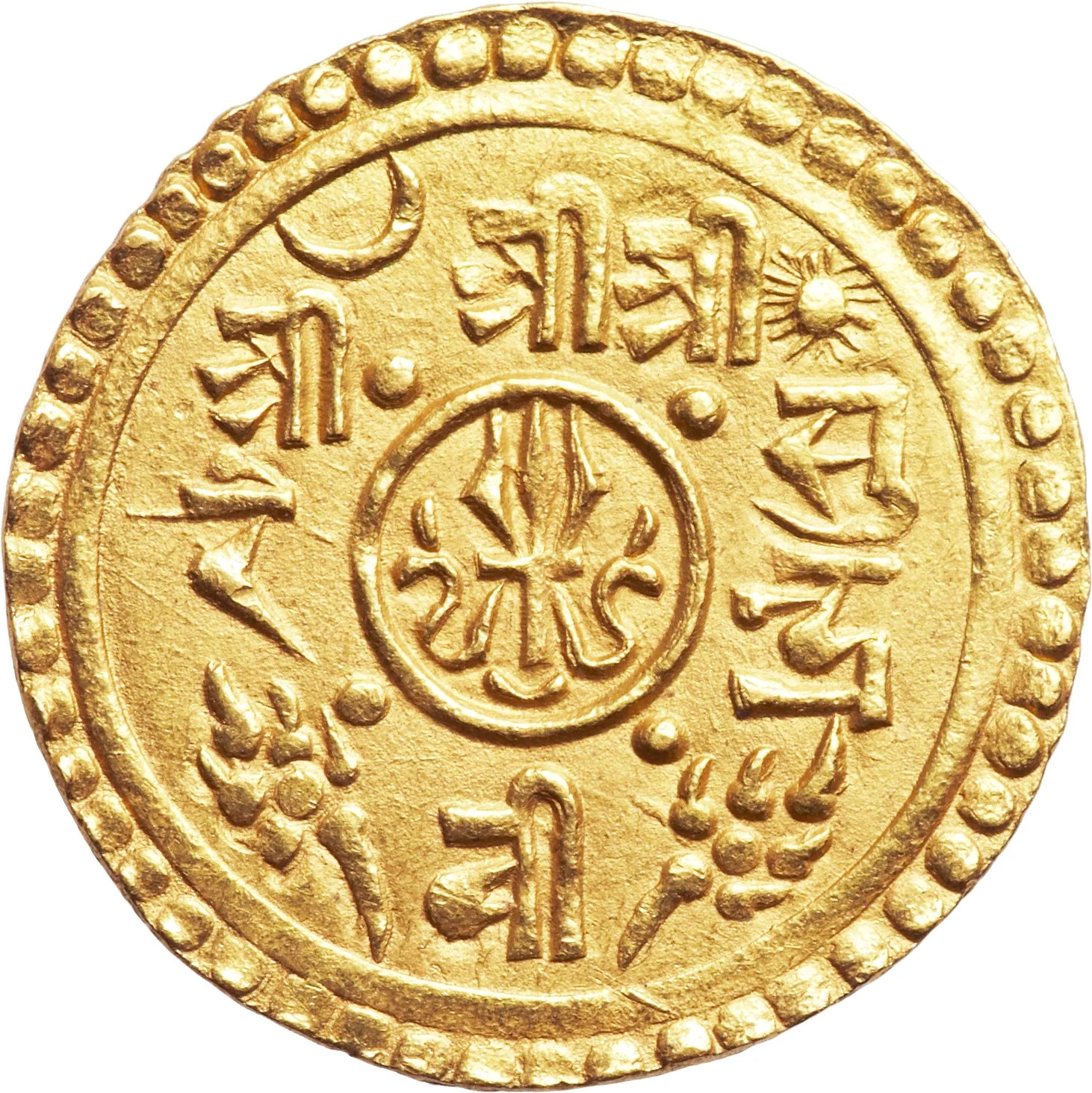
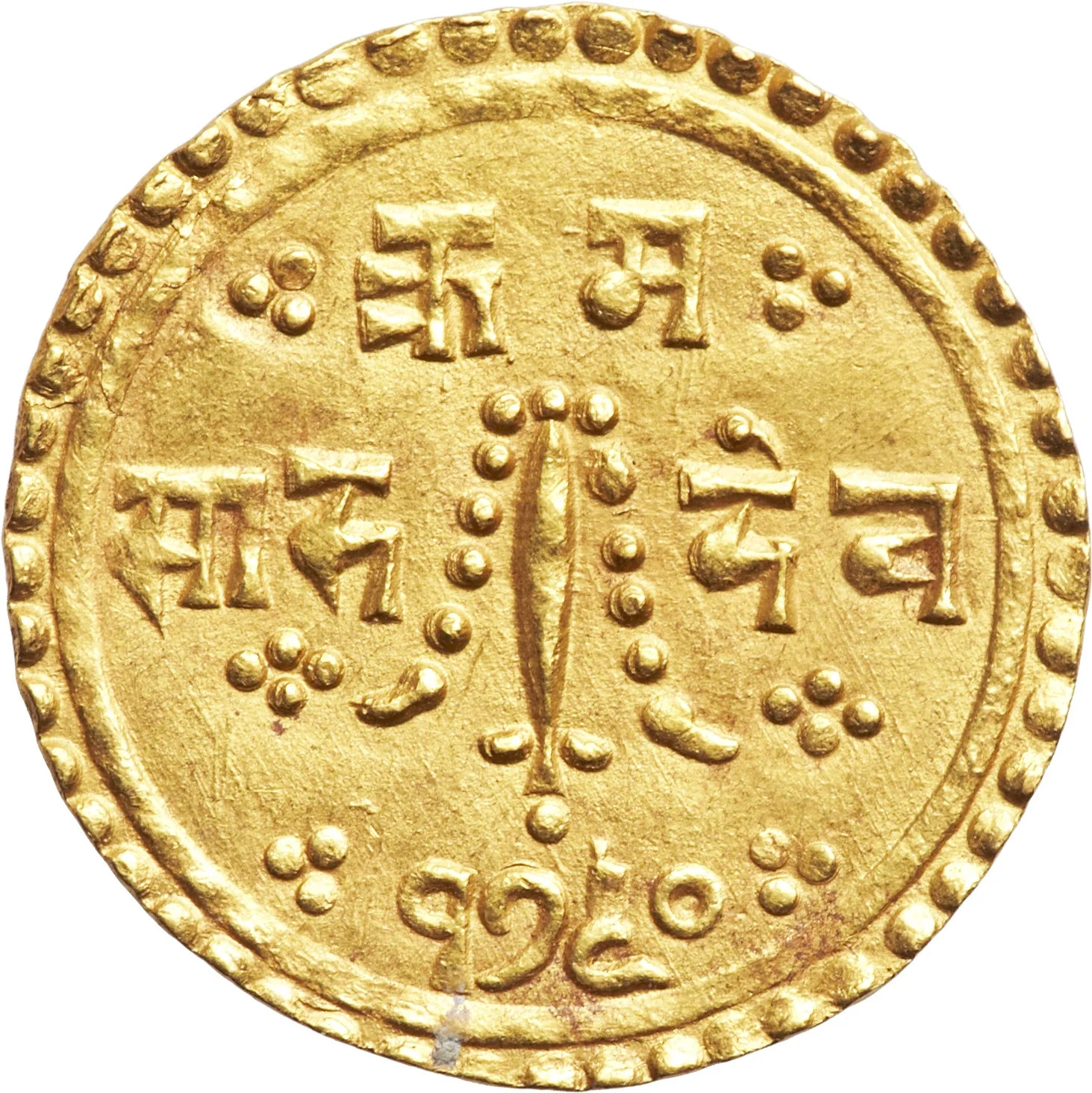
½ Mohar – Nepal
Nepal
Context
Year: 1868
Nepal - Saka era Year: 1790
Issuer: Nepal 
Ruler: Surendra Bikram Shah
Currency:
(1546—1932)
Demonetized: Yes
Material
References
KM: #Click to copy to clipboard612
Numista: #66163
Value
Bullion value: $466.14
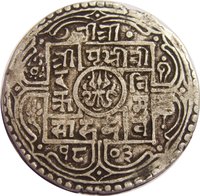
Obverse
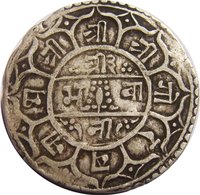
Reverse
Edge
Mintings
| Year | Mint Mark | Mintage | Quality | Collection |
|---|---|---|---|---|
| 1868 | — | — |
Historical background
In 1868, Nepal's currency system was a complex and transitional landscape, deeply rooted in its history of independent minting but increasingly influenced by external trade pressures. The primary circulating medium was the Mohar, a silver coin minted by the state since the 16th century. However, the value and purity of these coins were not uniform, as they were struck by various mints (Khut) across the kingdom, including in Kathmandu, Bhadgaon (Bhaktapur), and Patan. This led to a lack of standardization, with older, debased coins circulating alongside newer issues, causing confusion in trade and valuation. Alongside the Mohar, copper Dam coins were used for smaller transactions, and gold Mohurs existed for high-value dealings, but silver remained the principal monetary metal.
This period was marked by significant economic strain and a critical shortage of silver, a direct consequence of Nepal's large and chronic trade deficit with British India. Essential imports like salt, cotton, and manufactured goods were paid for with vast outflows of silver bullion and coins, draining the treasury. In response, the state under Prime Minister Jang Bahadur Rana (in power since 1846) had begun to actively debase the silver Mohar to conserve precious metal, reducing its silver content while maintaining its face value. This practice, while a fiscal stopgap, eroded public confidence and disrupted the internal economy, as people hoarded older, purer coins.
Furthermore, the influence of British Indian currency was becoming inescapable. The Indian Rupee, a standardized and machine-struck coin, was increasingly used in the Tarai plains and for cross-border trade. The year 1868 falls within a crucial decade where the Rana regime was grappling with the need for monetary reform, which would culminate in the introduction of a new, standardized silver Rupee in 1880, pegged to and mimicking the Indian Rupee. Thus, the currency situation in 1868 was one of fragmentation, debasement, and looming transition, caught between a traditional, weakening system and the impending adoption of a modern, foreign-influenced standard.
This period was marked by significant economic strain and a critical shortage of silver, a direct consequence of Nepal's large and chronic trade deficit with British India. Essential imports like salt, cotton, and manufactured goods were paid for with vast outflows of silver bullion and coins, draining the treasury. In response, the state under Prime Minister Jang Bahadur Rana (in power since 1846) had begun to actively debase the silver Mohar to conserve precious metal, reducing its silver content while maintaining its face value. This practice, while a fiscal stopgap, eroded public confidence and disrupted the internal economy, as people hoarded older, purer coins.
Furthermore, the influence of British Indian currency was becoming inescapable. The Indian Rupee, a standardized and machine-struck coin, was increasingly used in the Tarai plains and for cross-border trade. The year 1868 falls within a crucial decade where the Rana regime was grappling with the need for monetary reform, which would culminate in the introduction of a new, standardized silver Rupee in 1880, pegged to and mimicking the Indian Rupee. Thus, the currency situation in 1868 was one of fragmentation, debasement, and looming transition, caught between a traditional, weakening system and the impending adoption of a modern, foreign-influenced standard.
✨ Legendary