

1 Dam – Nepal
Nepal

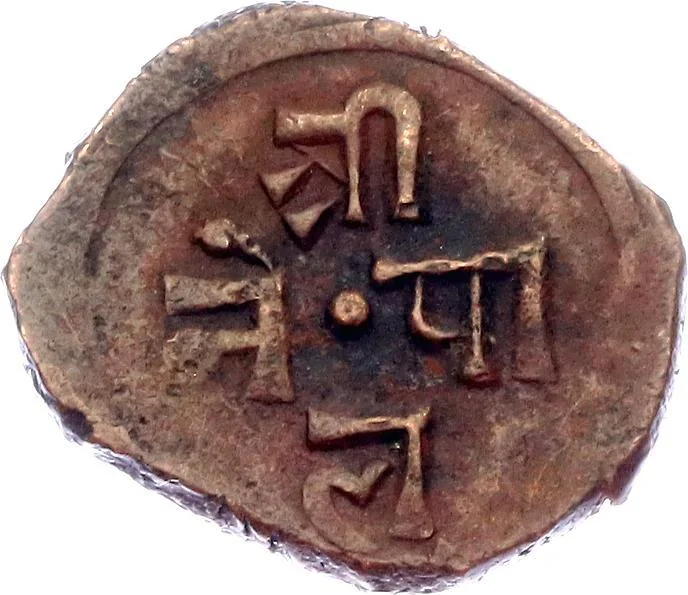
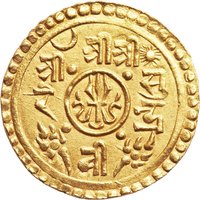
Obverse
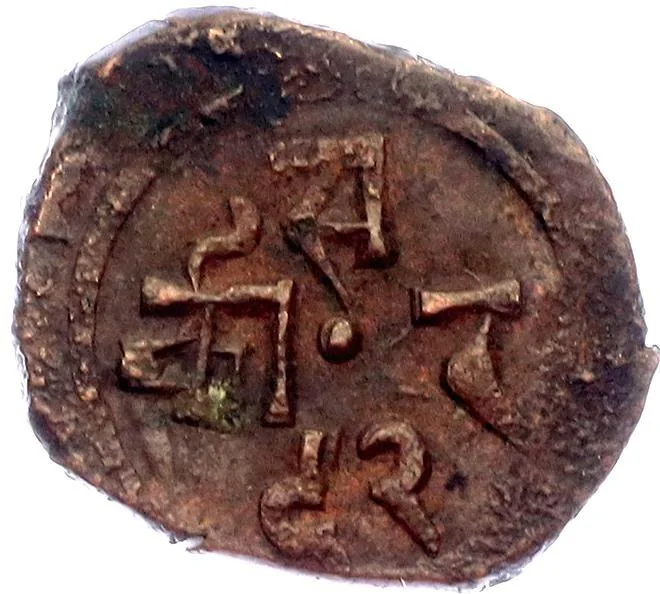
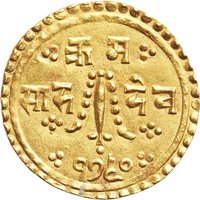
Reverse
Description:
Inscribed "Sarkar" in Nagari script.
Inscription:
स
र्का. र
र्का. र
Translation:
The Glorious King.
Language: Sanskrit
Edge
Plain
Mintings
| Year | Mint Mark | Mintage | Quality | Collection |
|---|---|---|---|---|
| 1866 | — | — | ||
| 1868 | — | — | ||
| 1869 | — | — | ||
| 1870 | — | — | ||
| 1871 | — | — | ||
| 1872 | — | — | ||
| 1874 | — | — | ||
| 1875 | — | — | ||
| 1876 | — | — | ||
| 1877 | — | — |
Historical background
In 1866, Nepal's currency situation was characterized by a complex and fragmented system, heavily influenced by its political and economic ties to both Tibet and British India. The primary circulating medium included a mix of silver mohars issued by the Shah kings, as well as a plethora of older, debased coins and even Tibetan tangkas. This created significant challenges for trade and taxation, as the value and purity of coins varied widely. The economy remained largely agrarian and isolated, with external trade tightly controlled by the Rana regime, which had seized power in 1846 and maintained a policy of isolationism to preserve its authority.
The most pressing monetary issue was the severe shortage of silver, the standard metal for coinage. This scarcity was driven by Nepal's negative trade balance with Tibet, where large quantities of silver flowed out to pay for luxury goods and religious offerings. Compounding the problem, the older silver coins in circulation were often clipped or adulterated, further eroding public confidence. While the British Indian rupee was gaining influence in the southern Tarai region due to cross-border trade, the state lacked a unified, modern minting system to standardize currency across the kingdom.
Consequently, the year 1866 fell within a period of monetary stagnation preceding a major reform. It would not be until 1880 that Prime Minister Jung Bahadur Rana, seeking to modernize state finances and centralize power, introduced the "Mohan Mohar" system. This later reform established a fixed exchange rate with the Indian rupee and standardized silver content. Therefore, the background for 1866 is one of a pre-modern, inefficient currency system straining under the demands of a changing regional economy and awaiting the decisive state intervention that would come in the following decade.
The most pressing monetary issue was the severe shortage of silver, the standard metal for coinage. This scarcity was driven by Nepal's negative trade balance with Tibet, where large quantities of silver flowed out to pay for luxury goods and religious offerings. Compounding the problem, the older silver coins in circulation were often clipped or adulterated, further eroding public confidence. While the British Indian rupee was gaining influence in the southern Tarai region due to cross-border trade, the state lacked a unified, modern minting system to standardize currency across the kingdom.
Consequently, the year 1866 fell within a period of monetary stagnation preceding a major reform. It would not be until 1880 that Prime Minister Jung Bahadur Rana, seeking to modernize state finances and centralize power, introduced the "Mohan Mohar" system. This later reform established a fixed exchange rate with the Indian rupee and standardized silver content. Therefore, the background for 1866 is one of a pre-modern, inefficient currency system straining under the demands of a changing regional economy and awaiting the decisive state intervention that would come in the following decade.
💎 Very Rare