

10 gulden – Netherlands
Add to wishlist
Netherlands
Context
Years: 1911–1917
Issuer: Netherlands
Ruler: Wilhelmina
Currency:
(1817—2001)
Demonetized: Yes
Total mintage: 8,913,028
Material
References
KM: #
Numista: #6553
Value
Exchange value: 10 NLG
Bullion value: $927.86
Obverse
Description:
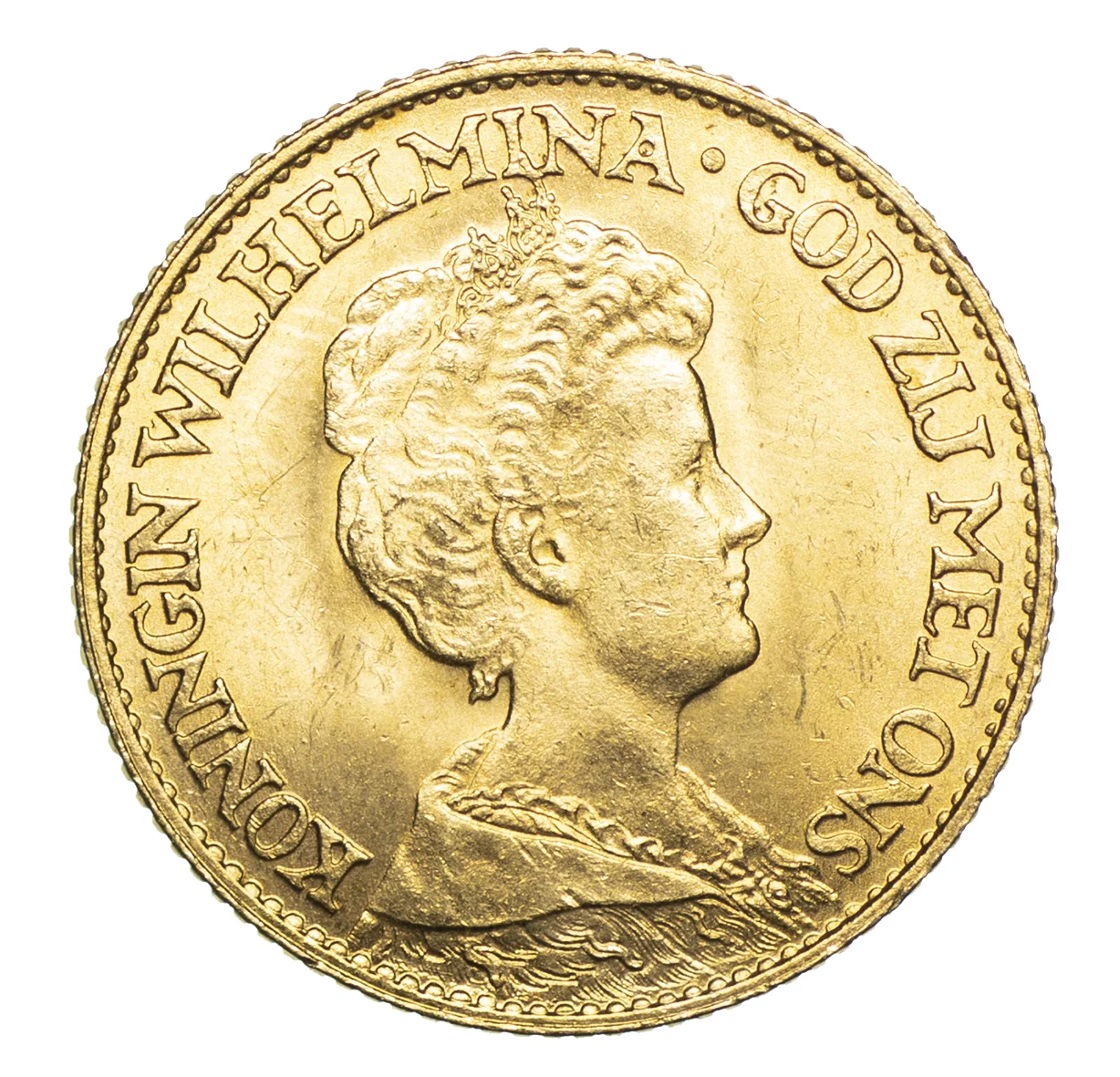
Queen Wilhelmina in tiara and ermine, facing right.
Inscription:
KONINGIN WILHELMINA • GOD ZIJ MET ONS
Translation:
QUEEN WILHELMINA • GOD BE WITH US
Script: Latin
Language: Dutch
Engraver: Johannes Cornelis Wienecke
Reverse
Edge
Reeded
Categories
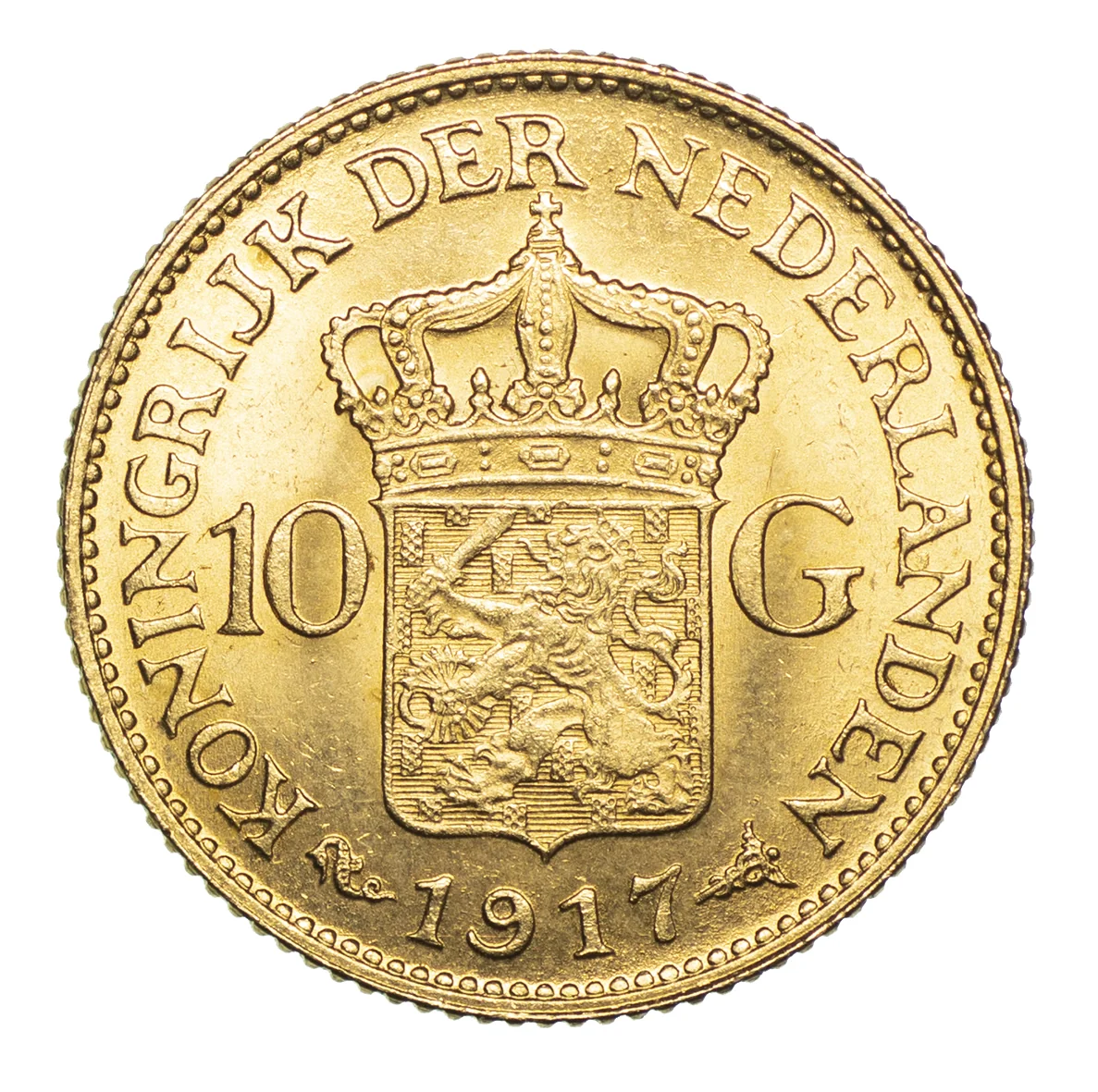
| Symbols> Coat of Arms |
| Symbol> Crown |
Mints
| Name | Mark |
|---|---|
| Royal Dutch Mint | — |
Mintings
| Year | Mint Mark | Mintage | Quality | Collection |
|---|---|---|---|---|
| 1911 | — | 774,544 | ||
| 1911 | — | 8 | Proof | |
| 1912 | — | 3,000,000 | ||
| 1913 | — | 1,138,476 | ||
| 1917 | — | 4,000,000 |
Historical background
In 1911, the Netherlands operated under the classical gold standard, a system it had adhered to since 1875. The Dutch guilder (gulden) was legally defined as a fixed quantity of gold, and the central bank, De Nederlandsche Bank, was obligated to exchange banknotes for gold on demand. This system ensured monetary stability, fixed exchange rates with other major economies like Britain and Germany, and was a cornerstone of international trade and confidence. The currency in circulation consisted of gold coins, silver subsidiary coins, and banknotes, with the latter gaining increasing prominence in daily transactions.
Economically, this period was one of relative prosperity and industrialization for the Netherlands. The stable guilder facilitated the country's significant role in global commerce, particularly through its vast colonial empire in the Dutch East Indies (modern-day Indonesia). However, the gold standard also meant that the domestic money supply was heavily influenced by the balance of payments and gold flows. A trade surplus would bring gold into the country, potentially expanding the money supply, while a deficit could force a contraction, limiting the central bank's ability to respond to domestic economic conditions.
Beneath this surface stability, there were ongoing discussions and minor tensions regarding the monetary system. Debates occasionally arose about the role of silver and the practical limits of the gold standard, especially as the global economic landscape grew more complex. Furthermore, the financial demands of maintaining the empire and modernizing the domestic infrastructure required careful fiscal management within the constraints of the rigid monetary regime. Nevertheless, in 1911, the system was viewed as fundamentally sound, with few anticipating the profound monetary upheavals that would be triggered just three years later by the outbreak of the First World War.
Economically, this period was one of relative prosperity and industrialization for the Netherlands. The stable guilder facilitated the country's significant role in global commerce, particularly through its vast colonial empire in the Dutch East Indies (modern-day Indonesia). However, the gold standard also meant that the domestic money supply was heavily influenced by the balance of payments and gold flows. A trade surplus would bring gold into the country, potentially expanding the money supply, while a deficit could force a contraction, limiting the central bank's ability to respond to domestic economic conditions.
Beneath this surface stability, there were ongoing discussions and minor tensions regarding the monetary system. Debates occasionally arose about the role of silver and the practical limits of the gold standard, especially as the global economic landscape grew more complex. Furthermore, the financial demands of maintaining the empire and modernizing the domestic infrastructure required careful fiscal management within the constraints of the rigid monetary regime. Nevertheless, in 1911, the system was viewed as fundamentally sound, with few anticipating the profound monetary upheavals that would be triggered just three years later by the outbreak of the First World War.
🌱 Fairly Common