

2½ Cents – Netherlands
Netherlands
Context
Years: 1941–1942
Issuer: Netherlands 
Period:
(1940—1945)
Currency:
(1817—2001)
Demonetization: 15 August 1950
Total mintage: 27,800,000
Material
References
KM: #Click to copy to clipboard171
Numista: #6542
Value
Exchange value: 0.025 NLG
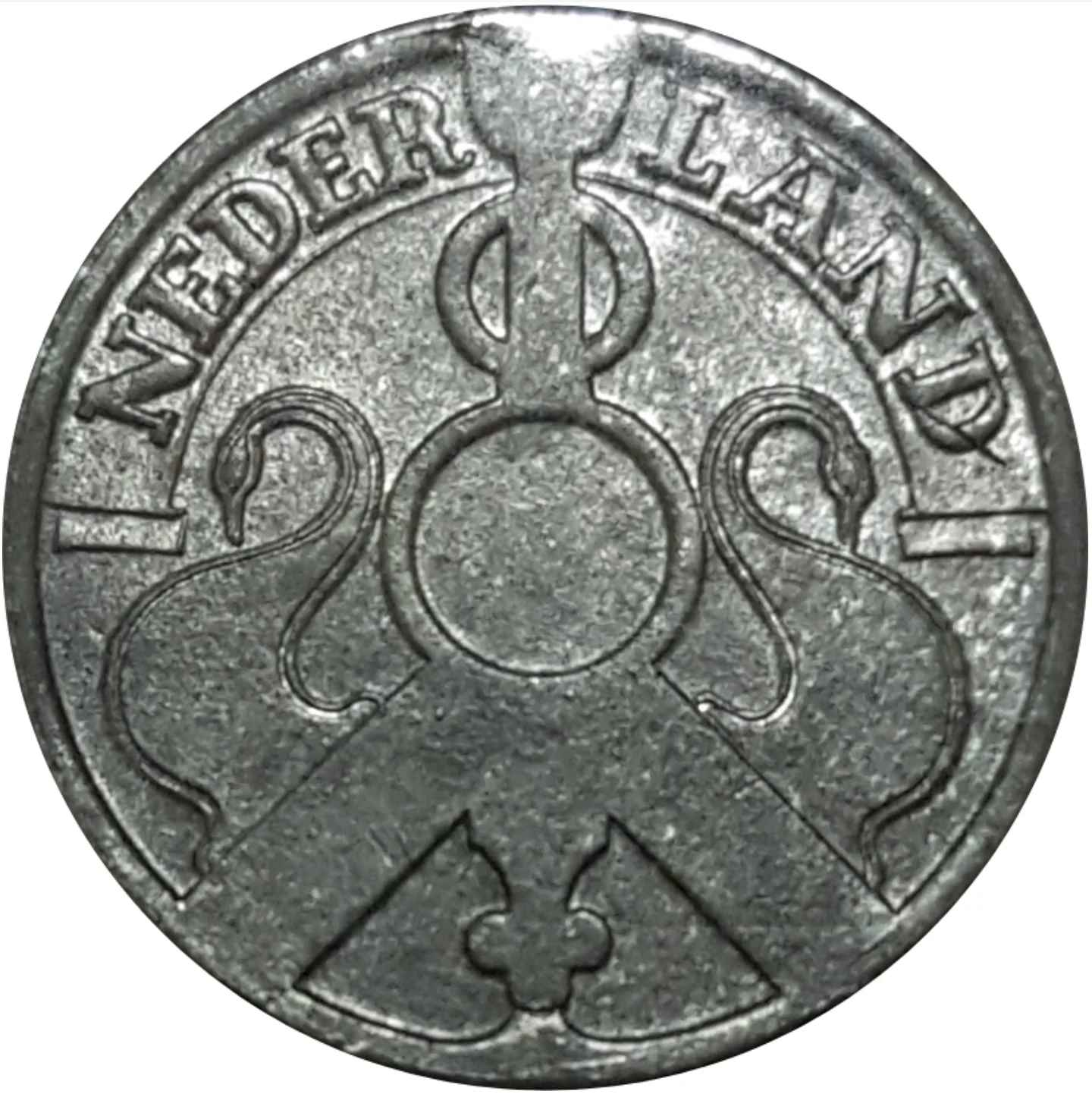
Obverse
Description:
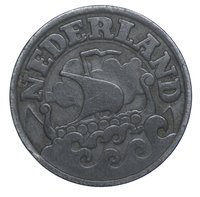
Frisian owl board: a decorated farm roof sign with stylized swans and a fly hole, allowing owls to enter the barn and hunt rodents.
Inscription:
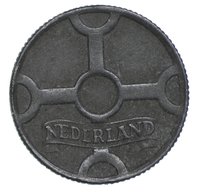
NEDERLAND
Translation:
Netherlands
Script: Latin
Language: Dutch
Designer: Nico de Haas
Reverse
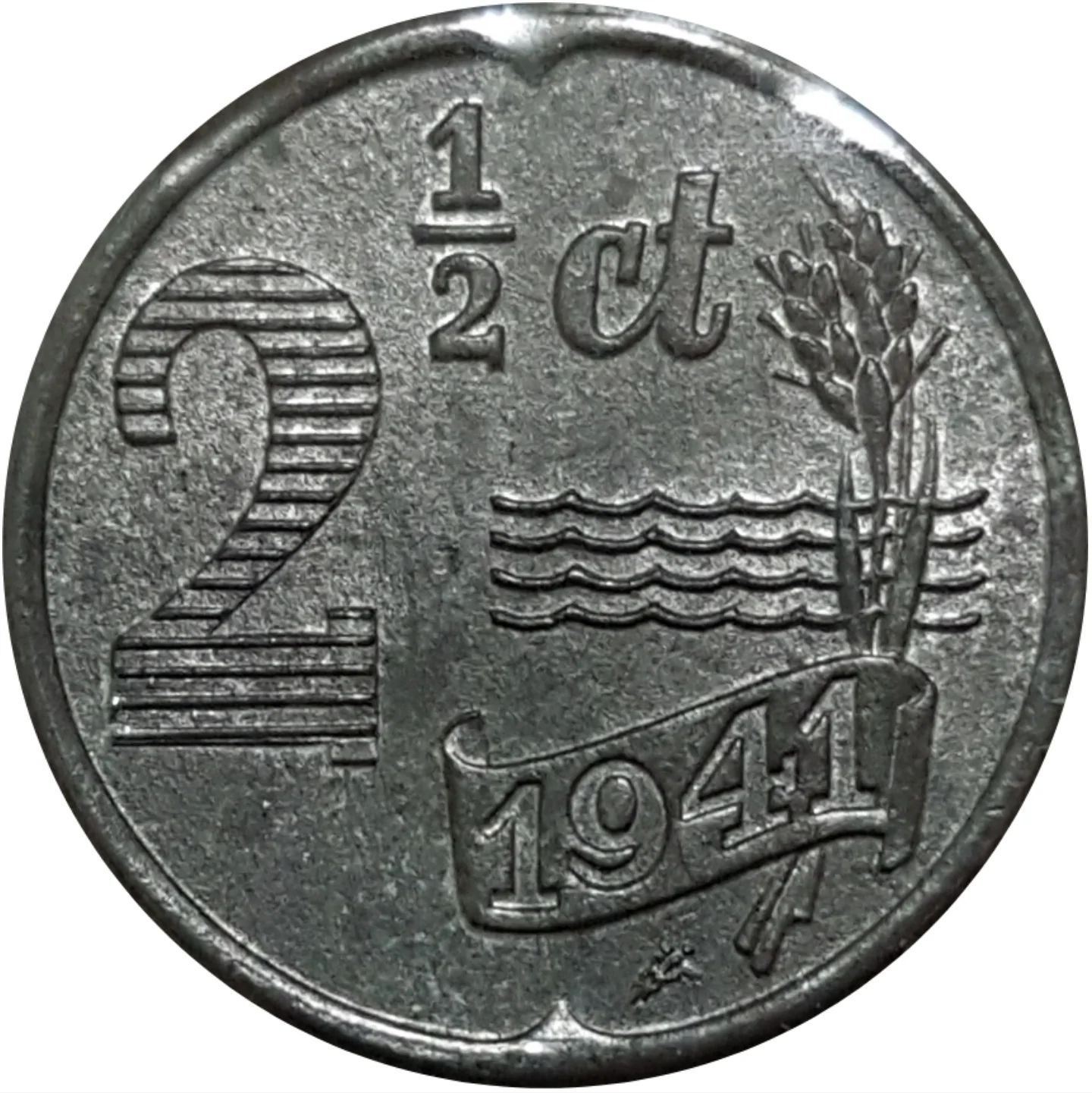
Description:
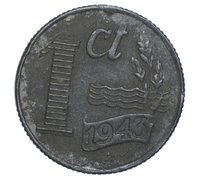
Four waves, corn ear right.
Inscription:
2½ ct
1941
1941
Script: Latin
Designer: Nico de Haas
Edge
Plain
Mints
| Name | Mark |
|---|---|
| Royal Dutch Mint | — |
Mintings
| Year | Mint Mark | Mintage | Quality | Collection |
|---|---|---|---|---|
| 1941 | — | 27,600,000 | ||
| 1942 | — | 200,000 |
Historical background
In 1941, the Netherlands was under the harsh military occupation of Nazi Germany, which had begun in May 1940. The German authorities immediately implemented strict financial controls, pegging the Dutch guilder to the Reichsmark at an artificially favourable rate for the occupiers (1 RM = 1.50 guilders). This forced exchange rate was a primary tool of economic exploitation, systematically draining Dutch resources to fund the German war effort. The Reichskommissariat, the civilian administration under Arthur Seyss-Inquart, compelled the Dutch central bank (De Nederlandsche Bank) to provide "occupation credits," effectively forcing the country to pay for its own subjugation, which led to a significant increase in the money supply.
The currency situation was characterized by growing instability and the emergence of a dual economy. While the official guilder remained in use, rampant wartime shortages and price controls led to a thriving black market. Here, goods could be obtained for vastly inflated prices or through barter, as confidence in the currency's purchasing power eroded. The German authorities also introduced Reichskreditkassenscheine, their own military scrip, which further complicated the monetary landscape. This inflationary pressure, though still partially suppressed by strict rationing, was building toward the hyperinflation that would mark the final "Hunger Winter" of the occupation.
Furthermore, the occupation regime used currency policy as an instrument of persecution. In 1941, anti-Jewish measures intensified, including the forced registration of property and the looting of Jewish-owned assets. A pivotal moment came in January 1942 (shortly after the period in question), with the establishment of the Lippmann, Rosenthal & Co. bank—a Nazi-controlled entity used to confiscate Jewish funds and securities. Thus, the currency situation of 1941 was not merely an economic issue but a key facet of the oppressive occupation, setting the stage for greater economic distress and systematic robbery in the years that followed.
The currency situation was characterized by growing instability and the emergence of a dual economy. While the official guilder remained in use, rampant wartime shortages and price controls led to a thriving black market. Here, goods could be obtained for vastly inflated prices or through barter, as confidence in the currency's purchasing power eroded. The German authorities also introduced Reichskreditkassenscheine, their own military scrip, which further complicated the monetary landscape. This inflationary pressure, though still partially suppressed by strict rationing, was building toward the hyperinflation that would mark the final "Hunger Winter" of the occupation.
Furthermore, the occupation regime used currency policy as an instrument of persecution. In 1941, anti-Jewish measures intensified, including the forced registration of property and the looting of Jewish-owned assets. A pivotal moment came in January 1942 (shortly after the period in question), with the establishment of the Lippmann, Rosenthal & Co. bank—a Nazi-controlled entity used to confiscate Jewish funds and securities. Thus, the currency situation of 1941 was not merely an economic issue but a key facet of the oppressive occupation, setting the stage for greater economic distress and systematic robbery in the years that followed.
🌱 Common