

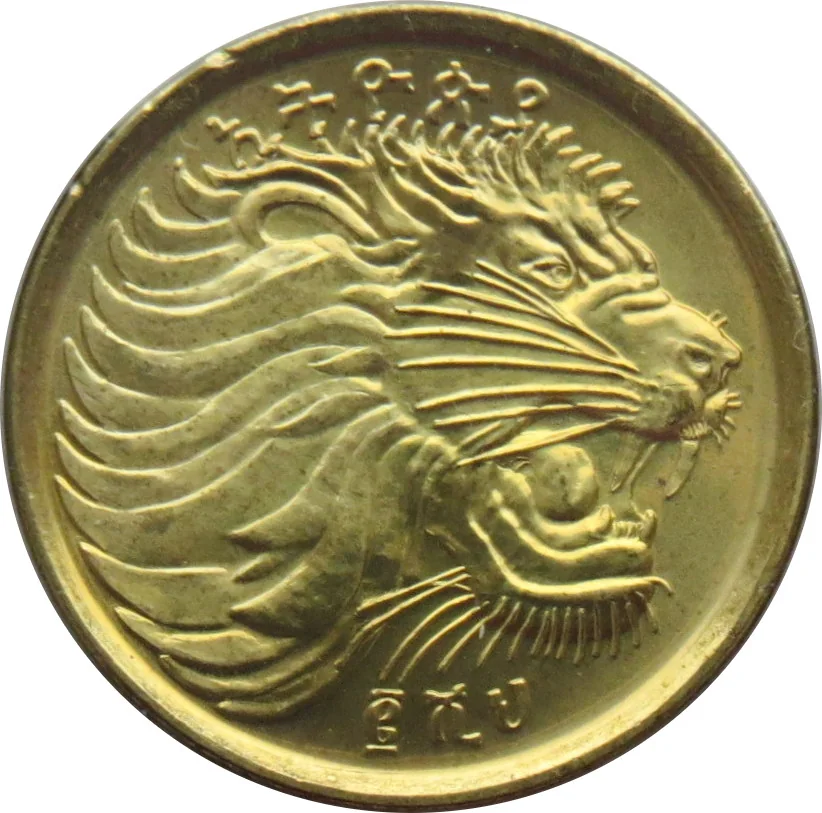

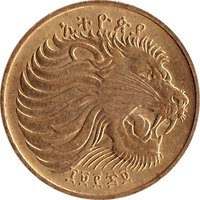
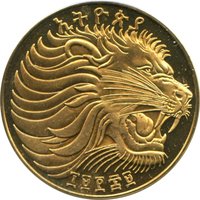
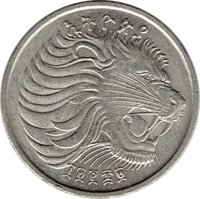
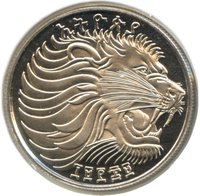
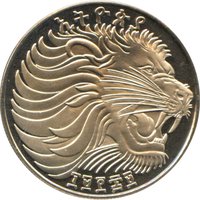
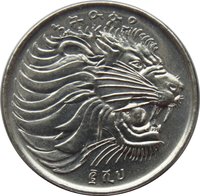
Obverse
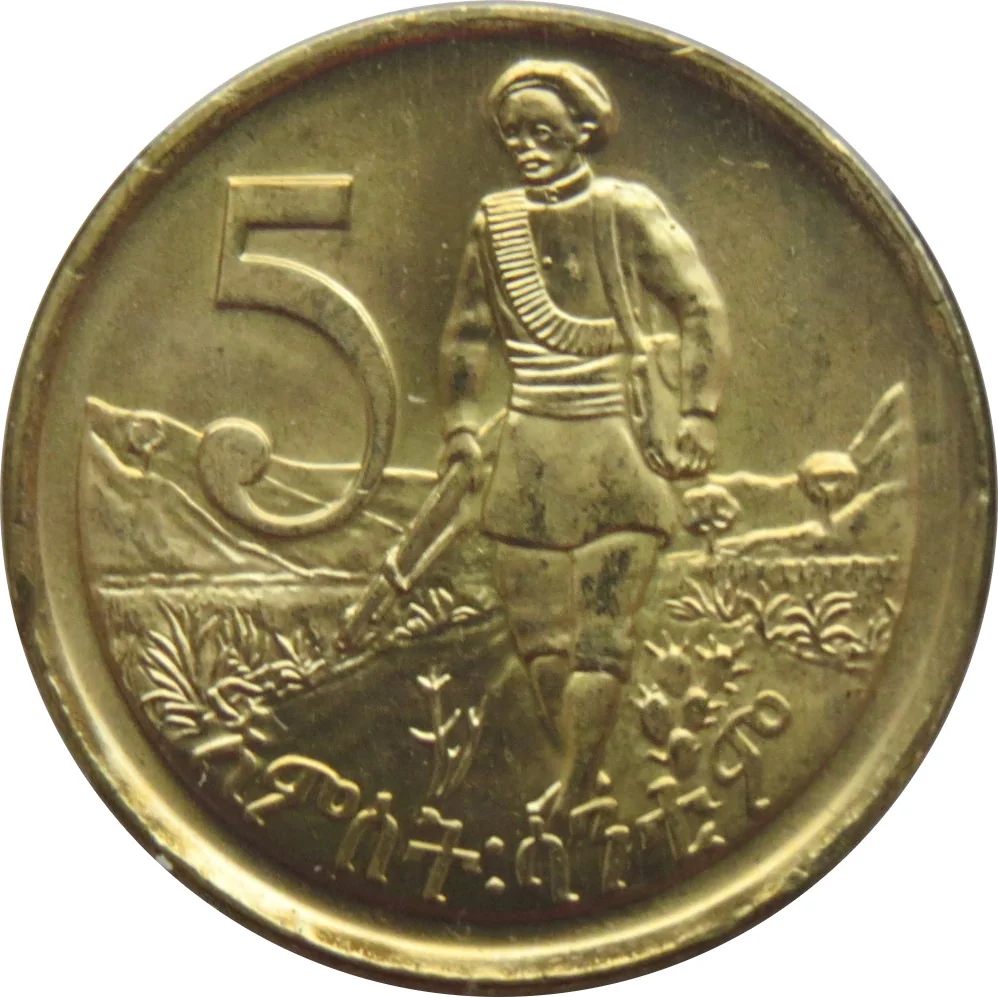
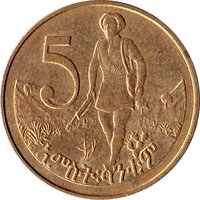
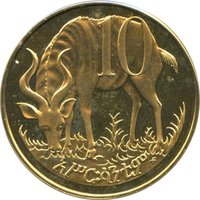
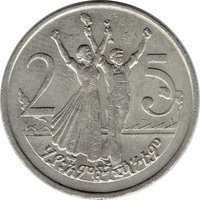
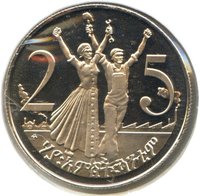
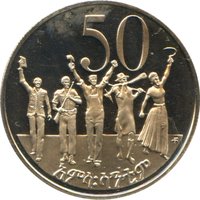
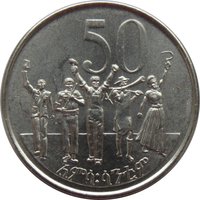
Reverse
Description:
Vagabond Hunter 1
Inscription:
5
አምስት:ሳንቲም
አምስት:ሳንቲም
Translation:
Five: Santim
Script: Ge'ez
Language: Amharic
Engraver: Stuart Devlin
Edge
Plain
Categories
| Agriculture |
| Animal> Feline |
| Object> Firearms |
Mints
| Name | Mark |
|---|---|
| Royal Canadian Mint of Winnipeg | — |
| Royal Mint | — |
| Franklin Mint | FM |
Mintings
| Year | Mint Mark | Mintage | Quality | Collection |
|---|---|---|---|---|
| 1977 | FM | — | ||
| 1977 | — | — | ||
| 1977 | — | 12,000 | Proof | |
| 2004 | — | — | ||
| 2006 | — | — | ||
| 2007 | — | — | ||
| 2008 | — | — | ||
| 2012 | — | — |
Historical background
In 1977, Ethiopia's currency situation was deeply strained by the dual pressures of a socialist economic transformation and a devastating multi-front war. The Derg regime, having overthrown Emperor Haile Selassie in 1974, had nationalized major industries and land, severing traditional economic ties with the West and aligning with the Soviet bloc. This political shift, coupled with the regime's focus on military expenditure, led to severe shortages of foreign exchange and essential imported goods. The currency, the Ethiopian birr, was kept at an artificially high official exchange rate, but a thriving black market for hard currency emerged, where its real value had plummeted, reflecting the growing economic distress.
The primary driver of the crisis was the escalating military conflict. Ethiopia was simultaneously engaged in the Ogaden War against Somalia and intense counter-insurgencies against Eritrean and Tigrayan separatist movements. These conflicts consumed over half of the national budget, diverting resources from production and causing massive inflation. The government resorted to printing money to finance the war effort, which further devalued the birr and eroded purchasing power. This wartime inflation, combined with poor harvests and the disruption of supply chains, pushed the country toward a dire humanitarian crisis.
Internationally, Ethiopia's currency was isolated. Western financial institutions had largely withdrawn support due to the Derg's human rights record and Marxist-Leninist orientation. While the Soviet Union and its allies provided substantial military aid and some economic support, this did not translate into stabilizing the domestic currency or alleviating the foreign exchange shortage. Consequently, by 1977, the Ethiopian birr was a currency under severe stress, its value and stability sacrificed to the immediate imperatives of revolutionary consolidation and military survival, setting the stage for the famine and deeper economic collapse of the early 1980s.
The primary driver of the crisis was the escalating military conflict. Ethiopia was simultaneously engaged in the Ogaden War against Somalia and intense counter-insurgencies against Eritrean and Tigrayan separatist movements. These conflicts consumed over half of the national budget, diverting resources from production and causing massive inflation. The government resorted to printing money to finance the war effort, which further devalued the birr and eroded purchasing power. This wartime inflation, combined with poor harvests and the disruption of supply chains, pushed the country toward a dire humanitarian crisis.
Internationally, Ethiopia's currency was isolated. Western financial institutions had largely withdrawn support due to the Derg's human rights record and Marxist-Leninist orientation. While the Soviet Union and its allies provided substantial military aid and some economic support, this did not translate into stabilizing the domestic currency or alleviating the foreign exchange shortage. Consequently, by 1977, the Ethiopian birr was a currency under severe stress, its value and stability sacrificed to the immediate imperatives of revolutionary consolidation and military survival, setting the stage for the famine and deeper economic collapse of the early 1980s.
Series: 1977 Ethiopia circulation coins
🌱 Very Common