

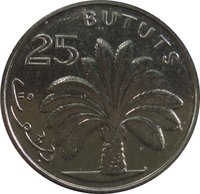
25 Bututs – The Gambia
Gambia
Context
Material
References
Numista: #65227
Value
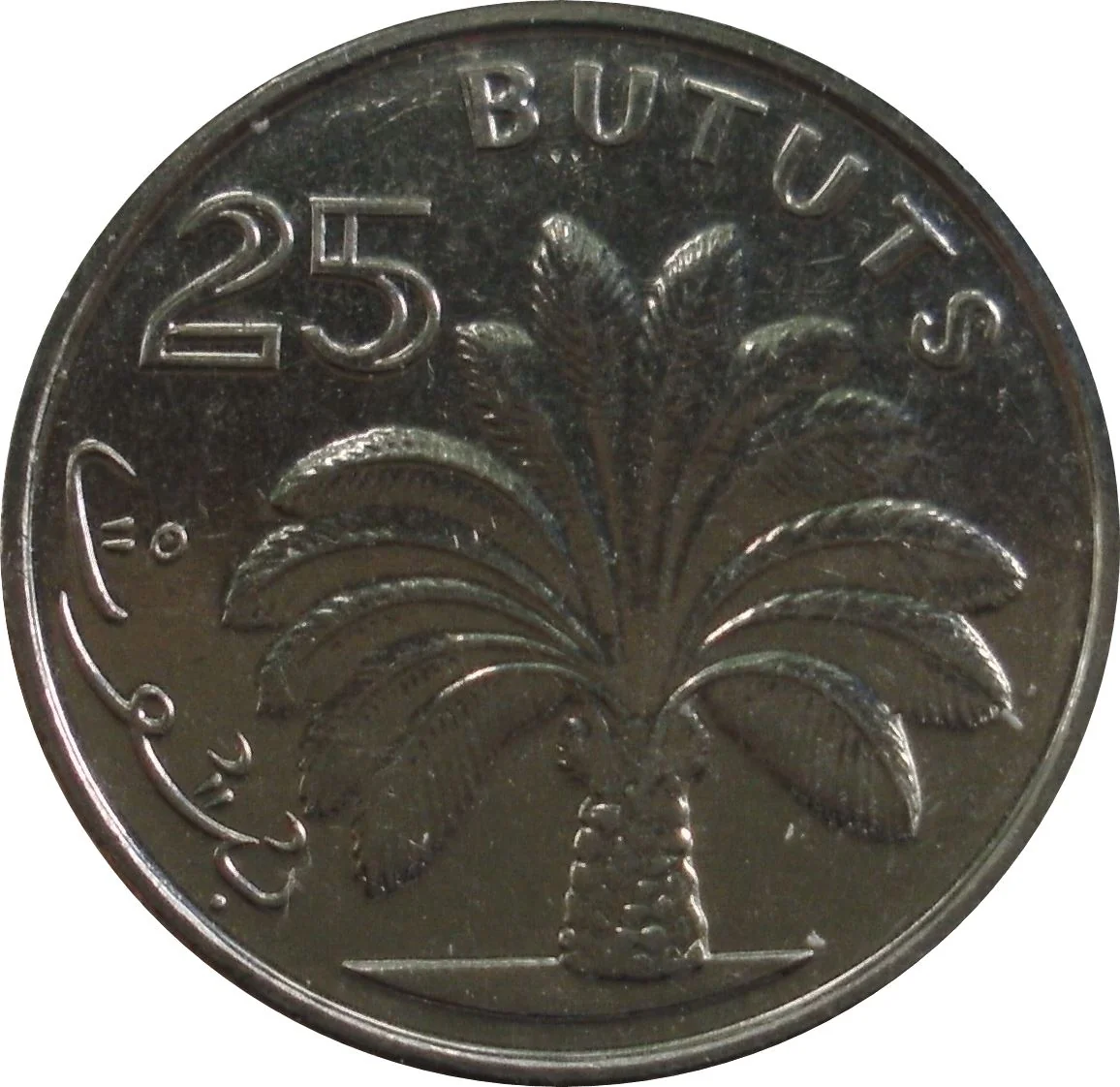
Exchange value: 0.25 GMD
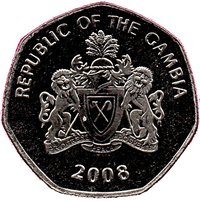
Obverse
Description:
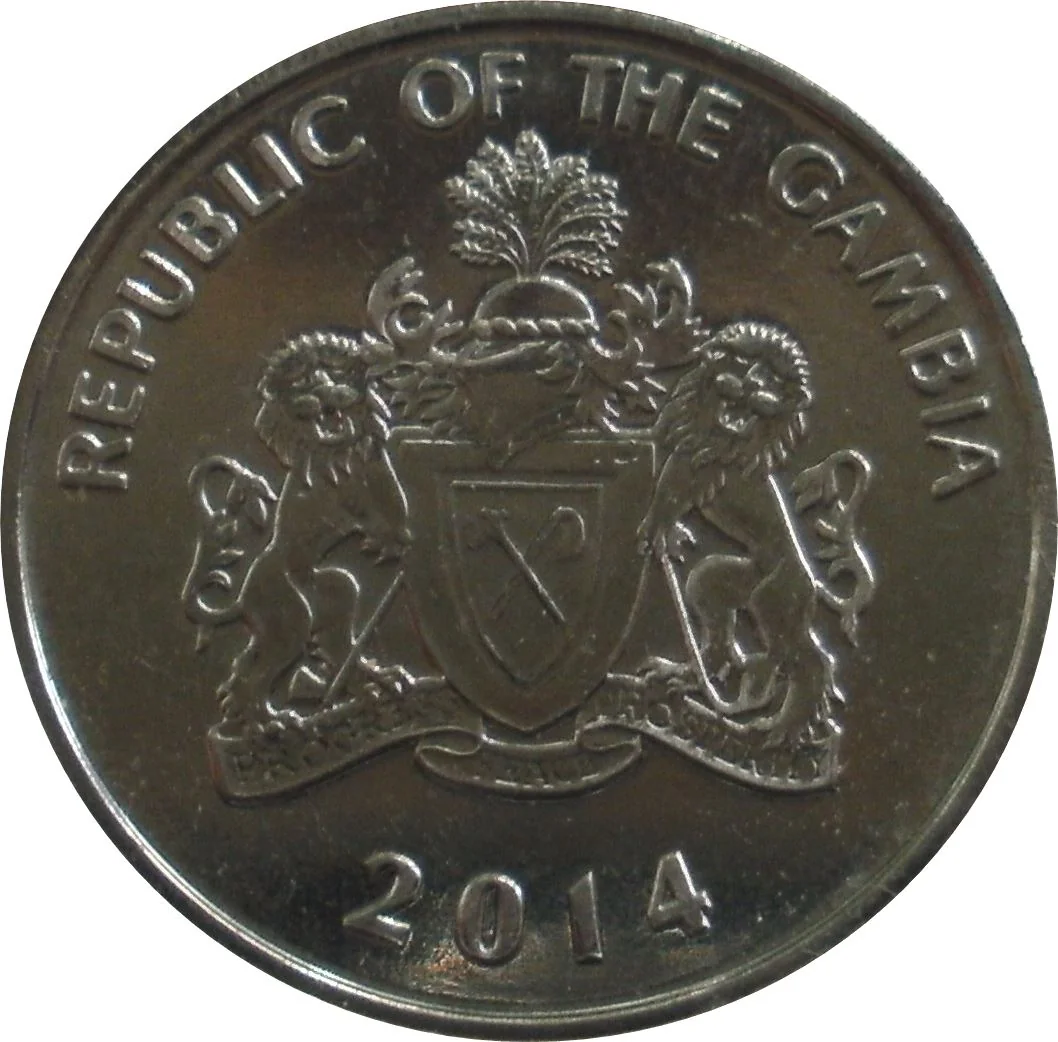
National arms, date beneath.
Inscription:
REPUBLIC OF GAMBIA
PROGRESS PEACE PROSPERITY
2014
PROGRESS PEACE PROSPERITY
2014
Script: Latin
Reverse
Edge
Reeded
Mintings
| Year | Mint Mark | Mintage | Quality | Collection |
|---|---|---|---|---|
| 2014 | — | — |
Historical background
In 2014, The Gambia's currency situation was characterized by significant instability and a growing crisis of confidence in the national currency, the Dalasi (GMD). The economy was under severe strain due to a combination of factors, including a poor agricultural season, a sharp decline in tourism (a key foreign exchange earner), and a withdrawal of budget support from major international donors following concerns over human rights and governance under President Yahya Jammeh's regime. This led to a severe shortage of foreign currency, particularly US dollars and euros, which are crucial for importing essential goods like food, fuel, and medicine.
The foreign exchange shortage triggered a rapid depreciation of the Dalasi on the parallel market. While the official exchange rate was pegged at roughly 40 GMD to 1 USD, the black-market rate soared to between 50 and 55 GMD, reflecting a devaluation of over 25%. This widening gap between official and parallel rates fueled inflation, which was estimated to be in double digits, severely eroding purchasing power and increasing the cost of living for ordinary Gambians. Businesses struggled to access forex for imports, leading to shortages and higher prices for basic commodities.
The government's response was largely ineffective and contributed to the problem. Rather than implementing orthodox economic reforms, the Jammeh administration resorted to imposing strict currency controls, limiting withdrawals, and mandating the use of Dalasi for all domestic transactions. These measures did not address the root causes of the forex shortage and instead further distorted the economy, encouraged hoarding, and undermined formal banking channels. Consequently, by the end of 2014, The Gambia's currency situation was a clear symptom of deeper macroeconomic mismanagement and political isolation, setting the stage for a full-blown economic crisis in the subsequent years.
The foreign exchange shortage triggered a rapid depreciation of the Dalasi on the parallel market. While the official exchange rate was pegged at roughly 40 GMD to 1 USD, the black-market rate soared to between 50 and 55 GMD, reflecting a devaluation of over 25%. This widening gap between official and parallel rates fueled inflation, which was estimated to be in double digits, severely eroding purchasing power and increasing the cost of living for ordinary Gambians. Businesses struggled to access forex for imports, leading to shortages and higher prices for basic commodities.
The government's response was largely ineffective and contributed to the problem. Rather than implementing orthodox economic reforms, the Jammeh administration resorted to imposing strict currency controls, limiting withdrawals, and mandating the use of Dalasi for all domestic transactions. These measures did not address the root causes of the forex shortage and instead further distorted the economy, encouraged hoarding, and undermined formal banking channels. Consequently, by the end of 2014, The Gambia's currency situation was a clear symptom of deeper macroeconomic mismanagement and political isolation, setting the stage for a full-blown economic crisis in the subsequent years.
🌟 Limited