

1 Dalasi – The Gambia
Gambia
Context

Material
Diameter: 28 mm
Weight: 8.67 g
Thickness: 2.2 mm
Shape: Equilateral curve heptagon
Magnetic: Yes
Technique: Milled
Alignment: Medal alignment
flip
References
KM: #Click to copy to clipboard59a
Numista: #19448
Value
Exchange value: 1 GMD
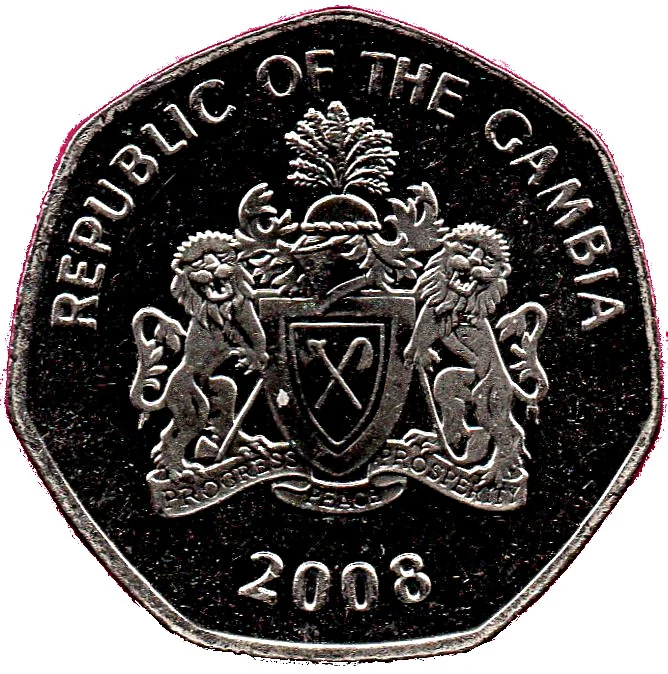
Obverse
Description:
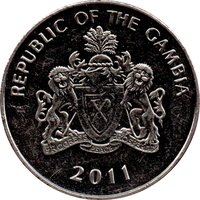
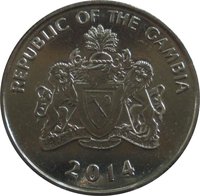
National arms, date beneath.
Inscription:
REPUBLIC OF THE GAMBIA
PROGRESS PEACE PROSPERITY
2008
PROGRESS PEACE PROSPERITY
2008
Script: Latin
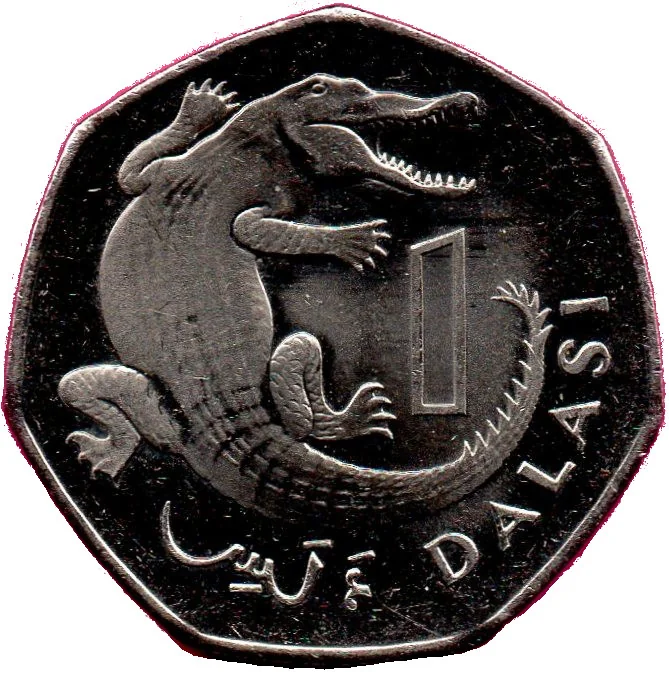
Reverse
Description:
Slender-snouted crocodile, right.
Inscription:
1 DALASI دَ لَسِ
Translation:
One Dalasi
Engraver: Michael Rizzello
Edge
Milled
Categories
| Animal> Reptile |
| Symbols> Coat of Arms |
Mintings
| Year | Mint Mark | Mintage | Quality | Collection |
|---|---|---|---|---|
| 2008 | — | — | ||
| 2011 | — | — | ||
| 2014 | — | — | ||
| 2016 | — | — | ||
| 2021 | — | — |
Historical background
In 2008, The Gambia's currency situation was characterized by significant instability and pressure on the Dalasi (GMD), driven by a combination of domestic economic mismanagement and external shocks. The country was grappling with high inflation, officially reported at around 6% but widely believed to be much higher, which eroded purchasing power and confidence in the local currency. A large fiscal deficit, financed primarily by domestic borrowing from the Central Bank of The Gambia (CBG), led to excessive money supply growth. This, coupled with a widening trade deficit and declining foreign exchange reserves, placed sustained downward pressure on the Dalasi, leading to a substantial gap between the official and parallel market exchange rates.
The situation was exacerbated by poor agricultural output due to erratic rainfall, which increased the need for expensive food imports and further drained foreign currency reserves. Furthermore, the global food and fuel price crisis of 2007-2008 hit the import-dependent Gambian economy hard, increasing the cost of essential goods and worsening the balance of payments position. Despite efforts by the CBG to tighten monetary policy and intervene in the foreign exchange market, confidence remained low. The parallel market for foreign currency thrived as businesses and individuals sought hard currency, primarily euros and US dollars, to facilitate trade and as a store of value, further depreciating the Dalasi's unofficial value.
Consequently, 2008 represented a period of acute currency weakness that undermined economic stability. The depreciating Dalasi increased the cost of servicing the country's external debt and made imports prohibitively expensive, contributing to a high cost of living. This precarious environment highlighted structural issues within the economy, including over-reliance on imports, remittances, and tourism, and set the stage for subsequent engagements with international financial institutions like the IMF to seek support for stabilization programs aimed at restoring macroeconomic balance and currency stability.
The situation was exacerbated by poor agricultural output due to erratic rainfall, which increased the need for expensive food imports and further drained foreign currency reserves. Furthermore, the global food and fuel price crisis of 2007-2008 hit the import-dependent Gambian economy hard, increasing the cost of essential goods and worsening the balance of payments position. Despite efforts by the CBG to tighten monetary policy and intervene in the foreign exchange market, confidence remained low. The parallel market for foreign currency thrived as businesses and individuals sought hard currency, primarily euros and US dollars, to facilitate trade and as a store of value, further depreciating the Dalasi's unofficial value.
Consequently, 2008 represented a period of acute currency weakness that undermined economic stability. The depreciating Dalasi increased the cost of servicing the country's external debt and made imports prohibitively expensive, contributing to a high cost of living. This precarious environment highlighted structural issues within the economy, including over-reliance on imports, remittances, and tourism, and set the stage for subsequent engagements with international financial institutions like the IMF to seek support for stabilization programs aimed at restoring macroeconomic balance and currency stability.
🌱 Common