

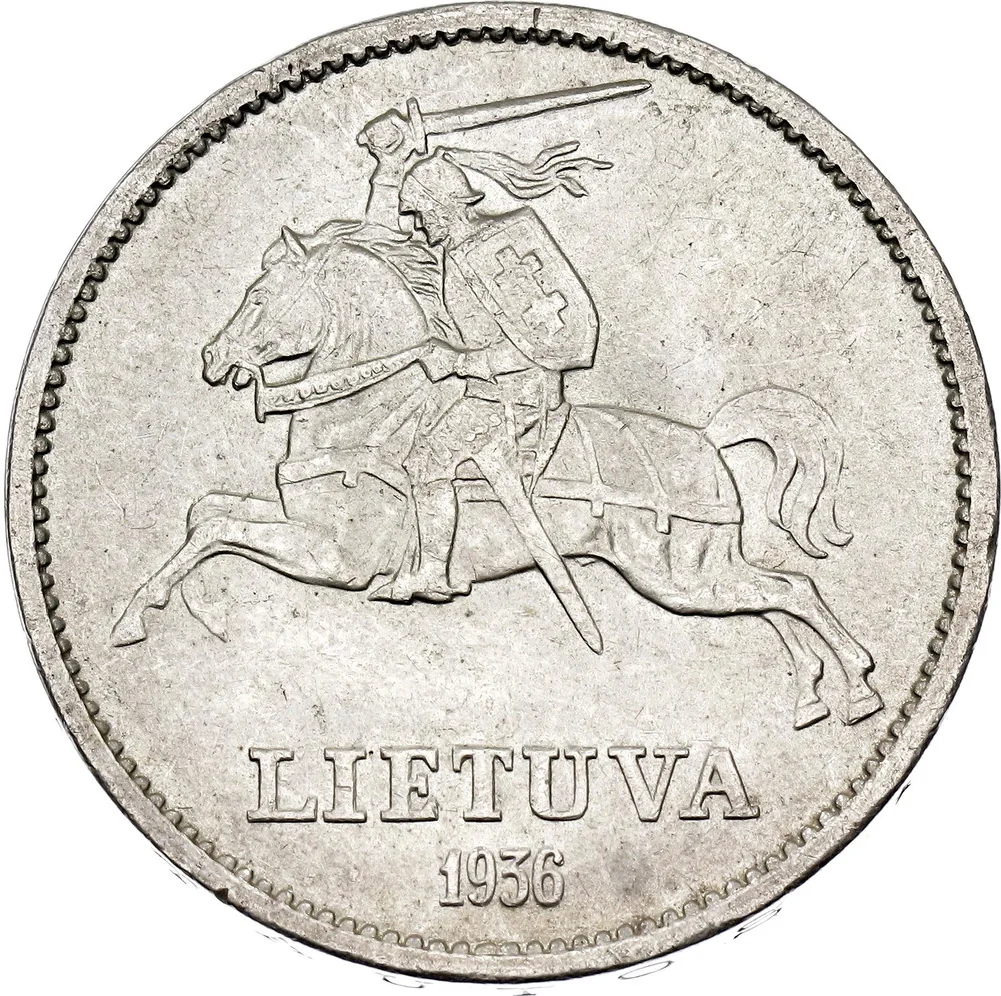
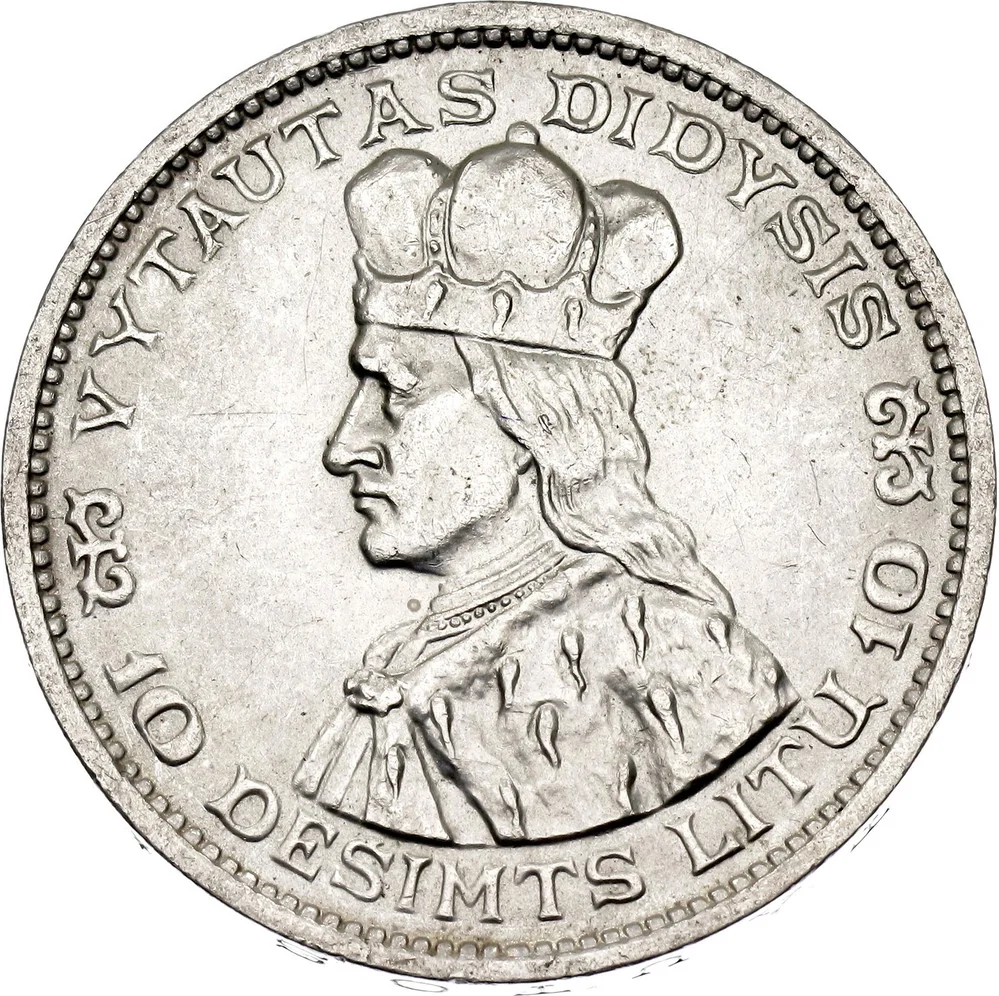
Obverse
Description:
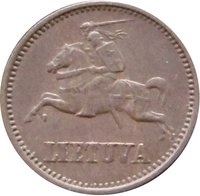
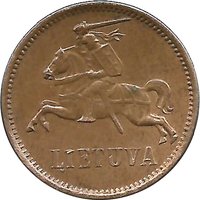
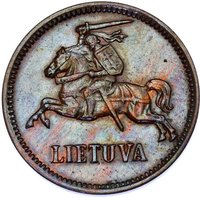
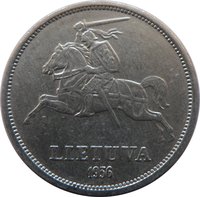
National arms of Lithuania above the country name and date.
Inscription:
LIETUVA
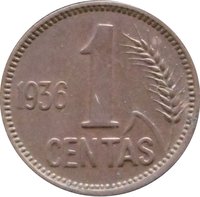
1936
1936
Translation:
LITHUANIA
1936
1936
Script: Latin
Language: Lithuanian
Reverse
Description:
Vytautas the Great crowned, facing left.
Inscription:
VYTAUTAS DIDYSIS
10 DEŠIMTS LITŲ 10
10 DEŠIMTS LITŲ 10
Translation:
VYTAUTAS THE GREAT
10 TEN LITAS 10
10 TEN LITAS 10
Script: Latin
Language: Lithuanian
Edge
Plain with incuse lettering
Legend:
TAUTOS JĖGA VIENYBĖJE
Translation:
The strength of the nation is in unity.
Language: Lithuanian
Mints
| Name | Mark |
|---|---|
| Kaunas | — |
Mintings
| Year | Mint Mark | Mintage | Quality | Collection |
|---|---|---|---|---|
| 1936 | — | 720,000 |
Historical background
In 1936, Lithuania operated under a managed currency system centered on the litas, which had been introduced in 1922 to replace the ostmark and ostruble. The currency was backed by a gold reserve, adhering to a gold standard established by the Bank of Lithuania (Lietuvos Bankas). This system provided a period of notable stability and confidence, with the litas being pegged to the US dollar at a fixed rate of 10 litas to 1 dollar since 1924. This peg, managed through careful foreign reserve holdings, facilitated international trade and helped control inflation during a turbulent interwar period.
However, the stability of the litas was increasingly under pressure by the mid-1930s. The global Great Depression had severely impacted Lithuania's agricultural export economy, reducing foreign currency earnings needed to maintain the gold reserve. Furthermore, the rise of autarkic economic policies in neighboring Nazi Germany, a major trade partner, disrupted traditional market flows. While the peg officially held, the Bank of Lithuania had to employ strict currency controls and deflationary policies to defend it, which contributed to domestic economic hardship.
Politically, the currency's situation was intertwined with national sovereignty. The government, led by President Antanas Smetona, viewed a strong and independent litas as a symbol of statehood, especially amid growing territorial threats from both Germany and Poland. Consequently, maintaining the gold standard became a point of national prestige. This rigid commitment, however, left the economy less flexible to respond to external shocks, setting the stage for the severe monetary crisis that would unfold in 1938-1939, ultimately leading to the devaluation of the litas just before the country's loss of independence in 1940.
However, the stability of the litas was increasingly under pressure by the mid-1930s. The global Great Depression had severely impacted Lithuania's agricultural export economy, reducing foreign currency earnings needed to maintain the gold reserve. Furthermore, the rise of autarkic economic policies in neighboring Nazi Germany, a major trade partner, disrupted traditional market flows. While the peg officially held, the Bank of Lithuania had to employ strict currency controls and deflationary policies to defend it, which contributed to domestic economic hardship.
Politically, the currency's situation was intertwined with national sovereignty. The government, led by President Antanas Smetona, viewed a strong and independent litas as a symbol of statehood, especially amid growing territorial threats from both Germany and Poland. Consequently, maintaining the gold standard became a point of national prestige. This rigid commitment, however, left the economy less flexible to respond to external shocks, setting the stage for the severe monetary crisis that would unfold in 1938-1939, ultimately leading to the devaluation of the litas just before the country's loss of independence in 1940.
Series: 1936 Lithuania circulation coins
🌱 Common