

2 lati (Declaration of Independence) – Latvia
Add to wishlist
Circulating commemorative coins
Commemoration: 75th Anniversary of the Declaration of Independence
Latvia
Context
Material
Diameter: 24.35 mm
Weight: 6 g
Shape: Round
Composition: Copper-nickel
Technique: Milled
Alignment: Medal alignment
flip
References
KM: #
Numista: #6471
Value
Exchange value: 2 LVL
Inflation-adjusted value: 26.49 LVL
Obverse
Description:
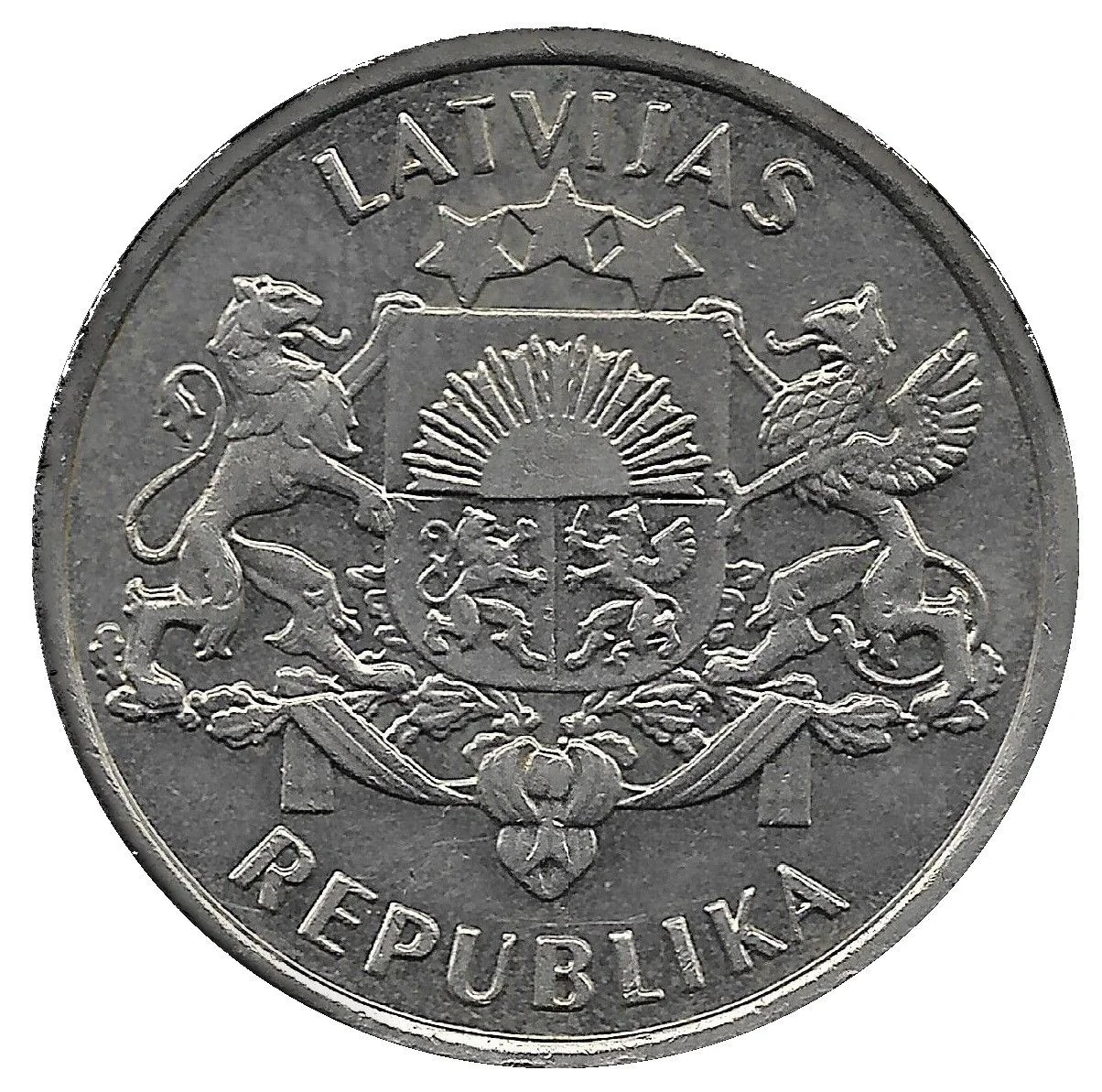
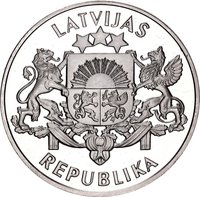
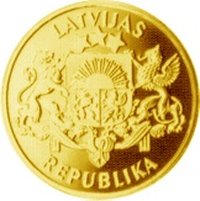
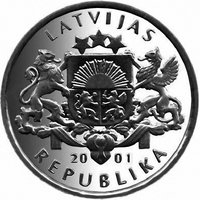
The Latvian national coat of arms is centered, with "LATVIJAS" arched above and "REPUBLIKA" arched below.
Inscription:
LATVIJAS
REPUBLIKA
REPUBLIKA
Translation:
REPUBLIC OF LATVIA
Script: Latin
Language: Latvian
Engraver: Edgars Grīnfelds
Designer: Aivars Krūklis
Reverse
Description:
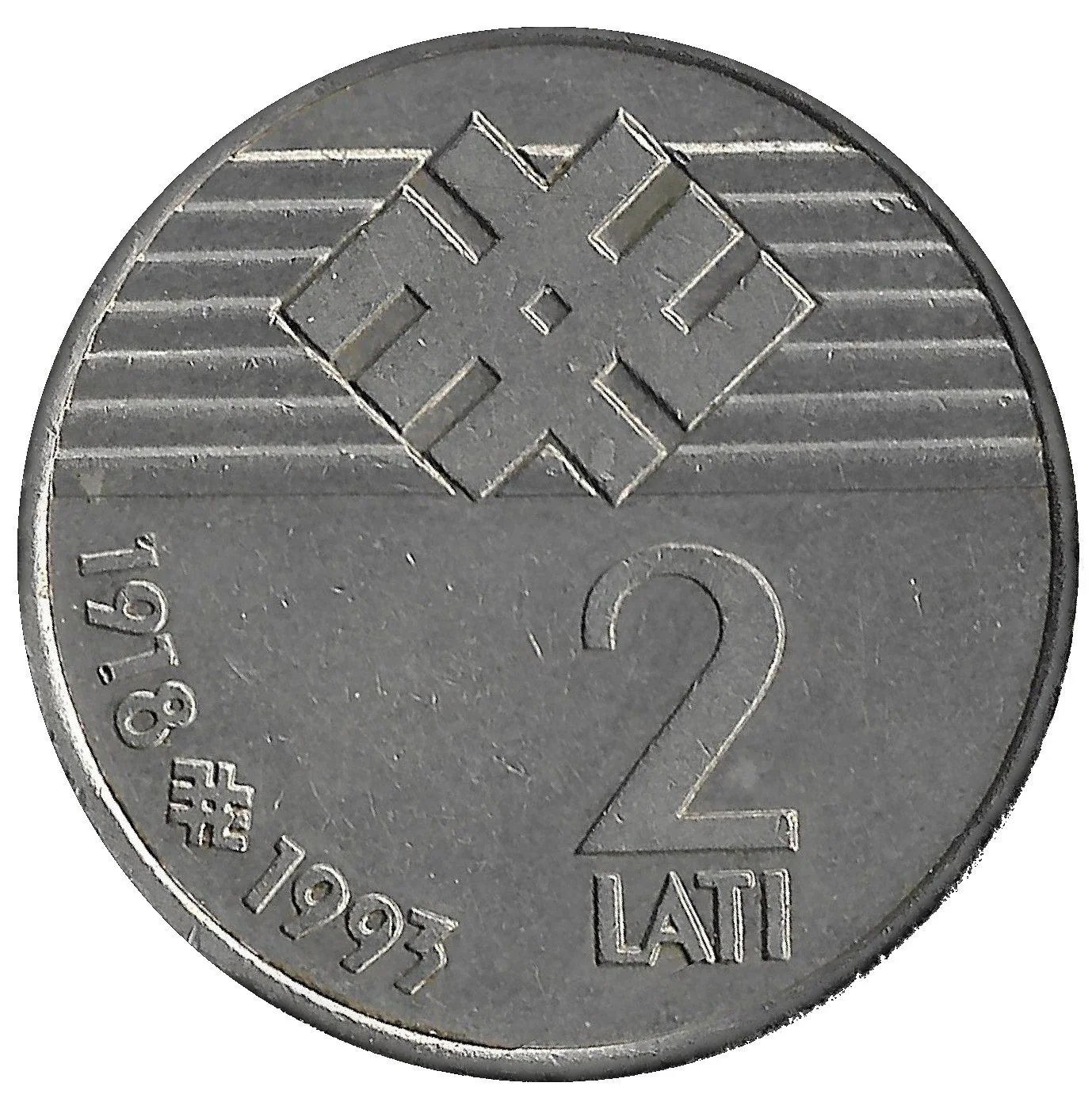
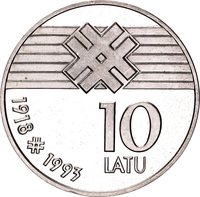
The reverse is horizontally divided: the upper part centers an ethnographic motif over seven lines, while the lower part features the numeral 2 with "LATI" on the right and the years 1918 and 1993 along the left edge.
Inscription:
1918 # 1993
2 LATI
2 LATI
Script: Latin
Engraver: Edgars Grīnfelds
Designer: Aivars Krūklis
Edge
Plain with incuse text
Legend:
LATVIJAS VALSTS 75 GADI ◊ LATVIJAS VALSTS 75 GADI ◊
Translation:
75 Years of the Latvian State ◊ 75 Years of the Latvian State ◊
Language: Latvian
Mints
| Name | Mark |
|---|---|
| Mint of Finland | — |
Mintings
| Year | Mint Mark | Mintage | Quality | Collection |
|---|---|---|---|---|
| 1993 | — | 4,000,000 | ||
| 1993 | — | 200,000 | Proof |
Historical background
In 1993, Latvia was navigating the complex aftermath of the Soviet Union's collapse, grappling with a critical currency situation. The country was still using the interim Latvian ruble (LVR), introduced in 1992 to replace the Soviet ruble, but it was not a stable national currency. Hyperinflation, inherited from the crumbling Soviet monetary system, was rampant, eroding savings and destabilizing the economy. This period was marked by a dual-currency reality, with both the Latvian ruble and foreign currencies like the US dollar and German mark circulating, while the government worked urgently to establish monetary sovereignty and curb the economic crisis.
The cornerstone solution was the introduction of the Latvian lats (LVL) in 1993, a process executed with remarkable discipline. On March 5th, a temporary currency, the "reform lat," was released to circulate alongside the Latvian ruble at a 1:1 ratio, preparing the public for the change. Then, on June 28th, the permanent lats was introduced, replacing the Latvian ruble at a firm rate of 1 lats to 200 rubles. This reform was not merely a symbolic change; it was a strict, currency board-based monetary policy that tied the lats first to the IMF's Special Drawing Rights (SDR) and later to a basket of major currencies, ensuring full convertibility and absolute restraint on money printing.
The successful 1993 currency reform was a foundational milestone for Latvia's independence and economic future. By decisively ending the hyperinflation of the ruble period, the lats restored public confidence in the national financial system and provided the stability necessary for market reforms. This rigorous approach laid the groundwork for Latvia's subsequent economic growth, eventual accession to the European Union in 2004, and the final adoption of the euro in 2014, with the lats remembered as a powerful symbol of recovered sovereignty and fiscal responsibility.
The cornerstone solution was the introduction of the Latvian lats (LVL) in 1993, a process executed with remarkable discipline. On March 5th, a temporary currency, the "reform lat," was released to circulate alongside the Latvian ruble at a 1:1 ratio, preparing the public for the change. Then, on June 28th, the permanent lats was introduced, replacing the Latvian ruble at a firm rate of 1 lats to 200 rubles. This reform was not merely a symbolic change; it was a strict, currency board-based monetary policy that tied the lats first to the IMF's Special Drawing Rights (SDR) and later to a basket of major currencies, ensuring full convertibility and absolute restraint on money printing.
The successful 1993 currency reform was a foundational milestone for Latvia's independence and economic future. By decisively ending the hyperinflation of the ruble period, the lats restored public confidence in the national financial system and provided the stability necessary for market reforms. This rigorous approach laid the groundwork for Latvia's subsequent economic growth, eventual accession to the European Union in 2004, and the final adoption of the euro in 2014, with the lats remembered as a powerful symbol of recovered sovereignty and fiscal responsibility.
🌱 Fairly Common