

5 Dollars – Hong Kong
China
Context
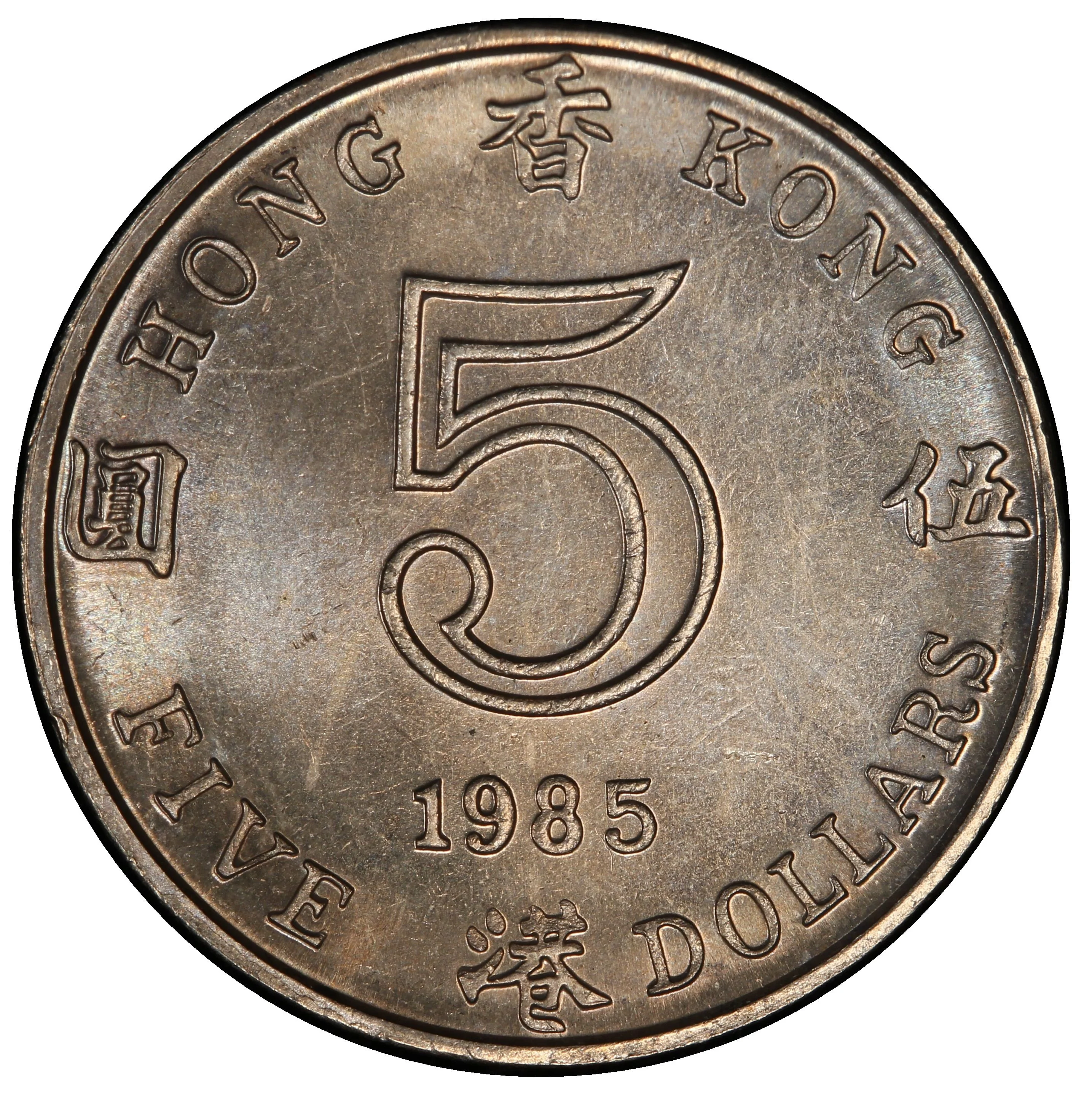
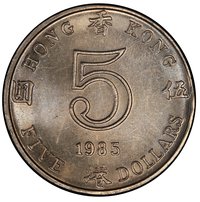
Years: 1985–1989
Country: China 
Issuer: Hong Kong 
Ruler: Elizabeth II
Currency:
(since 1863)
Total mintage: 67,025,000
Material
References
KM: #Click to copy to clipboard56
Numista: #6421
Value
Exchange value: 5 HKD = $0.64
Obverse
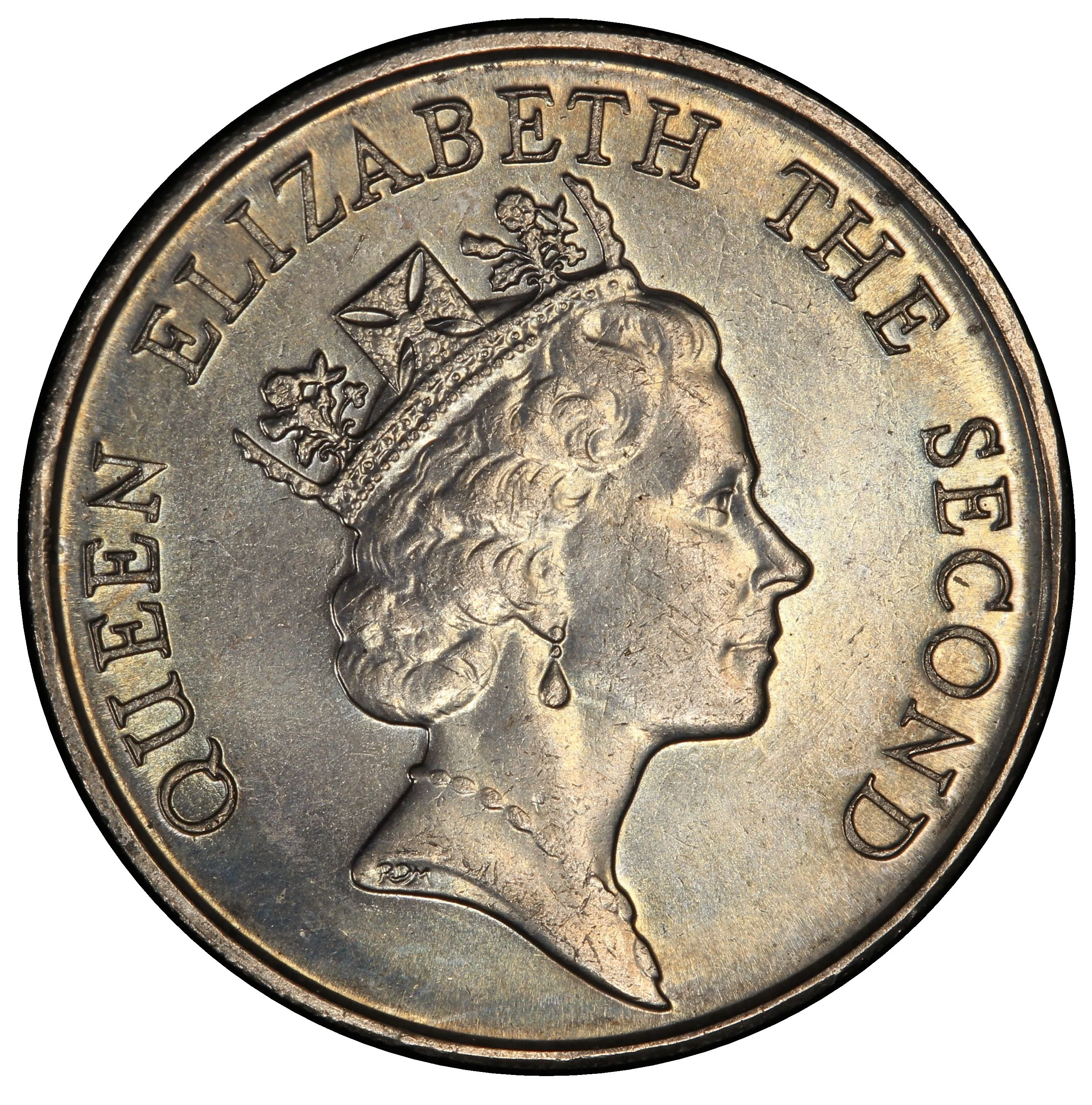
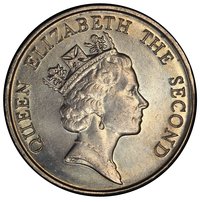
Description:
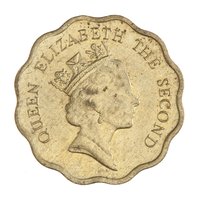
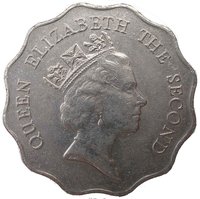
Right-facing crowned bust.
Inscription:
QUEEN ELIZABETH THE SECOND
Script: Latin
Engraver: Raphael David Maklouf
Reverse
Mints
| Name | Mark |
|---|---|
| Royal Mint | — |
Mintings
| Year | Mint Mark | Mintage | Quality | Collection |
|---|---|---|---|---|
| 1985 | — | 6,000,000 | ||
| 1986 | — | 8,000,000 | ||
| 1987 | — | — | ||
| 1988 | — | 25,000 | Proof | |
| 1988 | — | 16,000,000 | ||
| 1989 | — | 37,000,000 |
Historical background
In 1985, Hong Kong operated under a unique and highly stable currency system known as the Linked Exchange Rate System (LERS), which had been established just two years prior in October 1983. This system was a direct response to a crisis of confidence during the Sino-British negotiations over Hong Kong's future, which triggered a severe depreciation of the Hong Kong dollar. The LERS pegged the local currency at a fixed rate of HK$7.80 to one US dollar, requiring the Hong Kong Monetary Authority (its functions then performed by the government and note-issuing banks) to fully back all Hong Kong dollar banknotes in circulation with US dollar reserves, ensuring strict convertibility.
The primary objective of this arrangement was to eliminate exchange rate volatility and restore monetary stability, which was deemed essential for Hong Kong's status as an international trade and finance hub. By 1985, the peg was widely seen as a success, having swiftly ended the currency crisis and provided a predictable environment for business and investment. This stability was particularly crucial as the territory looked toward its impending handover to China in 1997, assuring markets that its financial system would remain robust and insulated from potential political uncertainties.
Consequently, the currency situation in 1985 was one of entrenched stability under a new, rules-based regime. The economy was adapting to the discipline of the peg, which meant Hong Kong’s interest rates largely had to follow those of the United States to maintain the fixed exchange rate, surrendering independent monetary policy. This framework firmly anchored Hong Kong’s financial system to the US dollar, a position that would define its economic policy for decades to come and provide a foundation for its continued prosperity through the transition.
The primary objective of this arrangement was to eliminate exchange rate volatility and restore monetary stability, which was deemed essential for Hong Kong's status as an international trade and finance hub. By 1985, the peg was widely seen as a success, having swiftly ended the currency crisis and provided a predictable environment for business and investment. This stability was particularly crucial as the territory looked toward its impending handover to China in 1997, assuring markets that its financial system would remain robust and insulated from potential political uncertainties.
Consequently, the currency situation in 1985 was one of entrenched stability under a new, rules-based regime. The economy was adapting to the discipline of the peg, which meant Hong Kong’s interest rates largely had to follow those of the United States to maintain the fixed exchange rate, surrendering independent monetary policy. This framework firmly anchored Hong Kong’s financial system to the US dollar, a position that would define its economic policy for decades to come and provide a foundation for its continued prosperity through the transition.
Series: 1985 Hong Kong circulation coins
🌱 Very Common