

1 Skilling – Sweden
Sweden
Context
Years: 1812–1817
Issuer: Sweden 
Ruler: Charles XIII
Currency:
(1798—1830)
Demonetized: Yes
Total mintage: 1,161,600
Material
References
KM: #Click to copy to clipboard585
Numista: #64145
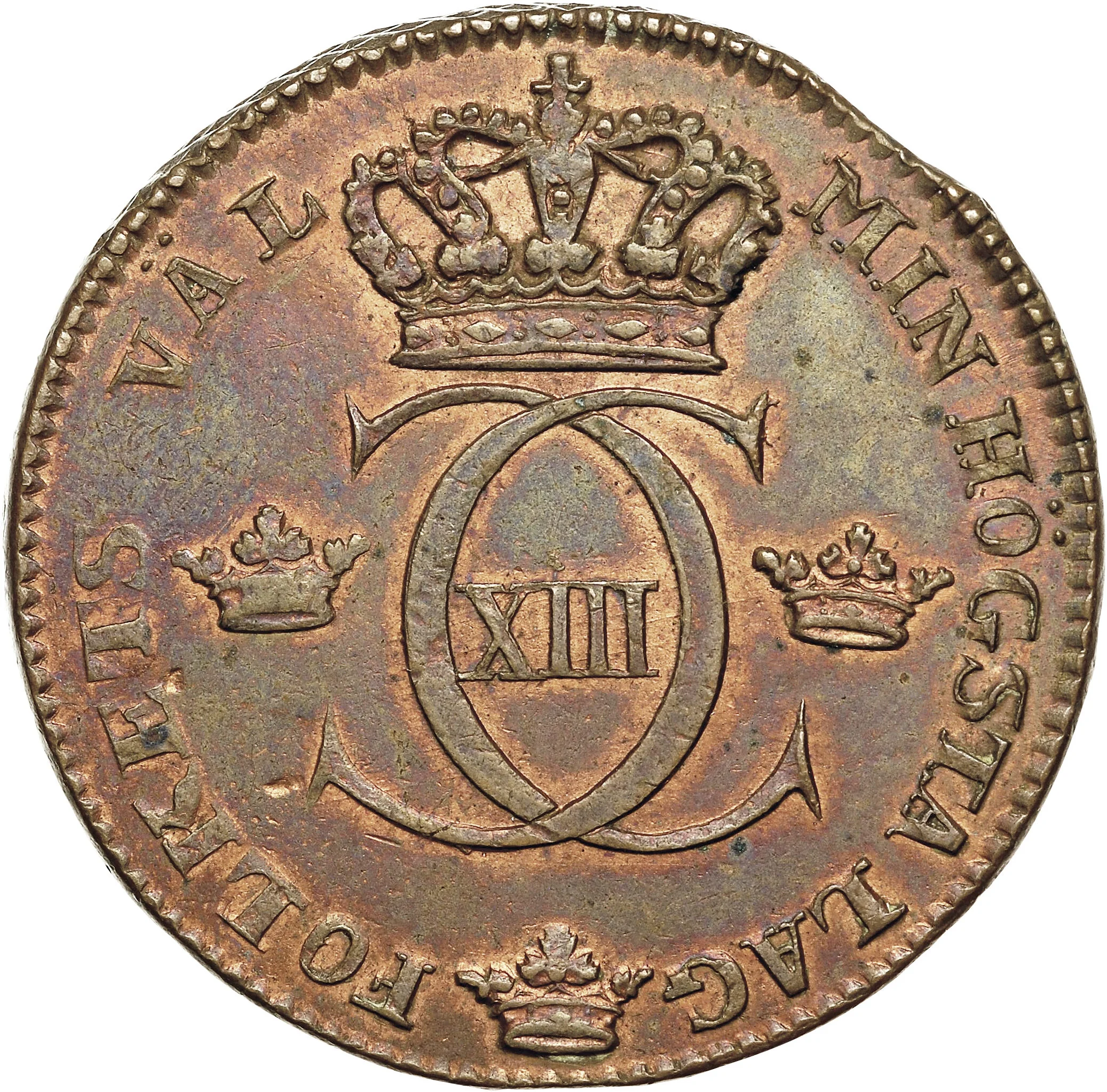
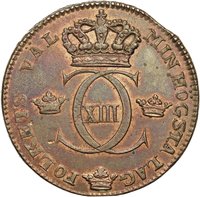
Obverse
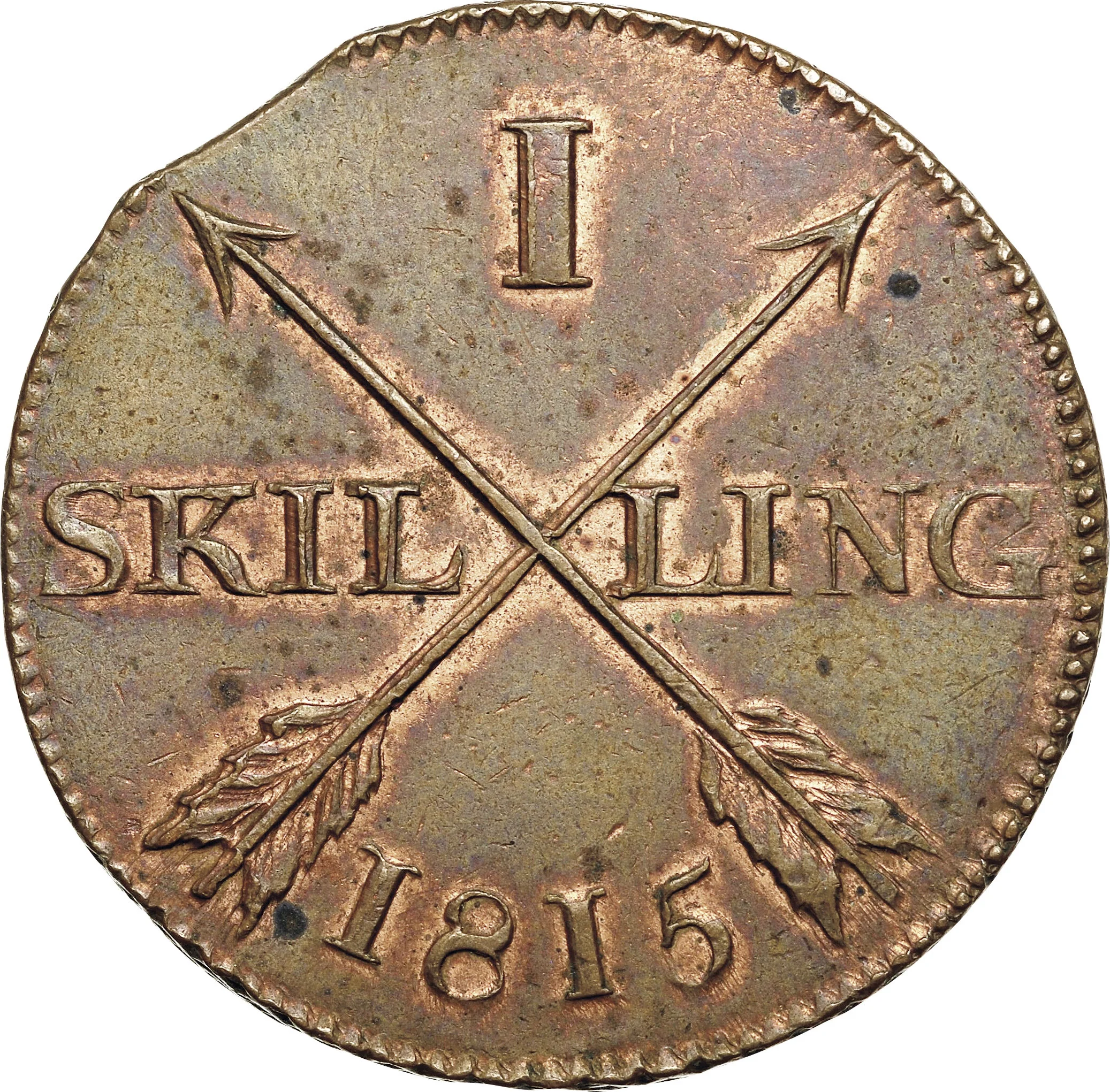
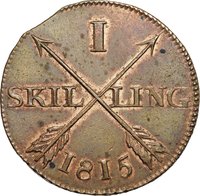
Reverse
Edge
Reeded
Mintings
| Year | Mint Mark | Mintage | Quality | Collection |
|---|---|---|---|---|
| 1812 | — | — | ||
| 1814 | — | 729,600 | ||
| 1815 | — | — | ||
| 1816 | — | 230,400 | ||
| 1817 | — | 201,600 |
Historical background
In 1812, Sweden found itself in a complex monetary crisis, a direct consequence of the Napoleonic Wars and its own geopolitical maneuvering. The nation was grappling with a dual-currency system of both silver riksdaler and paper riksdaler riksgälds, the latter issued by the National Debt Office (Riksgäldskontoret) to finance the war against Russia in 1808-1809. This paper money, not backed by sufficient silver reserves, had depreciated dramatically, losing about two-thirds of its value against the silver coin. The resulting inflation caused severe economic hardship and a profound loss of public confidence in the currency, threatening the state's financial stability.
The situation was further complicated by Sweden's recent territorial losses. The 1809 Treaty of Fredrikshamn, which ended the war with Russia, forced Sweden to cede Finland. This severed important economic links and tax revenues, exacerbating the fiscal strain. Furthermore, the new political landscape—with the French Marshal Jean-Baptiste Bernadotte installed as Crown Prince Karl Johan—pushed Sweden into the Continental System against Britain, disrupting trade and creating shortages. The state's finances were in disarray, with a heavy debt burden and a circulating medium whose value was unstable and unreliable.
In response, the government enacted the Myntrealisationen (Currency Realization) of 1812, a decisive but harsh reform. This law aimed to restore confidence by formally devaluing the paper riksdaler and tying it to a new silver standard at a fixed, lower rate. While effectively a state bankruptcy that wiped out a significant portion of public and private debt held in paper money, it was a necessary step to halt hyperinflation and create a foundation for future stability. This painful reset, combined with the eventual peace dividends after Napoleon's defeat, allowed Sweden to begin a slow recovery, setting the stage for the more stable monetary system that would follow later in the century.
The situation was further complicated by Sweden's recent territorial losses. The 1809 Treaty of Fredrikshamn, which ended the war with Russia, forced Sweden to cede Finland. This severed important economic links and tax revenues, exacerbating the fiscal strain. Furthermore, the new political landscape—with the French Marshal Jean-Baptiste Bernadotte installed as Crown Prince Karl Johan—pushed Sweden into the Continental System against Britain, disrupting trade and creating shortages. The state's finances were in disarray, with a heavy debt burden and a circulating medium whose value was unstable and unreliable.
In response, the government enacted the Myntrealisationen (Currency Realization) of 1812, a decisive but harsh reform. This law aimed to restore confidence by formally devaluing the paper riksdaler and tying it to a new silver standard at a fixed, lower rate. While effectively a state bankruptcy that wiped out a significant portion of public and private debt held in paper money, it was a necessary step to halt hyperinflation and create a foundation for future stability. This painful reset, combined with the eventual peace dividends after Napoleon's defeat, allowed Sweden to begin a slow recovery, setting the stage for the more stable monetary system that would follow later in the century.
⭐ Rare