

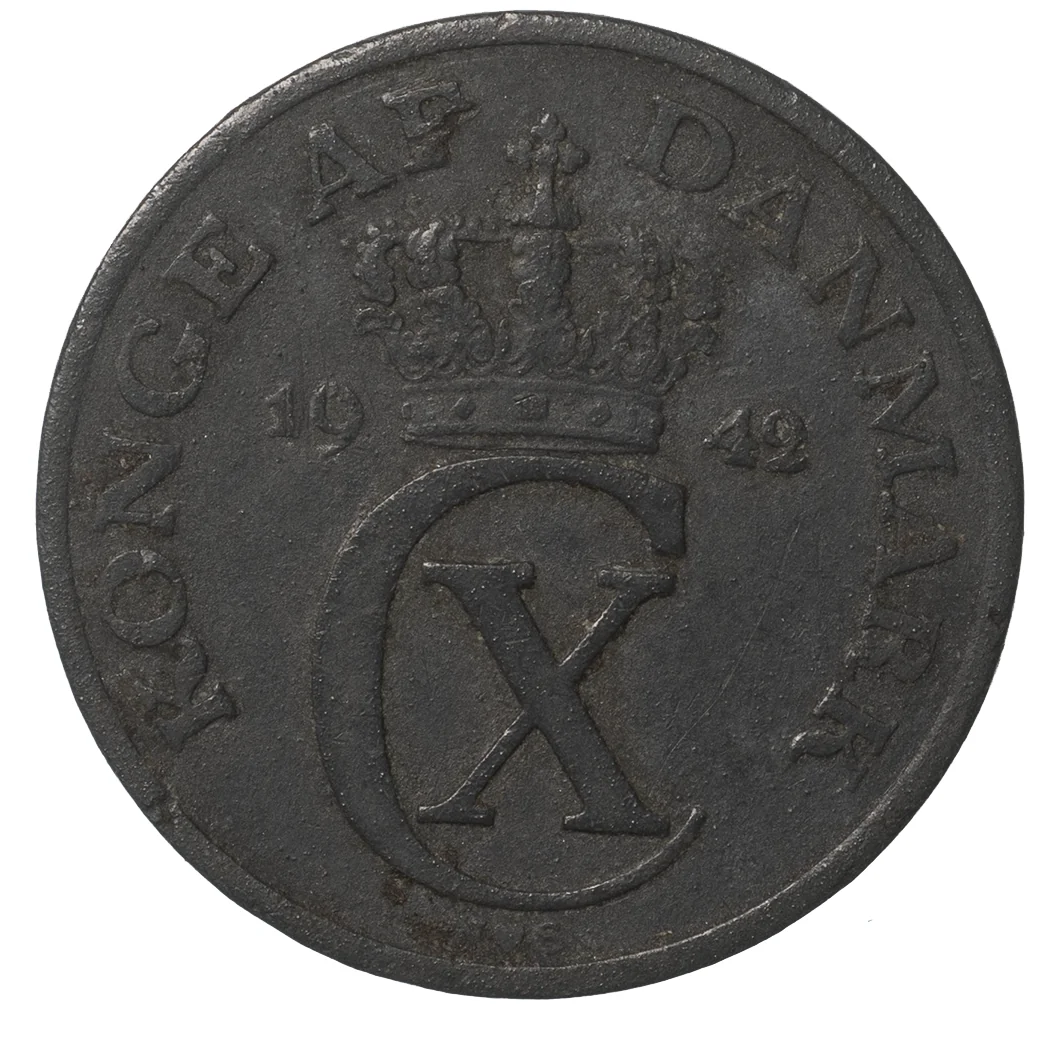
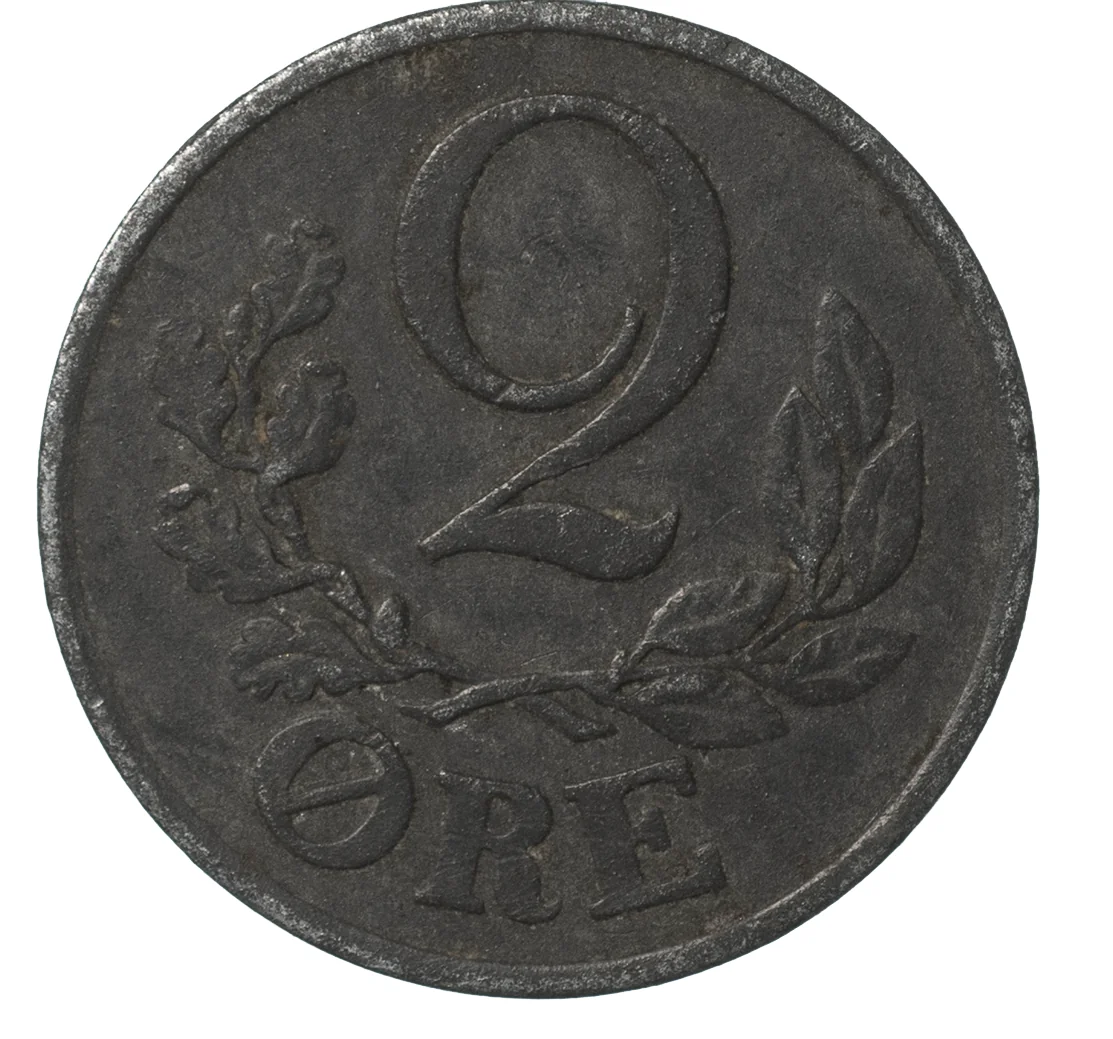
2 øre – Denmark
Add to wishlist
Denmark
Context
Years: 1942–1947
Issuer: Denmark
Ruler: Christian X
Currency:
(since 1873)
Demonetization: 31 March 1973
Total mintage: 29,524,000
Material
References
KM: #
Numista: #6400
Value
Exchange value: 0.02 DKK
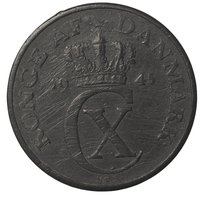
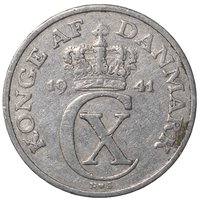
Obverse
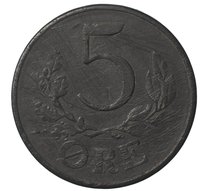
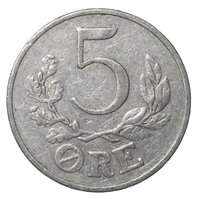
Reverse
Edge
Plain
Mintings
| Year | Mint Mark | Mintage | Quality | Collection |
|---|---|---|---|---|
| 1942 | N♥S | 12,934,000 | ||
| 1943 | N♥S | 9,603,000 | ||
| 1944 | N♥S | 6,069,000 | ||
| 1945 | N♥S | 329,000 | ||
| 1947 | N♥S | 589,000 |
Historical background
In 1942, Denmark remained under German occupation, a situation that had begun in April 1940. Unlike many occupied nations, Denmark maintained a unique and controversial "cooperation policy" with the Nazi authorities until 1943. This arrangement allowed the Danish government and institutions, including the central bank, to continue functioning with a degree of autonomy. Consequently, the Danish krone (DKK) remained the official currency, and the Reichsmark was not imposed as legal tender. However, the German occupation authorities exerted immense indirect pressure on the monetary system, primarily through the mechanism of "occupation costs."
The financial cornerstone of the occupation was the so-called clearing agreement. Germany demanded Denmark pay for the costs of its own occupation, leading to massive, compulsory credits extended to the German Reichsbank through the Danish National Bank. These payments, which ultimately covered a staggering 40% of Danish government expenditure during the war, were financed by the Danish state borrowing from its own central bank. This practice created a powerful inflationary pressure, as it dramatically increased the money supply without a corresponding increase in goods for civilian consumption, much of which was diverted to Germany.
To manage this inflation and prevent economic collapse, the Danish government implemented strict wage and price controls, alongside comprehensive rationing of virtually all essential goods. The black market flourished as a result, operating with significant premiums in cash. While the krone remained stable on the surface due to these controls and the ongoing German need for a functioning Danish economy to supply agricultural and industrial products, the underlying reality was one of hidden inflation, repressed consumption, and a currency whose stability was artificially maintained by oppressive economic regulations and the draining financial burden of the occupation itself.
The financial cornerstone of the occupation was the so-called clearing agreement. Germany demanded Denmark pay for the costs of its own occupation, leading to massive, compulsory credits extended to the German Reichsbank through the Danish National Bank. These payments, which ultimately covered a staggering 40% of Danish government expenditure during the war, were financed by the Danish state borrowing from its own central bank. This practice created a powerful inflationary pressure, as it dramatically increased the money supply without a corresponding increase in goods for civilian consumption, much of which was diverted to Germany.
To manage this inflation and prevent economic collapse, the Danish government implemented strict wage and price controls, alongside comprehensive rationing of virtually all essential goods. The black market flourished as a result, operating with significant premiums in cash. While the krone remained stable on the surface due to these controls and the ongoing German need for a functioning Danish economy to supply agricultural and industrial products, the underlying reality was one of hidden inflation, repressed consumption, and a currency whose stability was artificially maintained by oppressive economic regulations and the draining financial burden of the occupation itself.
🌱 Very Common