

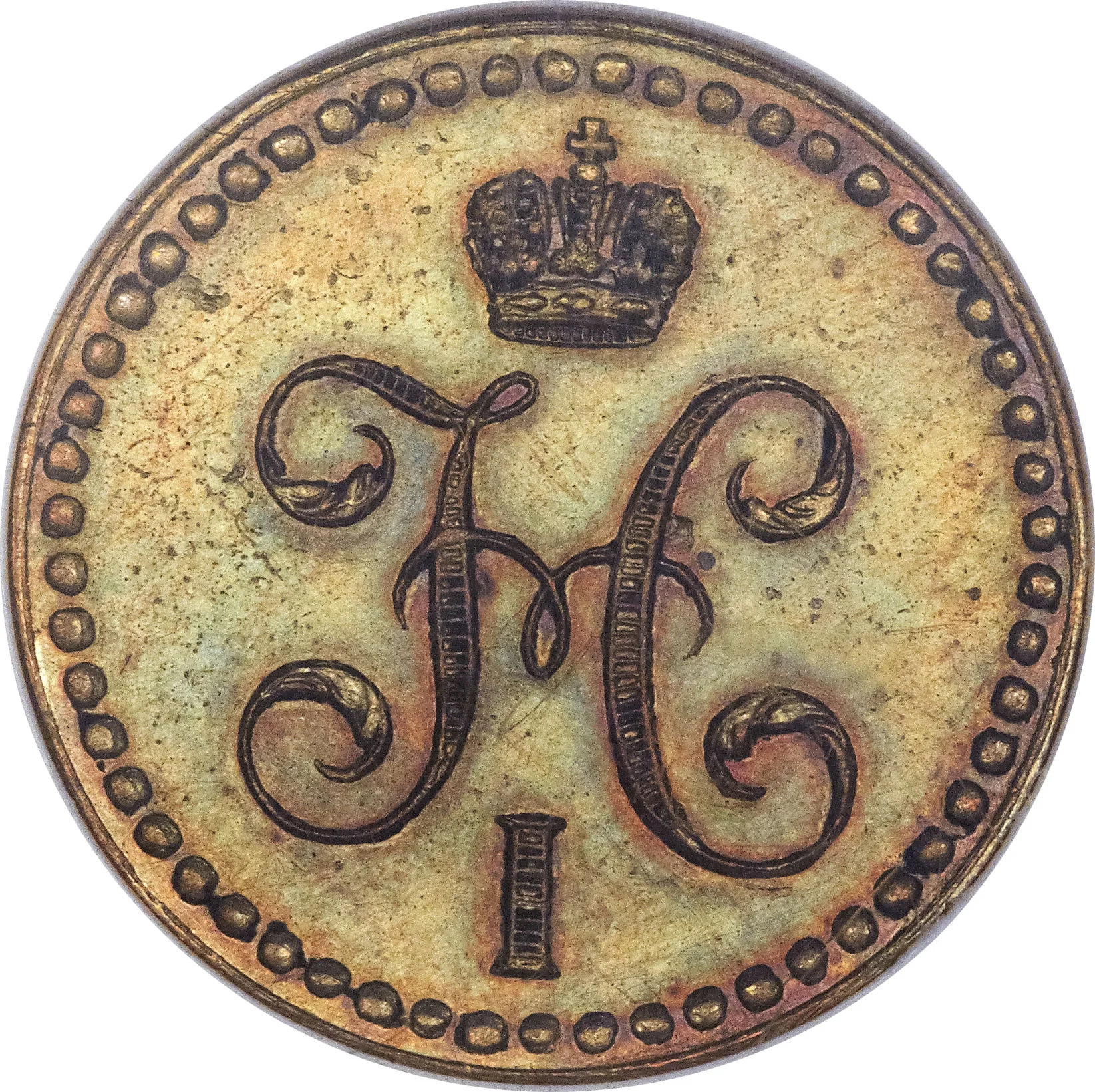
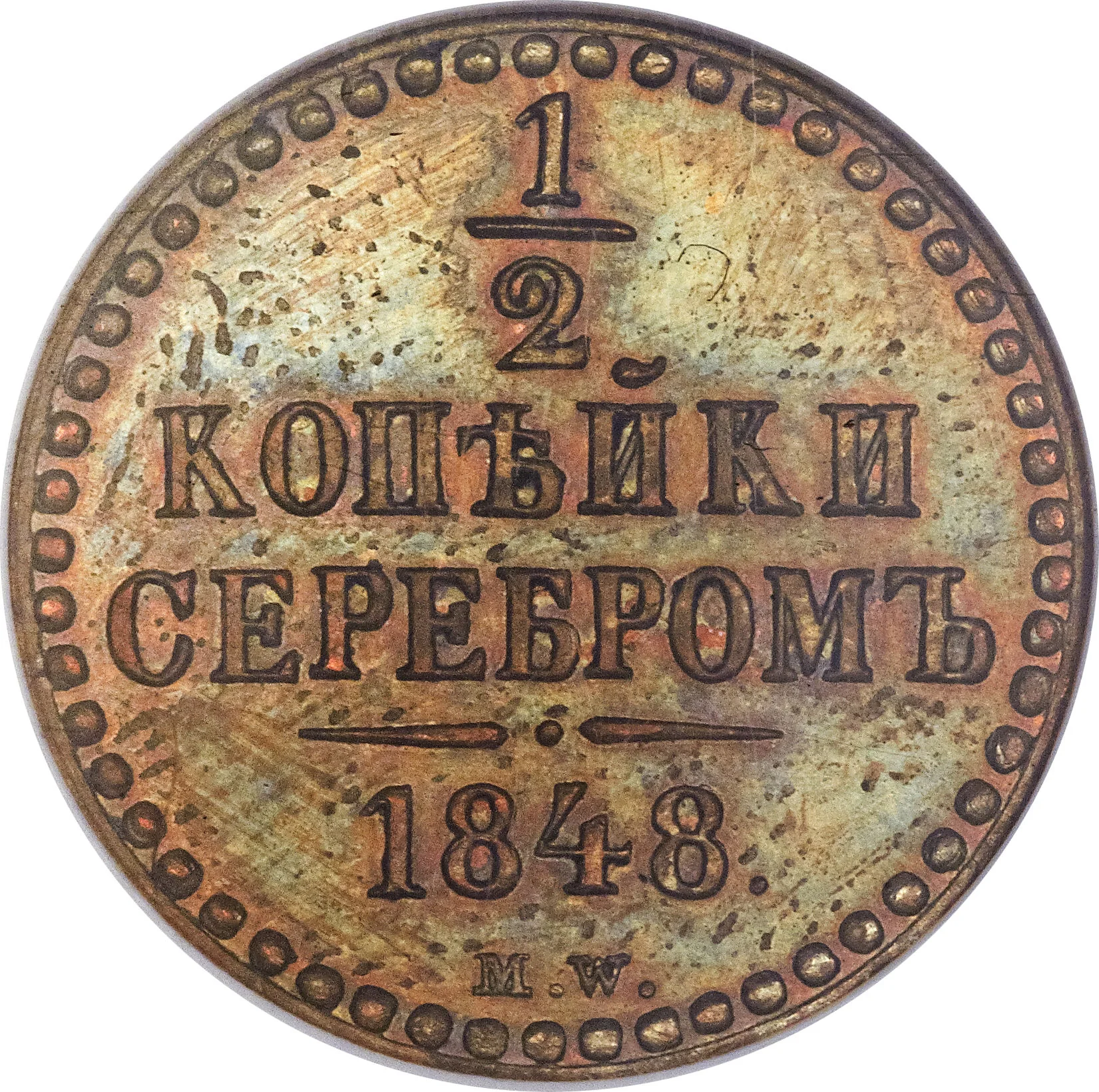
½ Kopeck – Russian Empire
Russia
Context
Year: 1848
Country: Russia 
Issuer: Russian Empire
Ruler: Nicholas I
Currency:
(1700—1917)
Demonetized: Yes
Total mintage: 87,334
Material
References
Numista: #63924
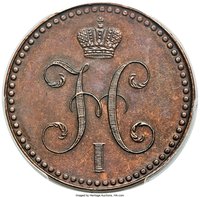
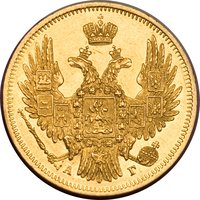
Obverse
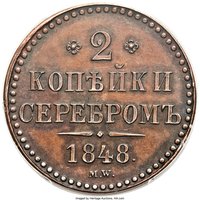
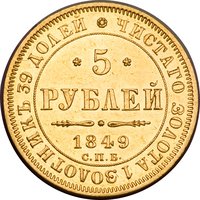
Reverse
Edge
Plain
Mints
| Name | Mark |
|---|---|
| Mint of Poland | M.W. |
Mintings
| Year | Mint Mark | Mintage | Quality | Collection |
|---|---|---|---|---|
| 1848 | M.W. | 87,334 |
Historical background
By 1848, the Russian Empire's currency system was a complex and strained mechanism, fundamentally based on the silver ruble but heavily reliant on paper assignats. Since the reign of Catherine the Great, the state had issued massive quantities of these paper assignats to finance wars and deficits, leading to chronic depreciation. Consequently, a dual-system existed where most daily transactions and state payments used devalued paper notes, while international trade and major contracts were often stipulated in silver rubles, creating a fluctuating exchange rate between the two.
The government of Nicholas I, deeply conservative and alarmed by the revolutionary waves sweeping Europe in 1848, prioritized financial and political stability above all. Earlier reforms by Minister of Finance Georg von Cancrin in the 1830s and 1840s had established a silver reserve and created a new paper currency, "credit notes" (kreditnye bilety), which were more stable than the old assignats but still not fully convertible. The outbreak of revolutions further cemented a defensive policy; the state avoided major monetary experiments or foreign loans, fearing economic vulnerability. Instead, it relied on strict metallist policies and its substantial silver reserve to maintain confidence and prevent a collapse of the paper credit.
Thus, in 1848, the Russian currency situation was one of fragile equilibrium. The system was not modern or uniform, but it was deliberately managed to avoid the crises unfolding elsewhere in Europe. The fundamental problems of paper inflation, a dual currency, and an underdeveloped credit network remained unresolved, stored up for future reformers. The immediate priority was preservation, successfully achieved through conservative fiscal management and the empire's isolation from the European financial system during that turbulent year.
The government of Nicholas I, deeply conservative and alarmed by the revolutionary waves sweeping Europe in 1848, prioritized financial and political stability above all. Earlier reforms by Minister of Finance Georg von Cancrin in the 1830s and 1840s had established a silver reserve and created a new paper currency, "credit notes" (kreditnye bilety), which were more stable than the old assignats but still not fully convertible. The outbreak of revolutions further cemented a defensive policy; the state avoided major monetary experiments or foreign loans, fearing economic vulnerability. Instead, it relied on strict metallist policies and its substantial silver reserve to maintain confidence and prevent a collapse of the paper credit.
Thus, in 1848, the Russian currency situation was one of fragile equilibrium. The system was not modern or uniform, but it was deliberately managed to avoid the crises unfolding elsewhere in Europe. The fundamental problems of paper inflation, a dual currency, and an underdeveloped credit network remained unresolved, stored up for future reformers. The immediate priority was preservation, successfully achieved through conservative fiscal management and the empire's isolation from the European financial system during that turbulent year.
✨ Legendary