

200 Zlotys (Solidarity Trade Union formation) – Poland
Non-circulating coins
Commemoration: The 20th Anniversary of forming the Solidarity Trade Union
Series: Polish Road to Freedom
Poland

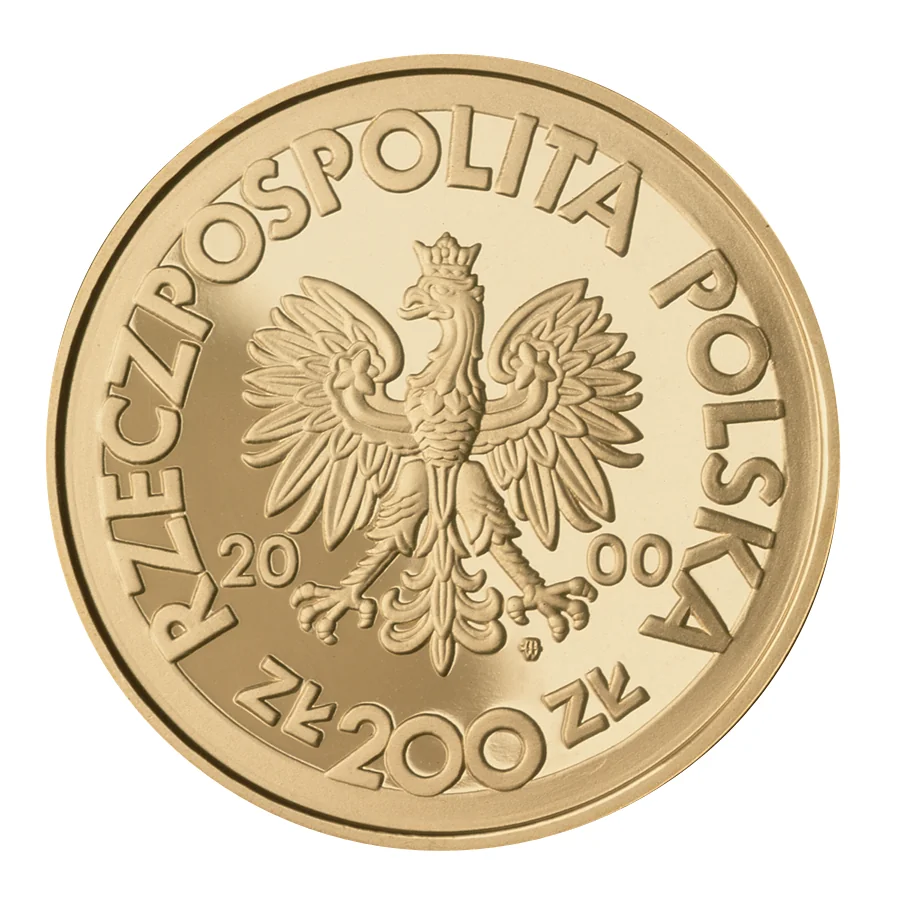
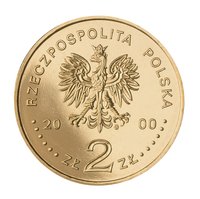
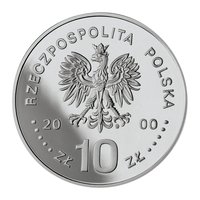
Obverse
Inscription:
RZECZPOSPOLITA POLSKA
2000
mw
ZŁ 200 ZŁ
2000
mw
ZŁ 200 ZŁ
Translation:
REPUBLIC OF POLAND
2000
mw
200 ZŁ 200 ZŁ
2000
mw
200 ZŁ 200 ZŁ
Script: Latin
Language: Polish
Designer: Robert Kotowicz
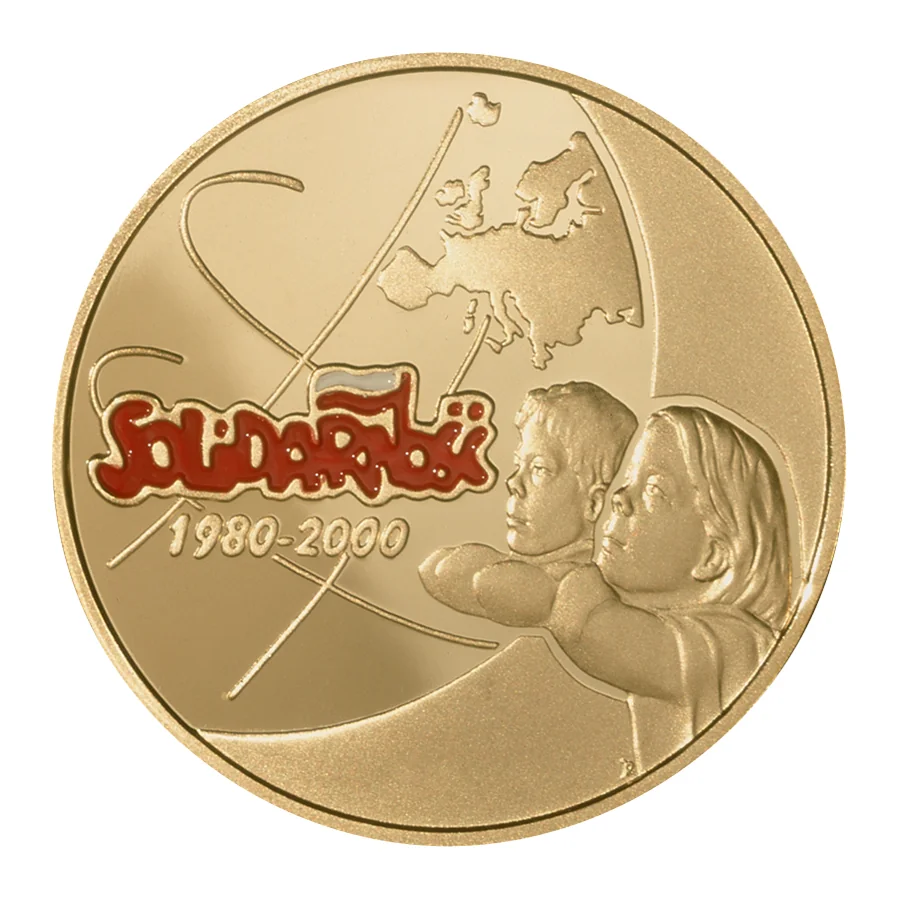
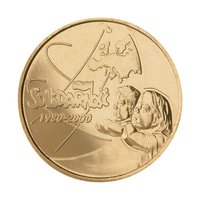
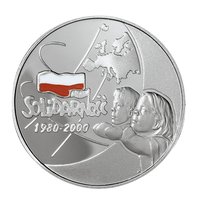
Reverse
Inscription:
SOLIDARNOŚĆ
1980-2000
1980-2000
Translation:
SOLIDARITY
1980-2000
1980-2000
Script: Latin
Language: Polish
Designer: Robert Kotowicz
Edge
Plain
Mints
| Name | Mark |
|---|---|
| Mint of Poland | (MW) |
Mintings
| Year | Mint Mark | Mintage | Quality | Collection |
|---|---|---|---|---|
| 2000 | MW | 2,500 | Proof |
Historical background
In the year 2000, Poland’s currency situation was defined by a managed float of the Polish złoty (PLN) within a crawling peg band system, a key transitional mechanism on the path to full Eurozone integration. Following the high inflation of the early post-communist transition, the National Bank of Poland (NBP) had successfully implemented a disinflation strategy. The core of this policy was a pre-announced, gradually widening exchange rate band against a basket of currencies (USD and EUR), which allowed the złoty to depreciate at a controlled, slowing pace. This regime provided crucial stability for trade and investment, anchoring inflation expectations while allowing for increasing market flexibility.
The period around 2000 was one of relative calm and strength for the złoty, supported by strong fundamentals. Poland’s economy was growing robustly, foreign direct investment was flowing in ahead of anticipated EU accession (achieved in 2004), and inflation had been tamed to single digits. Consequently, the złoty often traded near the stronger end of its permitted band, leading the central bank to intervene periodically by buying foreign reserves to prevent excessive appreciation that could hurt export competitiveness. This strength was a testament to growing international confidence in Poland’s economic transition and policy framework.
Looking forward, the currency regime of 2000 was inherently temporary. The strategic goal, aligned with Poland’s EU membership aspirations, was to eventually adopt the euro. Therefore, the crawling band was a stepping stone, designed to be gradually phased out in favor of a pure free float—a necessary condition for entering the EU's Exchange Rate Mechanism (ERM II). The stability achieved by 2000 set the stage for this next evolution, which would see the band widened significantly in 2001 and finally abandoned in April 2000, allowing the złoty to float freely and marking the completion of an important chapter in Poland’s monetary policy modernization.
The period around 2000 was one of relative calm and strength for the złoty, supported by strong fundamentals. Poland’s economy was growing robustly, foreign direct investment was flowing in ahead of anticipated EU accession (achieved in 2004), and inflation had been tamed to single digits. Consequently, the złoty often traded near the stronger end of its permitted band, leading the central bank to intervene periodically by buying foreign reserves to prevent excessive appreciation that could hurt export competitiveness. This strength was a testament to growing international confidence in Poland’s economic transition and policy framework.
Looking forward, the currency regime of 2000 was inherently temporary. The strategic goal, aligned with Poland’s EU membership aspirations, was to eventually adopt the euro. Therefore, the crawling band was a stepping stone, designed to be gradually phased out in favor of a pure free float—a necessary condition for entering the EU's Exchange Rate Mechanism (ERM II). The stability achieved by 2000 set the stage for this next evolution, which would see the band widened significantly in 2001 and finally abandoned in April 2000, allowing the złoty to float freely and marking the completion of an important chapter in Poland’s monetary policy modernization.
Series: Polish Road to Freedom
✨ Legendary