

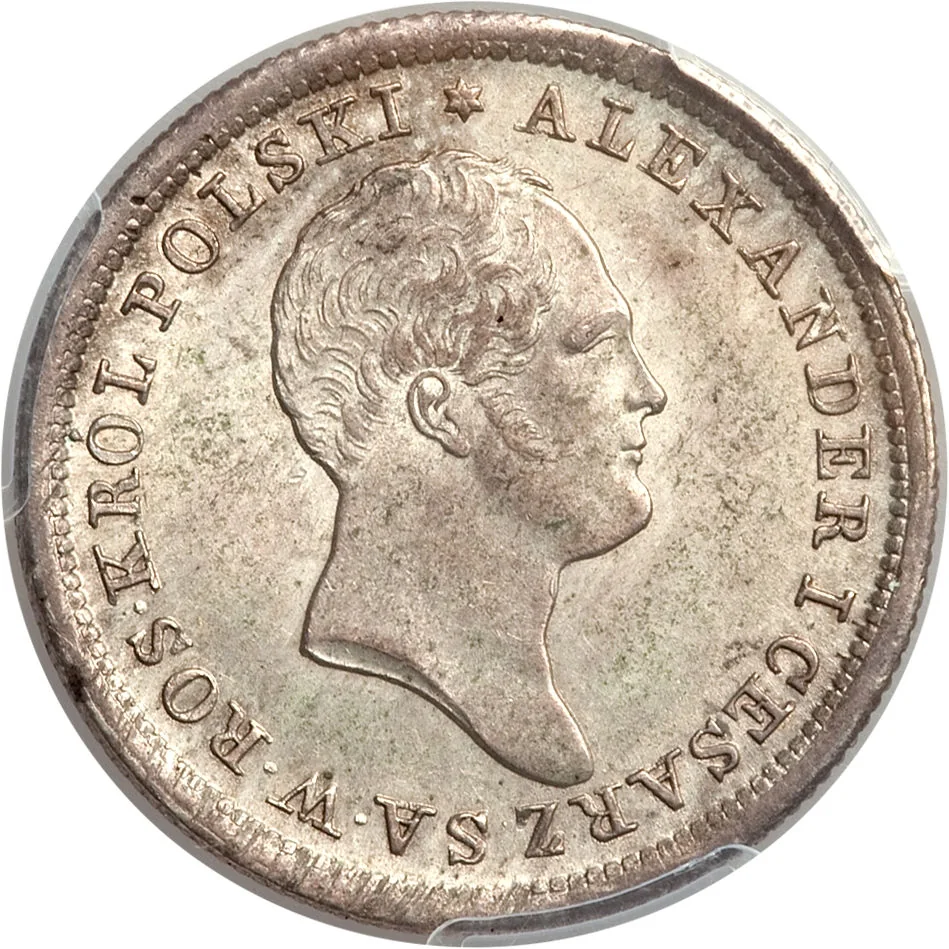
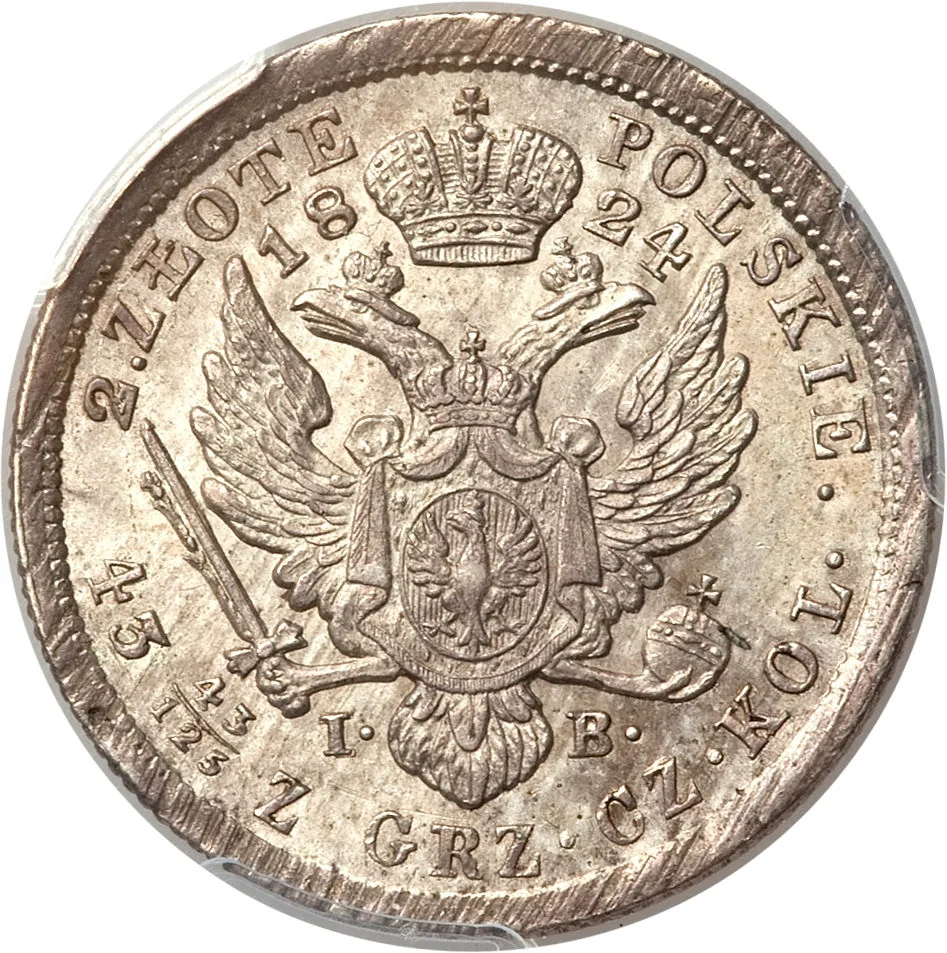
2 zlotys – Congress Kingdom of Poland
Add to wishlist
Poland
Context
Years: 1816–1825
Country: Poland
Issuer: Congress Kingdom of Poland
Ruler: Alexander I
Currency:
(1815—1841)
Demonetized: Yes
Total mintage: 9,122,697
Material
References
Numista: #63676
Value
Bullion value: $13.79
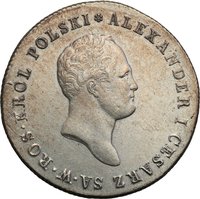
Obverse
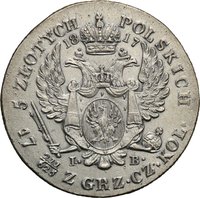
Reverse
Edge
Reeded
Mintings
| Year | Mint Mark | Mintage | Quality | Collection |
|---|---|---|---|---|
| 1816 | IB | 1,392,549 | ||
| 1817 | IB | 1,084,499 | ||
| 1818 | IB | 1,320,681 | ||
| 1819 | IB | 1,241,493 | ||
| 1820 | IB | 1,970,057 | ||
| 1821 | IB | 997,267 | ||
| 1822 | IB | 93,025 | ||
| 1823 | IB | 445,891 | ||
| 1824 | IB | 348,327 | ||
| 1825 | IB | 228,908 |
Historical background
The currency situation in the Congress Kingdom of Poland in 1816 was defined by a significant monetary reform enacted that year, which established a new, distinct national currency. Following the Kingdom's creation at the 1815 Congress of Vienna under Russian sovereignty, its autonomous status included the right to its own financial system. The 1816 reform, introduced by Finance Minister Jan Węgliński and backed by Tsar Alexander I, replaced the various coins still circulating from the Polish-Lithuanian Commonwealth and the Duchy of Warsaw with a unified decimal currency based on the Polish złoty.
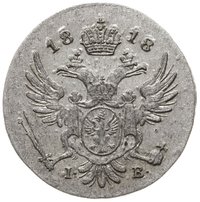
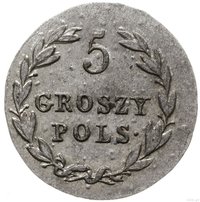
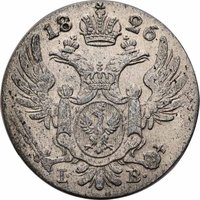
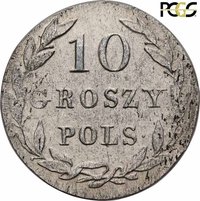
The new system was carefully structured on a bimetallic standard, pegging the złoty to both silver and gold. One złoty was divided into 30 groszy, and crucially, it was given a fixed exchange rate against the Russian ruble (1 złoty = 15 kopeks) to facilitate economic integration within the Russian Empire. The złoty's value was explicitly defined in terms of pure silver, with one złoty containing 16.695 grams of fine silver. This move was intended to stabilize the economy, foster trade, and symbolize the Kingdom's continued statehood through its own coinage, which bore Polish inscriptions and the coat of arms.
In practice, this reform successfully created a stable and modern currency that would remain in use for decades, underpinning the Kingdom's economic development until the aftermath of the November Uprising (1830-31). However, its fixed link to the Russian ruble also meant that the Polish monetary system was ultimately subordinate to Russian fiscal policy, reflecting the Kingdom's broader political duality as an autonomous entity within the imperial sphere of influence.
The new system was carefully structured on a bimetallic standard, pegging the złoty to both silver and gold. One złoty was divided into 30 groszy, and crucially, it was given a fixed exchange rate against the Russian ruble (1 złoty = 15 kopeks) to facilitate economic integration within the Russian Empire. The złoty's value was explicitly defined in terms of pure silver, with one złoty containing 16.695 grams of fine silver. This move was intended to stabilize the economy, foster trade, and symbolize the Kingdom's continued statehood through its own coinage, which bore Polish inscriptions and the coat of arms.
In practice, this reform successfully created a stable and modern currency that would remain in use for decades, underpinning the Kingdom's economic development until the aftermath of the November Uprising (1830-31). However, its fixed link to the Russian ruble also meant that the Polish monetary system was ultimately subordinate to Russian fiscal policy, reflecting the Kingdom's broader political duality as an autonomous entity within the imperial sphere of influence.
⭐ Rare