

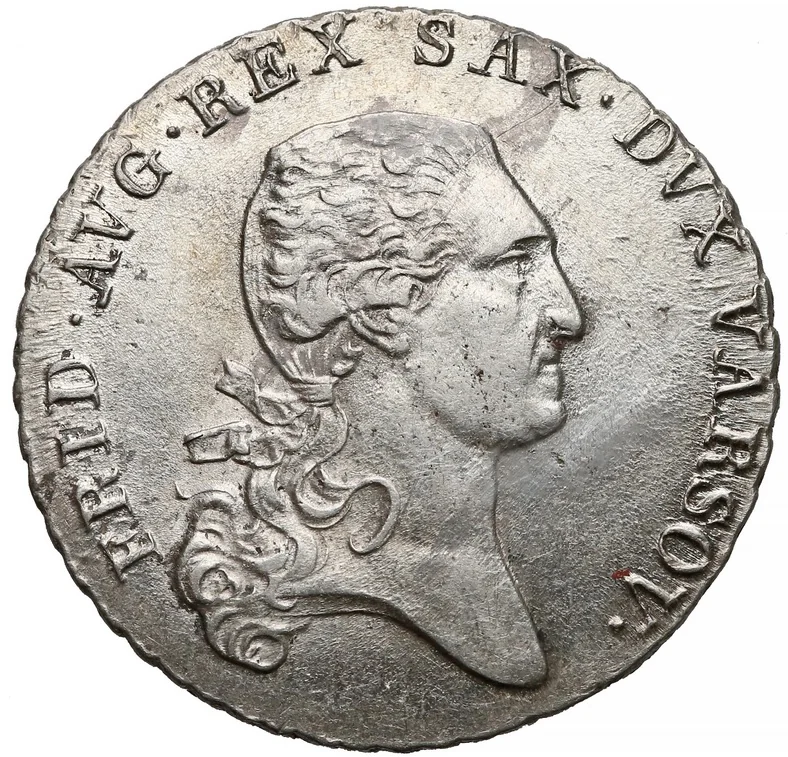
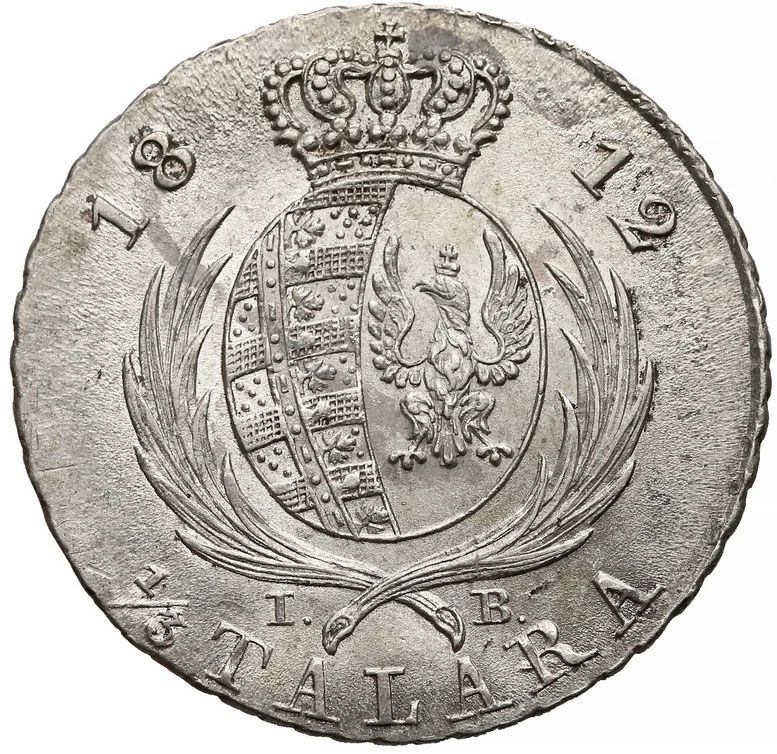
⅓ Thaler – Duchy of Warsaw
Poland
Context
Years: 1810–1814
Country: Poland 
Issuer: Duchy of Warsaw
Ruler: Frederick Augustus I
Currency:
(1807—1815)
Demonetized: Yes
Total mintage: 8,004,698
Material
References
Numista: #63669
Value
Bullion value: $15.48
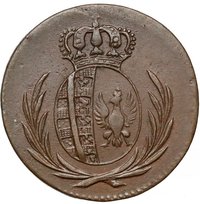
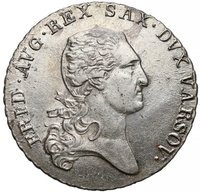
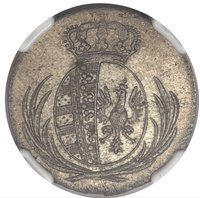
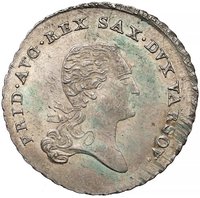
Obverse
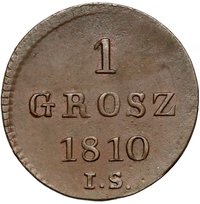
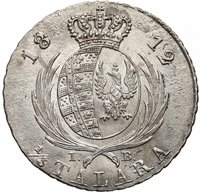
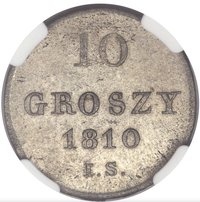
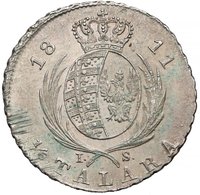
Reverse
Edge
Ornamental
Mints
| Name | Mark |
|---|---|
| Mint of Poland | — |
Mintings
| Year | Mint Mark | Mintage | Quality | Collection |
|---|---|---|---|---|
| 1810 | — | 123,777 | ||
| 1811 | — | 993,077 | ||
| 1812 | — | 2,804,086 | ||
| 1813 | — | 1,915,989 | ||
| 1814 | — | 2,167,769 |
Historical background
In 1810, the Duchy of Warsaw found itself in a precarious and complex monetary situation, a direct legacy of its political creation. Established by Napoleon in 1807 from Polish lands annexed by Prussia and Austria, the Duchy inherited a chaotic mix of circulating currencies, including Prussian thalers, Austrian gulden, Russian rubles, and old Polish zlotys. To assert sovereignty and streamline the economy, the Duchy introduced its own currency in 1810: the Polish zloty (often called the złotówka), which was divided into 30 groszy. This move was a symbolic and practical step toward financial independence, with new coins minted bearing the image of the Saxon king, Frederick Augustus I, who served as the Duchy's ruler.
However, this new currency system faced immediate and severe challenges. The Duchy's finances were overwhelmingly strained by the cost of maintaining a large army for Napoleon's campaigns, which consumed over half the state's budget. Consequently, the government resorted to printing large quantities of paper money (banknotes and treasury notes) without sufficient metallic backing, leading to rapid inflation and a sharp decline in public trust. The value of the paper zloty quickly depreciated against silver coinage, creating a destructive dual-system where precious metal coins were hoarded and paper money circulated at a steep and fluctuating discount.
Ultimately, the monetary chaos of 1810 reflected the Duchy's fragile and dependent existence. Its economy was subordinated to the Continental System and the demands of the French Empire, preventing true financial stabilization. The lack of substantial bullion reserves and the relentless fiscal pressures of war meant that the new zloty never achieved the stability intended. This unstable currency environment would persist until the Duchy's dissolution following Napoleon's defeat in 1815, underscoring how its monetary policy was inextricably tied to the volatile fortunes of Napoleonic Europe.
However, this new currency system faced immediate and severe challenges. The Duchy's finances were overwhelmingly strained by the cost of maintaining a large army for Napoleon's campaigns, which consumed over half the state's budget. Consequently, the government resorted to printing large quantities of paper money (banknotes and treasury notes) without sufficient metallic backing, leading to rapid inflation and a sharp decline in public trust. The value of the paper zloty quickly depreciated against silver coinage, creating a destructive dual-system where precious metal coins were hoarded and paper money circulated at a steep and fluctuating discount.
Ultimately, the monetary chaos of 1810 reflected the Duchy's fragile and dependent existence. Its economy was subordinated to the Continental System and the demands of the French Empire, preventing true financial stabilization. The lack of substantial bullion reserves and the relentless fiscal pressures of war meant that the new zloty never achieved the stability intended. This unstable currency environment would persist until the Duchy's dissolution following Napoleon's defeat in 1815, underscoring how its monetary policy was inextricably tied to the volatile fortunes of Napoleonic Europe.
⭐ Rare