

8 maravedis – Spain
Add to wishlist
Spain
Context
Material
References
KM: #
Numista: #6360
Obverse
Description:
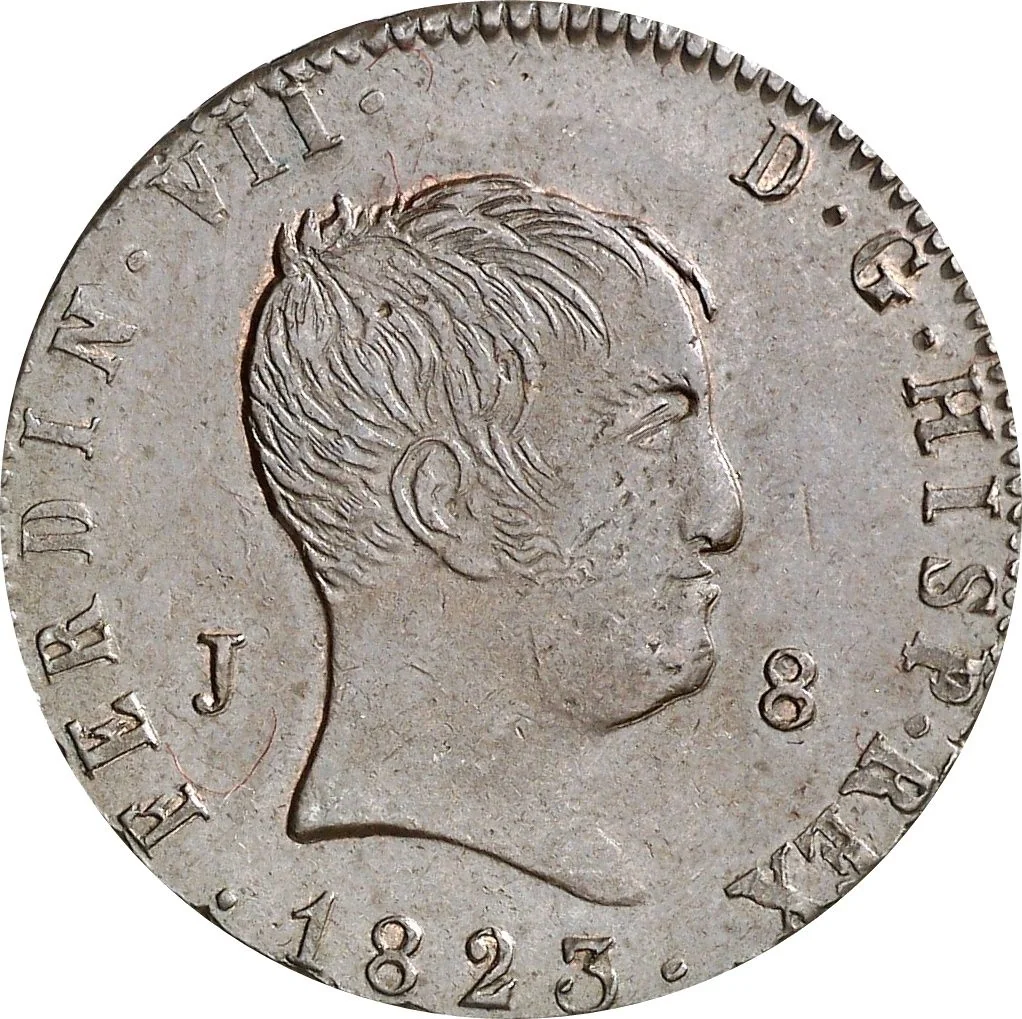
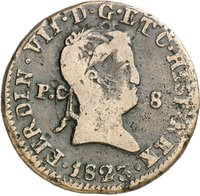
King Fernando VII facing right.
Inscription:
FERDIN · VII· D · G · HISP · REX
J 8
· 1823 ·
J 8
· 1823 ·
Translation:
FERDINAND VII, BY THE GRACE OF GOD, KING OF SPAIN
J 8
1823
J 8
1823
Script: Latin
Language: Latin
Engraver: Félix Sagau y Dalmau de Galcerán
Reverse
Description:
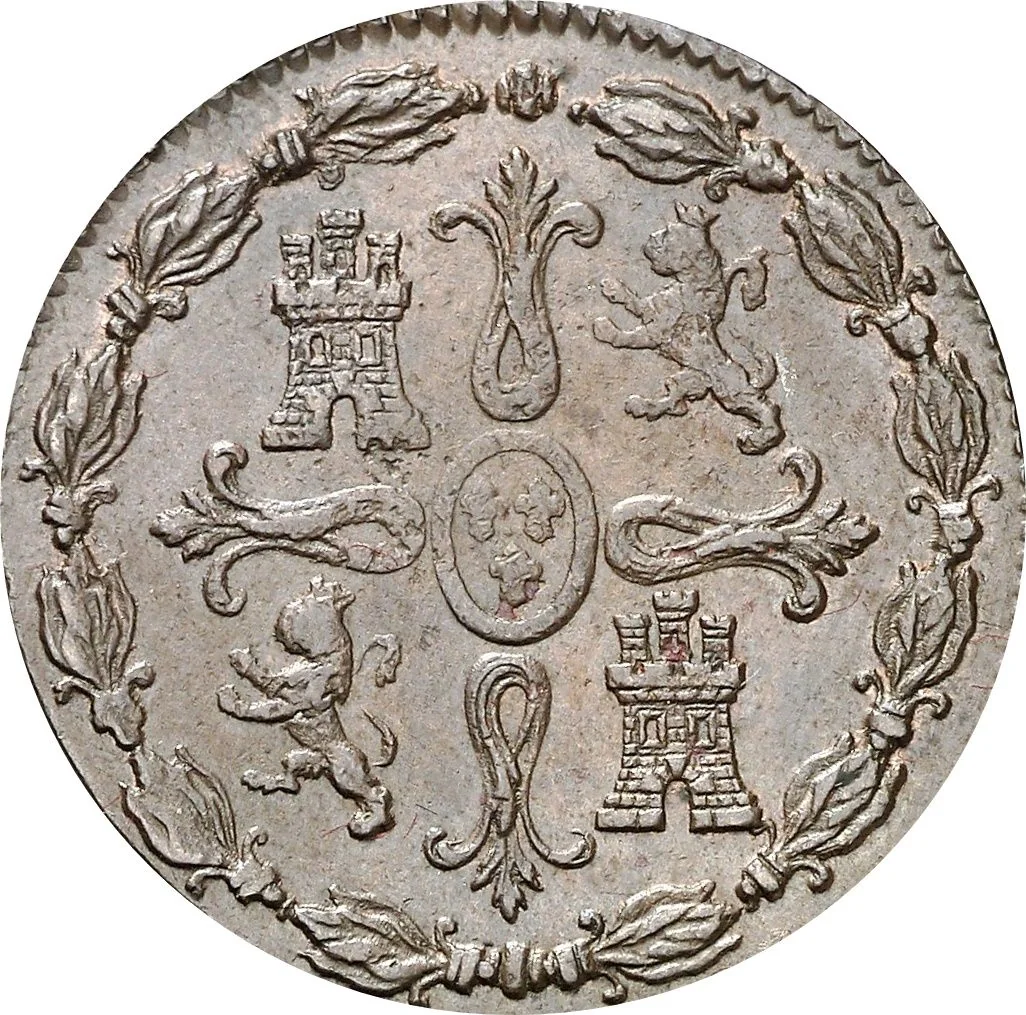
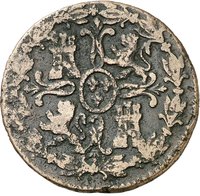
Spanish coat of arms and wreath.
Engraver: Félix Sagau y Dalmau de Galcerán
Edge
Mints
| Name | Mark |
|---|---|
| Royal Mint of Segovia | — |
| Jubia Mint | J |
Historical background
In 1823, Spain's currency situation was dire, characterized by severe inflation and a deeply debased coinage, a direct legacy of the Peninsular War (1808-1814) and the political chaos that followed. To finance the war against Napoleon, successive governments, both patriot and French-controlled, had resorted to printing vast quantities of paper money—vales reales—which were not backed by silver or gold. This, coupled with the issuance of low-quality copper and silver coins by provincial juntas and the central government, led to a catastrophic loss of confidence in the monetary system. By 1823, the paper currency was virtually worthless, and the coinage in circulation was a chaotic mix of old pre-war coins, wartime emergency issues, and foreign currency, with their value determined more by metal content than face value.
The political context of that specific year exacerbated the crisis. In 1823, the French "Hundred Thousand Sons of Saint Louis" invasion crushed the liberal Trienio Liberal government and restored the absolutist King Ferdinand VII to full power. This violent regime change created immense economic uncertainty, disrupting trade and government administration. The restored absolutist regime inherited an empty treasury and a monetary system in ruins. One of its immediate priorities was to assert control over the coinage as a symbol of sovereign authority, but it lacked the precious metal reserves to restore a sound, full-bodied currency.
Consequently, the primary monetary reality for most Spaniards in 1823 was one of instability and complexity. Transactions were often conducted using a confusing array of physical coins, with widespread hoarding of older, higher-silver content coins (Gresham's Law in action). Barter was common in many areas. While Ferdinand VII's government would soon move to reform the system—announcing a new currency law in 1824 and issuing new silver reales and gold escudos from 1825 onward—the year 1823 itself represents the chaotic nadir of Spain's early 19th-century monetary disorder, a period where the state's financial credibility had been utterly destroyed by war and political strife.
The political context of that specific year exacerbated the crisis. In 1823, the French "Hundred Thousand Sons of Saint Louis" invasion crushed the liberal Trienio Liberal government and restored the absolutist King Ferdinand VII to full power. This violent regime change created immense economic uncertainty, disrupting trade and government administration. The restored absolutist regime inherited an empty treasury and a monetary system in ruins. One of its immediate priorities was to assert control over the coinage as a symbol of sovereign authority, but it lacked the precious metal reserves to restore a sound, full-bodied currency.
Consequently, the primary monetary reality for most Spaniards in 1823 was one of instability and complexity. Transactions were often conducted using a confusing array of physical coins, with widespread hoarding of older, higher-silver content coins (Gresham's Law in action). Barter was common in many areas. While Ferdinand VII's government would soon move to reform the system—announcing a new currency law in 1824 and issuing new silver reales and gold escudos from 1825 onward—the year 1823 itself represents the chaotic nadir of Spain's early 19th-century monetary disorder, a period where the state's financial credibility had been utterly destroyed by war and political strife.
🌱 Fairly Common