

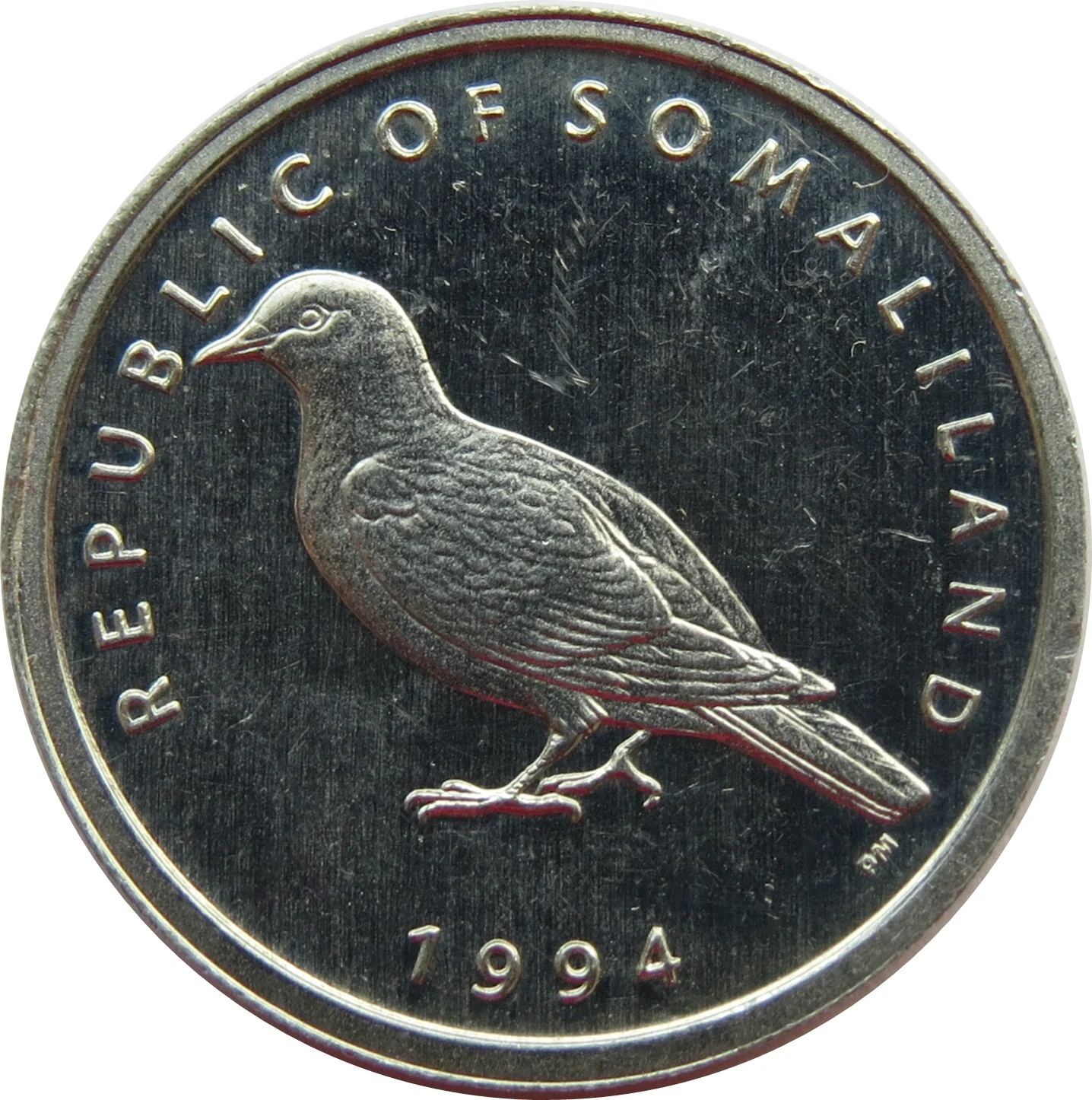
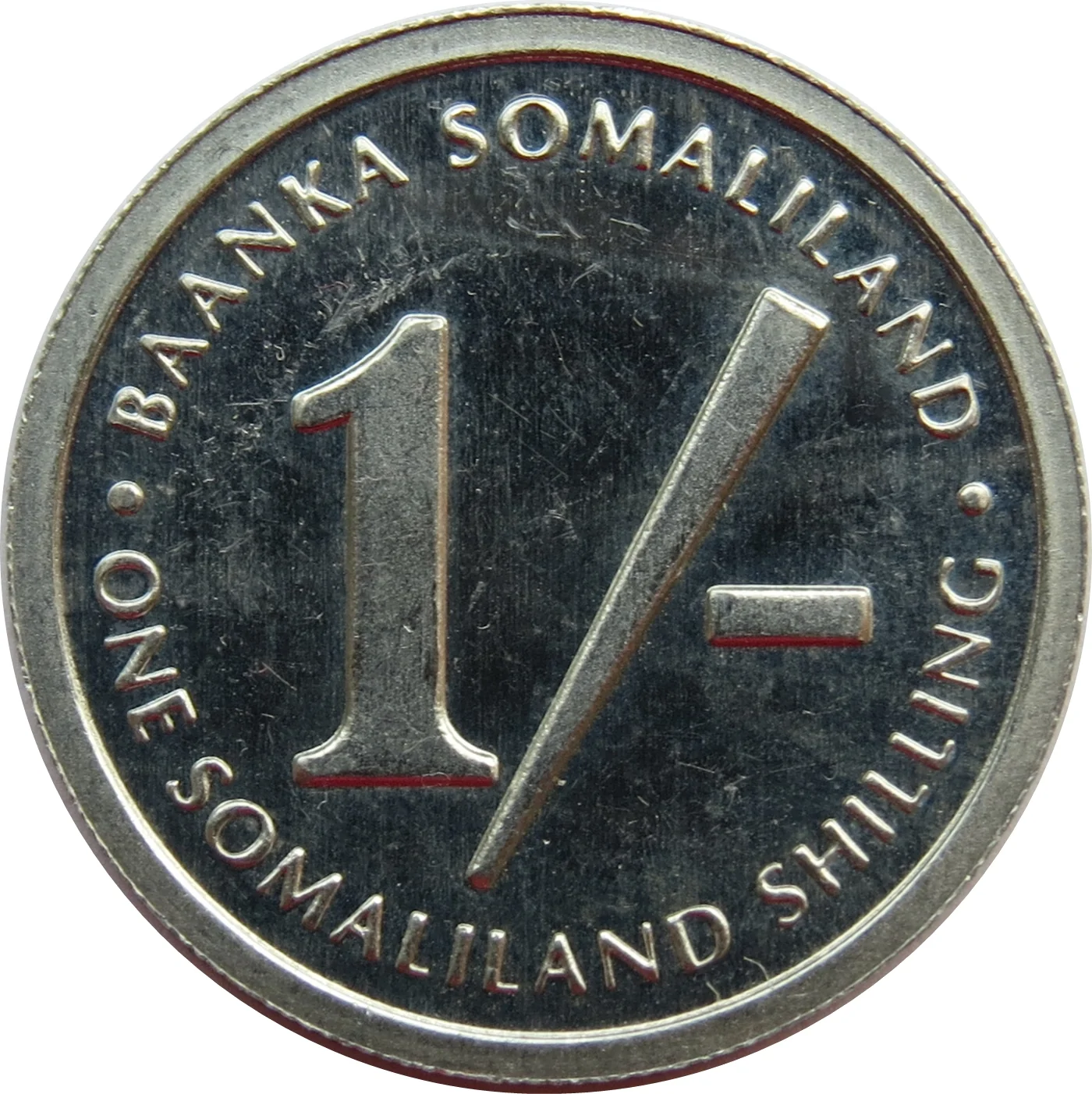
1 Shilling – Somaliland
Somalia
Context
Year: 1994
Country: Somalia 
Issuer: Somaliland
Period:
(since 1991)
Currency:
(since 1994)
Demonetized: Yes
Material
References
KM: #Click to copy to clipboard1
Numista: #6359
Value
Exchange value: 1 SLS
Obverse
Reverse
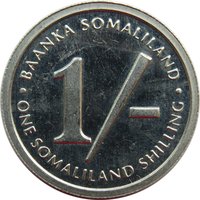
Description:
Denomination
Inscription:
• BAANKA SOMALILAND •
1/-
ONE SOMALILAND SHILLING
1/-
ONE SOMALILAND SHILLING
Script: Latin
Edge
Reeded
Mints
| Name | Mark |
|---|---|
| Pobjoy Mint | PM |
Mintings
| Year | Mint Mark | Mintage | Quality | Collection |
|---|---|---|---|---|
| 1994 | PM | — |
Historical background
In 1994, Somaliland, having declared its independence from Somalia in 1991, faced a profound and complex currency crisis central to its struggle for state-building. The territory was flooded with multiple, worthless currencies: the old Somali shilling notes, issued by the deposed Siad Barre regime, remained in circulation but had hyper-inflated into near-valueless paper. More critically, an epidemic of mass counterfeiting had erupted, with various factions and business interests printing their own versions of the shilling, further destroying public trust and paralyzing formal economic activity. This monetary anarchy reflected the broader challenges of establishing sovereignty and security in the post-conflict landscape.
The situation created severe practical hardships for the population. Barter trade became a necessary survival mechanism, especially in rural areas, while more stable foreign currencies like the US dollar and the Saudi riyal circulated in urban centers for larger transactions. This dual-system disadvantaged ordinary citizens without access to foreign cash and stifled any possibility of economic recovery or investment. The lack of a legitimate, unified currency hampered the government's ability to collect taxes, pay civil servants, or provide basic services, threatening the very viability of the nascent state.
Recognizing that monetary sovereignty was a fundamental pillar of independence, the Somaliland government began serious preparations in 1994 for a radical solution: the introduction of an entirely new national currency. This culminated in the launch of the Somaliland shilling in October 1994, a bold step aimed at displacing the sea of counterfeit notes and establishing a central symbol of national authority. The successful introduction, however, required a delicate and risky process of convincing a skeptical public to swap their old notes for the new currency, a critical test for the Hargeisa government's legitimacy and administrative capability.
The situation created severe practical hardships for the population. Barter trade became a necessary survival mechanism, especially in rural areas, while more stable foreign currencies like the US dollar and the Saudi riyal circulated in urban centers for larger transactions. This dual-system disadvantaged ordinary citizens without access to foreign cash and stifled any possibility of economic recovery or investment. The lack of a legitimate, unified currency hampered the government's ability to collect taxes, pay civil servants, or provide basic services, threatening the very viability of the nascent state.
Recognizing that monetary sovereignty was a fundamental pillar of independence, the Somaliland government began serious preparations in 1994 for a radical solution: the introduction of an entirely new national currency. This culminated in the launch of the Somaliland shilling in October 1994, a bold step aimed at displacing the sea of counterfeit notes and establishing a central symbol of national authority. The successful introduction, however, required a delicate and risky process of convincing a skeptical public to swap their old notes for the new currency, a critical test for the Hargeisa government's legitimacy and administrative capability.
🌱 Very Common