

1⁄24 shilling – Jersey
Add to wishlist
Context
Years: 1911–1923
Country: British Crown dependencies
Issuer: Jersey
Ruler: George V
Currency:
(1813—1971)
Demonetization: 27 December 1971
Total mintage: 216,000
Material
References
KM: #
Numista: #6339
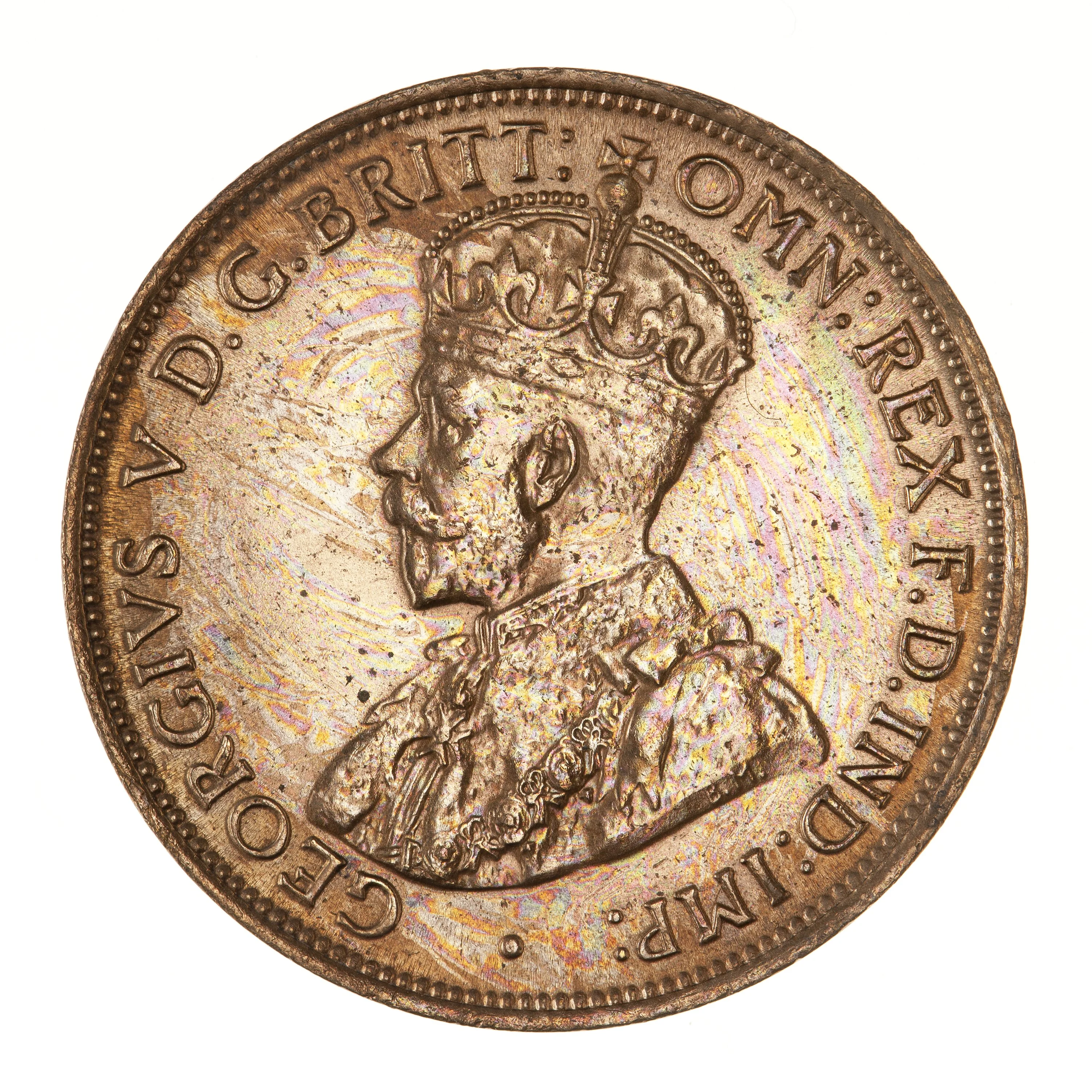
Obverse
Description:
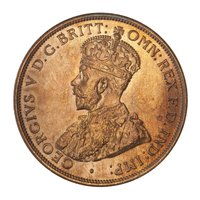
King George V crowned left, legend around, engraver's initials on shoulder.
Inscription:
· GEORGIVS V D.G.BRITT: OMN:REX F.D.IND:IMP:
B. M.
B. M.
Translation:
George V, by the Grace of God, of all the Britains King, Defender of the Faith, Emperor of India.
Script: Latin
Language: Latin
Engraver: Edgar Bertram MacKennal
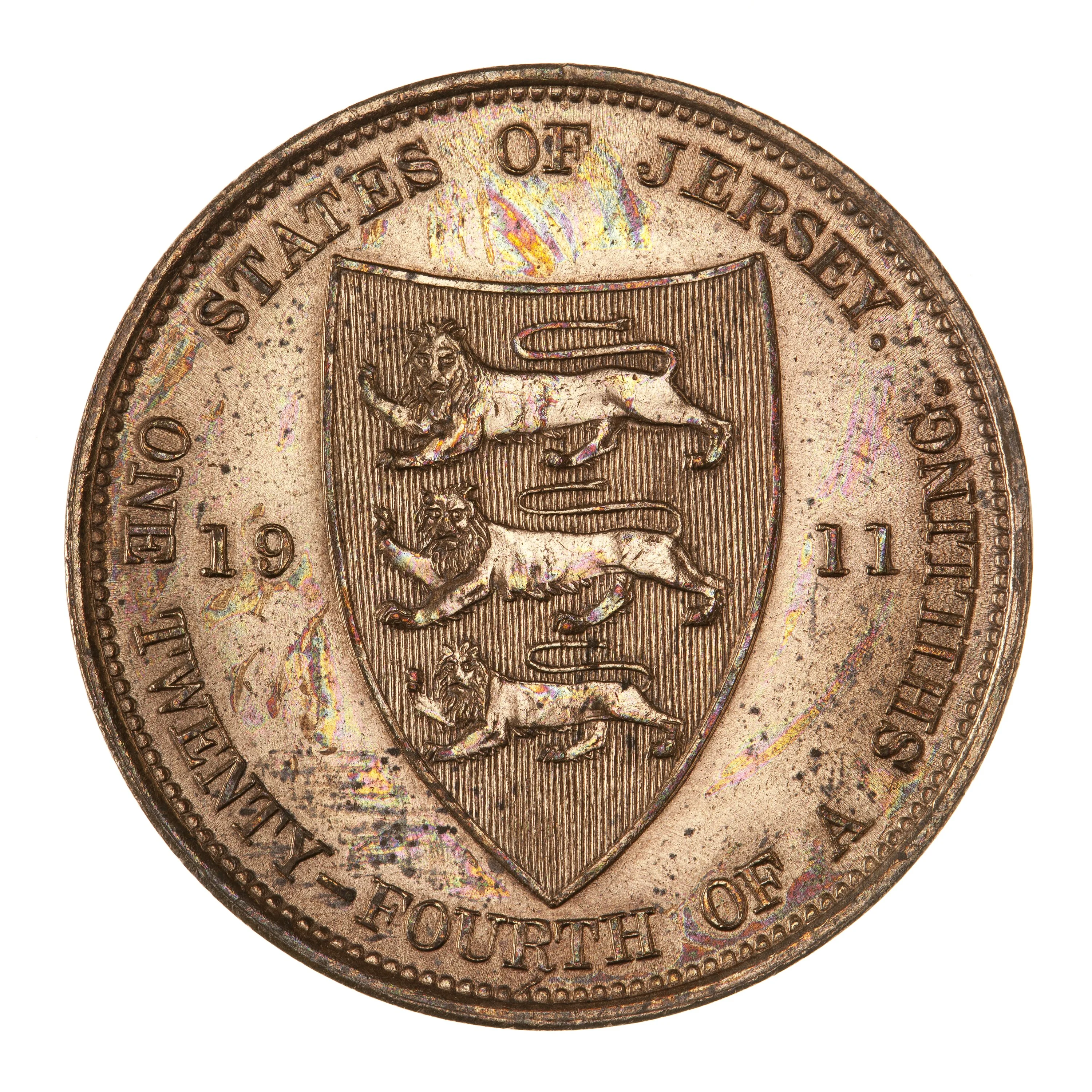
Reverse
Description:
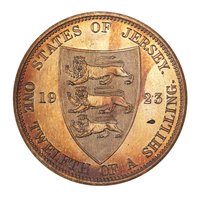
Shield divides date, legend above, denomination below.
Inscription:
STATES OF JERSEY.
19 23
ONE TWENTY-FOURTH OF A SHILLING.
19 23
ONE TWENTY-FOURTH OF A SHILLING.
Script: Latin
Engraver: Leonard Charles Wyon
Edge
Plain
Mints
| Name | Mark |
|---|---|
| Royal Mint (Tower Hill) | — |
Mintings
| Year | Mint Mark | Mintage | Quality | Collection |
|---|---|---|---|---|
| 1911 | — | 72,000 | ||
| 1913 | — | 72,000 | ||
| 1923 | — | 72,000 |
Historical background
In 1911, Jersey's currency situation was a complex and locally distinctive system, a legacy of its unique constitutional position as a Crown Dependency outside the United Kingdom. While politically loyal to the British Crown, the island operated a largely separate financial and monetary environment. The most prominent feature was the continued legal tender status of the French franc alongside British coinage, a practical reflection of Jersey's centuries-old trading ties with Normandy and continental Europe. This created a dual-currency economy where everyday transactions could be conducted in either currency, with exchange rates fluctuating based on trade flows and metal values.
The British government had long sought to standardise currency across the Empire, and the UK Coinage Act of 1870 had made British money legal tender in Jersey. However, the island's authorities, protective of its autonomy and mindful of its commercial needs, successfully resisted the complete demonetisation of French currency. Consequently, by 1911, the franc circulated widely, particularly in retail and market settings, while the British pound sterling was dominant in government accounts and larger transactions. This unofficial bimetallism required merchants and bankers to be adept at exchange calculations, often listing prices in both currencies.
This period represented the twilight of this unique system. Growing economic integration with Britain, the stability offered by the sterling gold standard, and administrative pressure from London were gradually shifting the balance. The outbreak of World War I in 1914 would prove the decisive catalyst, leading to the final withdrawal of the French franc from circulation in Jersey. Therefore, the currency situation in 1911 was a fading, yet still operational, snapshot of the island's historic independence and its pragmatic adaptation to cross-Channel commerce.
The British government had long sought to standardise currency across the Empire, and the UK Coinage Act of 1870 had made British money legal tender in Jersey. However, the island's authorities, protective of its autonomy and mindful of its commercial needs, successfully resisted the complete demonetisation of French currency. Consequently, by 1911, the franc circulated widely, particularly in retail and market settings, while the British pound sterling was dominant in government accounts and larger transactions. This unofficial bimetallism required merchants and bankers to be adept at exchange calculations, often listing prices in both currencies.
This period represented the twilight of this unique system. Growing economic integration with Britain, the stability offered by the sterling gold standard, and administrative pressure from London were gradually shifting the balance. The outbreak of World War I in 1914 would prove the decisive catalyst, leading to the final withdrawal of the French franc from circulation in Jersey. Therefore, the currency situation in 1911 was a fading, yet still operational, snapshot of the island's historic independence and its pragmatic adaptation to cross-Channel commerce.
🌱 Common