

10 Santims – Ethiopia
Ethiopia

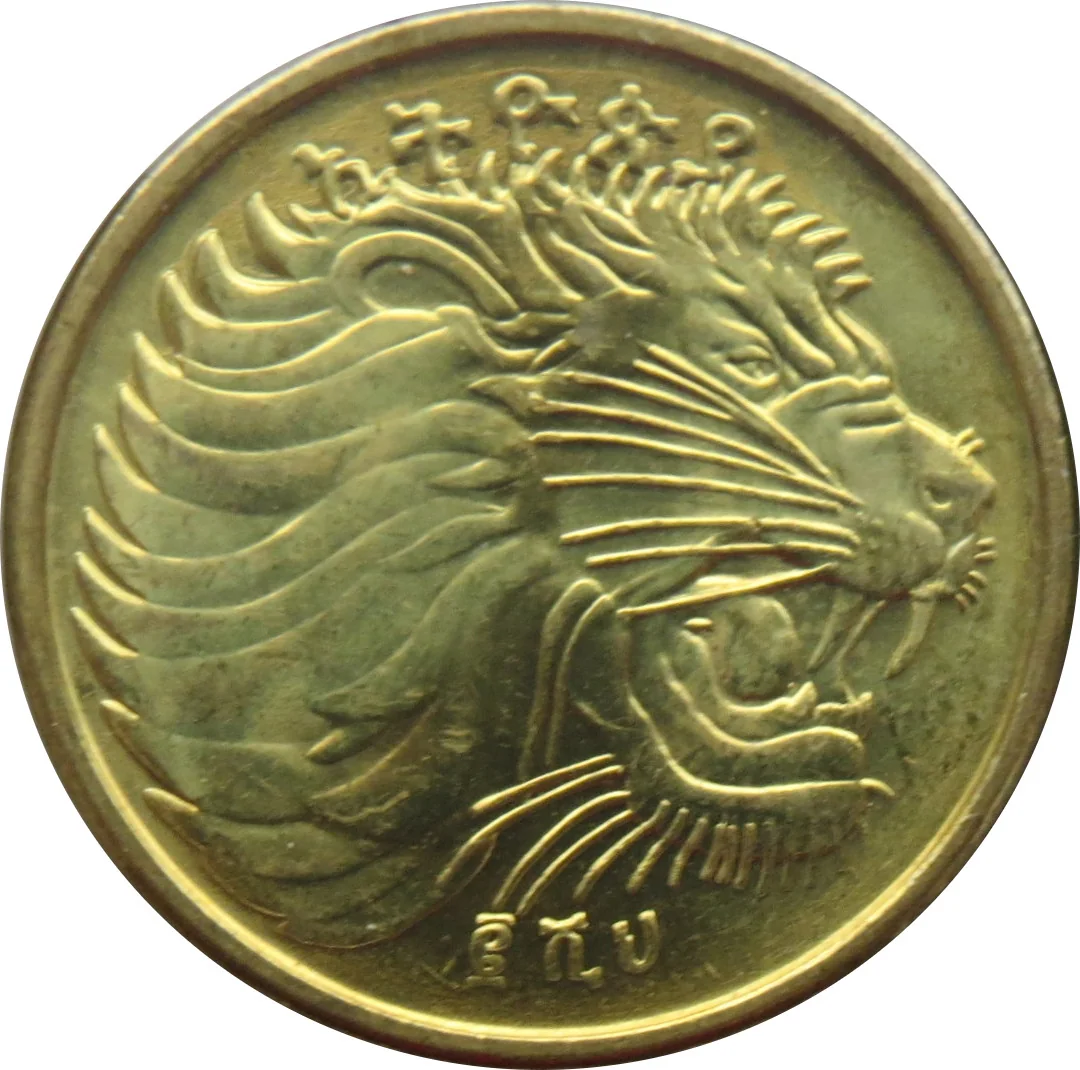
Obverse
Description:
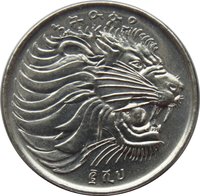
Larger lion head with two whiskers above the date.
Inscription:
ኢትዮጵያ
፪ሺህ
፪ሺህ
Translation:
Ethiopia
Two Thousand
Two Thousand
Script: Ge'ez
Language: Amharic
Engraver: Stuart Devlin
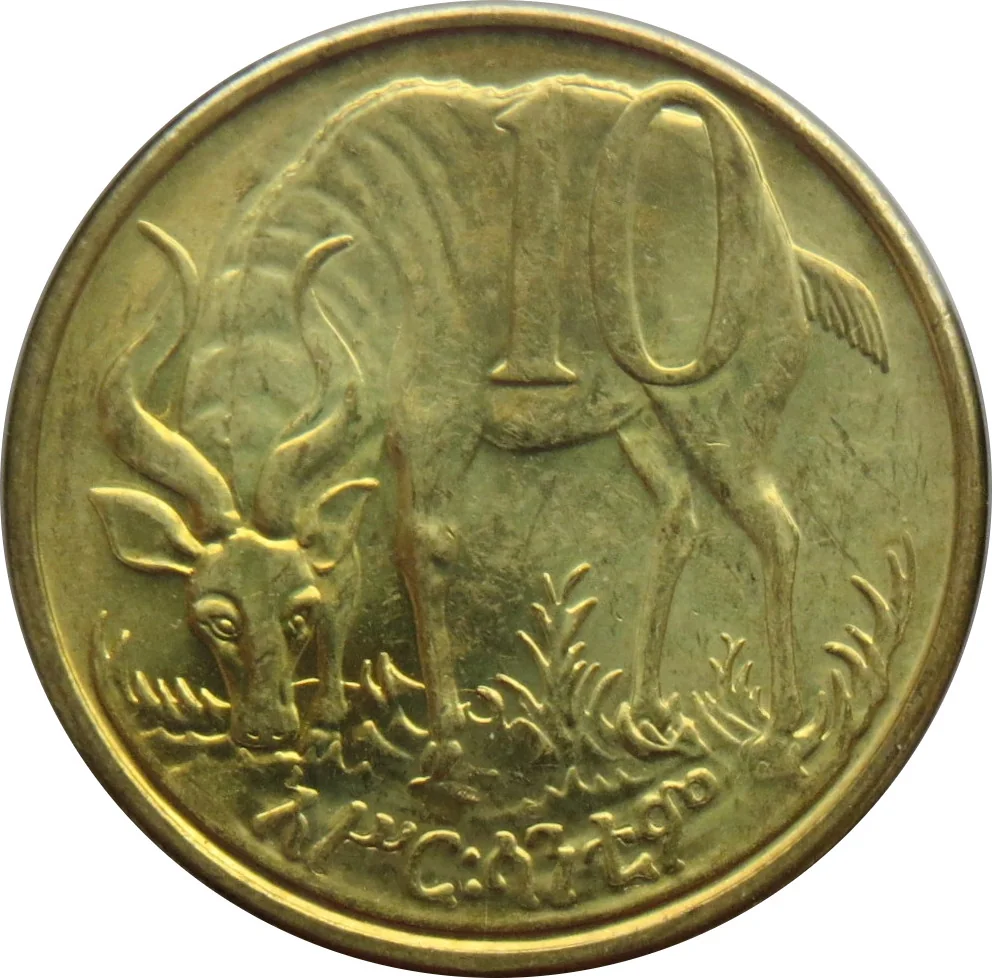
Reverse
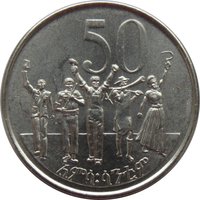
Description:
Mountain Nyala
Inscription:
10
አሥር:ሳንቲም
አሥር:ሳንቲም
Translation:
Ten: Santim
Script: Ge'ez
Language: Amharic
Engraver: Stuart Devlin
Edge
Plain
Mints
| Name | Mark |
|---|---|
| Royal Canadian Mint of Winnipeg | — |
| Royal Mint | — |
Mintings
| Year | Mint Mark | Mintage | Quality | Collection |
|---|---|---|---|---|
| 2004 | — | — | ||
| 2005 | — | — | ||
| 2006 | — | — | ||
| 2008 | — | — | ||
| 2012 | — | — |
Historical background
In 2004, Ethiopia's currency situation was characterized by a tightly managed official exchange rate for the Ethiopian Birr (ETB) under a regime of strict foreign exchange controls. The National Bank of Ethiopia (NBE) maintained a fixed peg, primarily to the US Dollar, at an official rate of approximately ETB 8.65 to USD 1. This overvalued official rate was intended to keep import costs low for essential goods and service the country's external debt, but it created significant distortions. A substantial parallel market for foreign currency thrived, where the Birr traded at a significant premium—often 15-25% weaker—reflecting the scarcity of hard currency and the pent-up demand from businesses and individuals unable to access sufficient forex through official channels.
The root cause of this duality was a chronic shortage of foreign exchange reserves, stemming from Ethiopia's persistent trade deficit. While the economy was growing, exports—dominated by a volatile coffee sector—were insufficient to cover the cost of imported petroleum, machinery, and manufactured goods. Remittances from the diaspora, though growing, flowed largely through the informal hawala system, bypassing the official banking sector and further starving it of forex. Consequently, the government rationed available dollars, prioritizing state-owned enterprises and approved imports, which led to lengthy bureaucratic delays and stifled private sector growth.
The government's stance in 2004 was one of caution, resisting pressure from international financial institutions for rapid liberalization. Authorities feared that a sudden devaluation would exacerbate inflation, increase the debt burden, and cause social unrest. Instead, they pursued a gradualist approach, focusing on building export capacity and attracting foreign direct investment, particularly in infrastructure and nascent manufacturing. Thus, the currency regime of 2004 represented a deliberate, if economically costly, policy choice to maintain stability and control during a period of ambitious state-led development.
The root cause of this duality was a chronic shortage of foreign exchange reserves, stemming from Ethiopia's persistent trade deficit. While the economy was growing, exports—dominated by a volatile coffee sector—were insufficient to cover the cost of imported petroleum, machinery, and manufactured goods. Remittances from the diaspora, though growing, flowed largely through the informal hawala system, bypassing the official banking sector and further starving it of forex. Consequently, the government rationed available dollars, prioritizing state-owned enterprises and approved imports, which led to lengthy bureaucratic delays and stifled private sector growth.
The government's stance in 2004 was one of caution, resisting pressure from international financial institutions for rapid liberalization. Authorities feared that a sudden devaluation would exacerbate inflation, increase the debt burden, and cause social unrest. Instead, they pursued a gradualist approach, focusing on building export capacity and attracting foreign direct investment, particularly in infrastructure and nascent manufacturing. Thus, the currency regime of 2004 represented a deliberate, if economically costly, policy choice to maintain stability and control during a period of ambitious state-led development.
🌱 Very Common