

1 Birr – Ethiopia
Ethiopia
Context
Years: 2010–2020
Issuer: Ethiopia 
Period:
(since 1995)
Currency:
(since 1976)
Total mintage: 416,000,000
Material
References
KM: #Click to copy to clipboard78
Numista: #16088
Value
Exchange value: 1 ETB
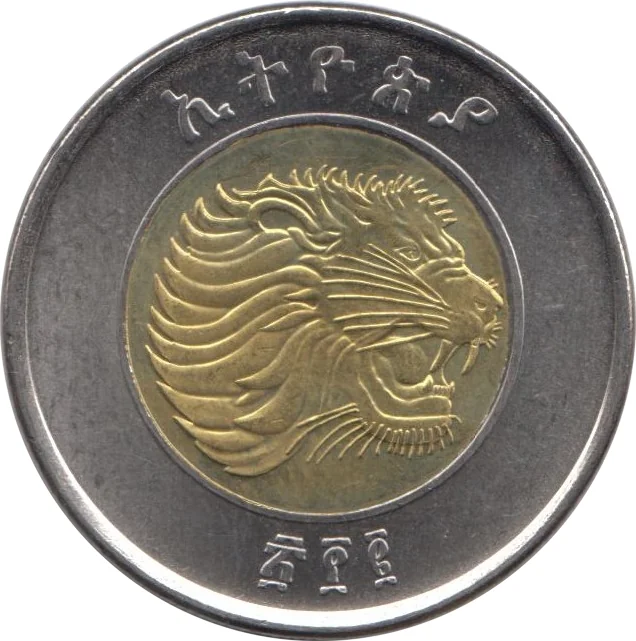
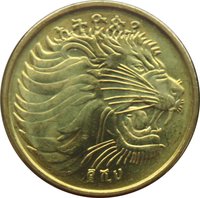
Obverse
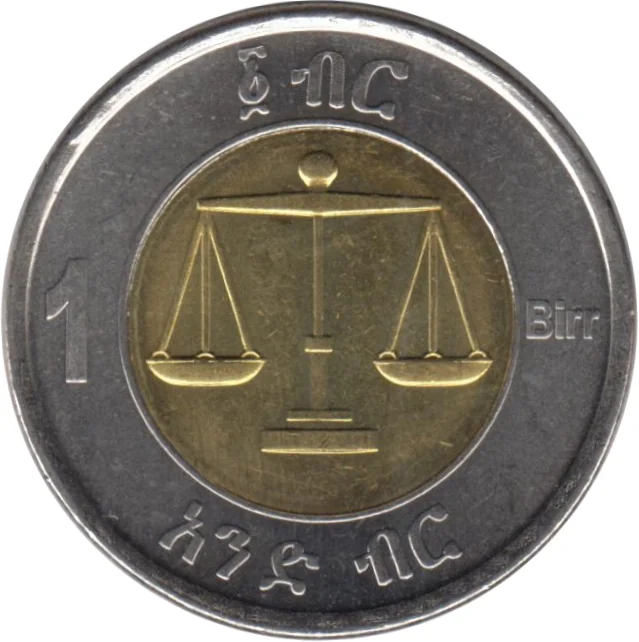
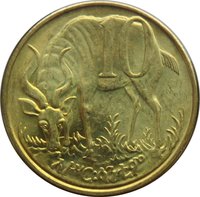
Reverse
Edge
6 reeded segments
Mints
| Name | Mark |
|---|---|
| Royal Canadian Mint of Winnipeg | — |
Mintings
| Year | Mint Mark | Mintage | Quality | Collection |
|---|---|---|---|---|
| 2010 | — | 416,000,000 | ||
| 2016 | — | — | ||
| 2020 | — | — |
Historical background
In 2010, Ethiopia's currency situation was characterized by a tightly controlled regime centered on the Ethiopian Birr (ETB), which was managed by the National Bank of Ethiopia (NBE). The official exchange rate was fixed by the central bank, with a significant disparity existing between this official rate and the parallel market rate. This gap, often exceeding 20%, was driven by strong demand for foreign exchange—particularly US dollars—from businesses needing to import goods, against a limited supply. The government maintained strict capital controls to conserve foreign reserves, prioritizing essential imports like petroleum, pharmaceuticals, and capital goods for state-led development projects.
The economic context was one of rapid, state-driven growth averaging over 10% annually, fueled by substantial public investment in infrastructure. However, this growth model increased import demand and contributed to persistent double-digit inflation, which eroded the Birr's domestic purchasing power. The government's reluctance to devalue the currency officially, for fear of exacerbating inflation and increasing the cost of servicing foreign debt, further entrenched the parallel market. Access to foreign currency for the private sector was rationed and bureaucratic, creating bottlenecks for businesses and fostering a thriving black market for forex.
Overall, the 2010 currency landscape reflected a fundamental tension: a growing economy requiring integration into global markets was constrained by a highly centralized and protective monetary policy. The system successfully directed scarce foreign exchange toward government priorities but at the cost of distorting the market, discouraging some foreign investment due to repatriation challenges, and creating inefficiencies for private enterprises. This controlled approach underscored the government's broader economic strategy of maintaining sovereignty over monetary policy while navigating the pressures of a globalizing economy.
The economic context was one of rapid, state-driven growth averaging over 10% annually, fueled by substantial public investment in infrastructure. However, this growth model increased import demand and contributed to persistent double-digit inflation, which eroded the Birr's domestic purchasing power. The government's reluctance to devalue the currency officially, for fear of exacerbating inflation and increasing the cost of servicing foreign debt, further entrenched the parallel market. Access to foreign currency for the private sector was rationed and bureaucratic, creating bottlenecks for businesses and fostering a thriving black market for forex.
Overall, the 2010 currency landscape reflected a fundamental tension: a growing economy requiring integration into global markets was constrained by a highly centralized and protective monetary policy. The system successfully directed scarce foreign exchange toward government priorities but at the cost of distorting the market, discouraging some foreign investment due to repatriation challenges, and creating inefficiencies for private enterprises. This controlled approach underscored the government's broader economic strategy of maintaining sovereignty over monetary policy while navigating the pressures of a globalizing economy.
🌱 Very Common