

20 Euro Cents – Belgium
Belgium
Context

Material
Diameter: 22.25 mm
Weight: 5.74 g
Thickness: 2.14 mm
Shape: Spanish flower
Composition: Nordic gold
Magnetic: No
Technique: Milled
Alignment: Medal alignment
flip
References
KM: #Click to copy to clipboard299
Numista: #6303
Value
Exchange value: 0.20 EUR = $0.24
Inflation-adjusted value: 0.29 EUR
Obverse
Description:
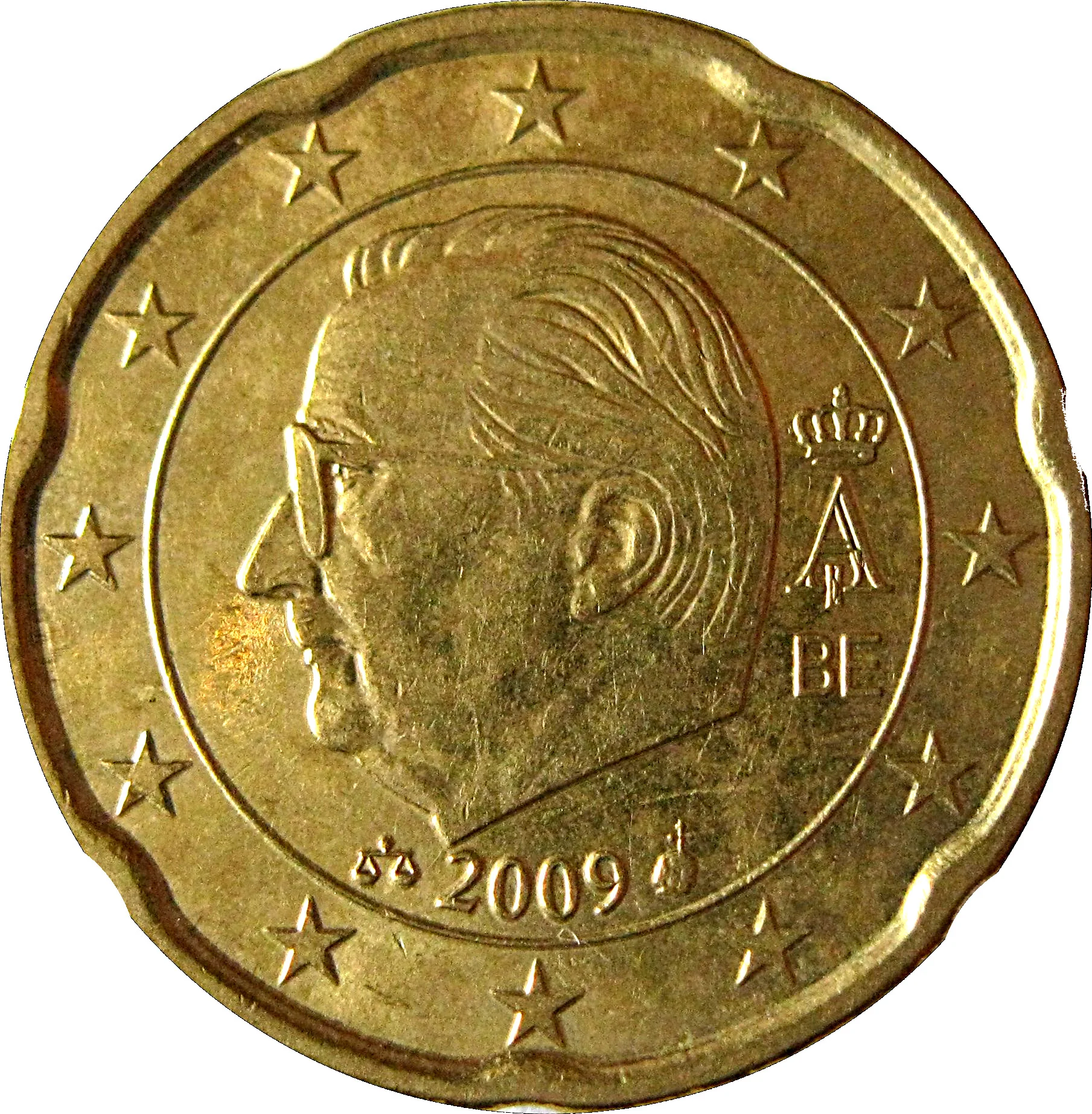
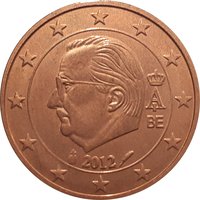
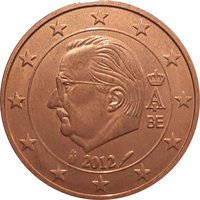
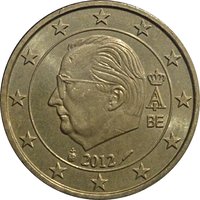
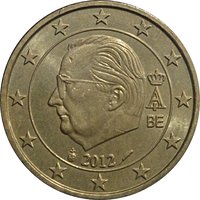
King Albert II's left profile is encircled by European stars, with his crowned monogram "A II" among them.
Inscription:
A II
BE
2009
BE
2009
Script: Latin
Engraver: Jan Alfons Keustermans
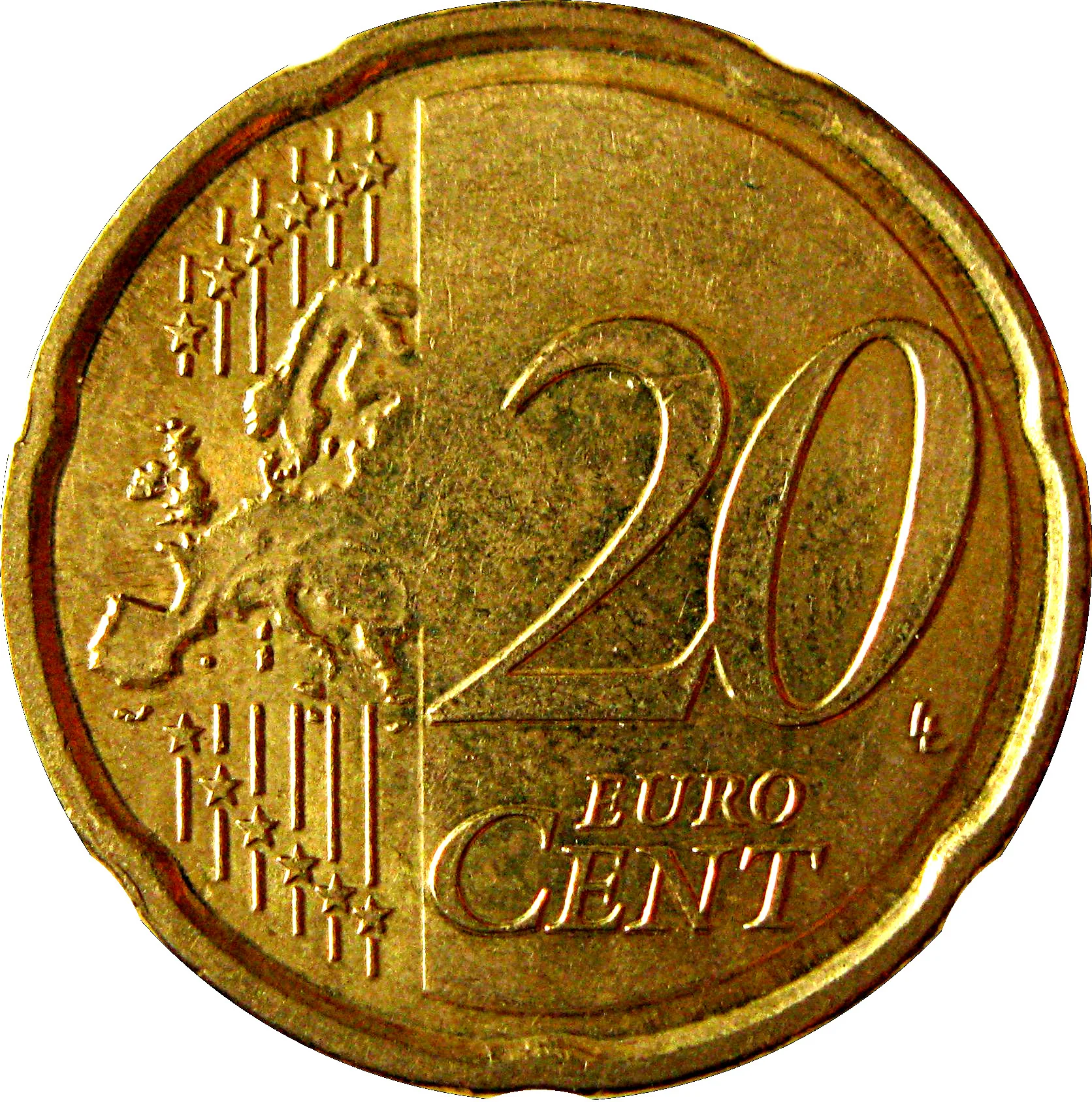
Reverse
Edge
Smooth with seven indentations ("Spanish flower")
Mints
| Name | Mark |
|---|---|
| Royal Mint of Belgium | — |
Mintings
| Year | Mint Mark | Mintage | Quality | Collection |
|---|---|---|---|---|
| 2009 | — | 39,500 | In sets | |
| 2009 | — | 1,506 | Proof | |
| 2009 | — | 30,000,000 | ||
| 2010 | — | 15,050,000 | ||
| 2010 | — | 42,000 | In sets | |
| 2010 | — | 1,850 | Proof | |
| 2011 | — | 1,850 | Proof | |
| 2011 | — | 31,300 | In sets | |
| 2011 | — | 40,250,000 | ||
| 2012 | — | 42,350,000 | ||
| 2012 | — | 32,000 | In sets | |
| 2012 | — | 1,000 | Proof | |
| 2013 | — | 1,000 | Proof | |
| 2013 | — | — | ||
| 2013 | — | 24,600 | In sets |
Historical background
In 2009, Belgium's currency situation was defined by its full integration into the Eurozone, having adopted the euro as its sole legal tender in 2002. The global financial crisis, which erupted in 2008, was the dominant economic backdrop, placing significant strain on the Belgian economy and, by extension, its position within the monetary union. As a member of the euro area, Belgium had relinquished control over its national monetary policy to the European Central Bank (ECB), which meant the country could not devalue its currency or set independent interest rates to combat the recession. Instead, it relied on coordinated ECB actions, which included lowering key interest rates to historic lows and implementing unconventional measures to ensure financial stability and liquidity across the Eurozone.
Domestically, the crisis exposed vulnerabilities in Belgium's financial sector, most notably the need for a series of government interventions to rescue Fortis Bank and Dexia, which had become severely distressed. These bailouts, occurring in 2008 and continuing into 2009, dramatically increased Belgium's public debt. This rising debt burden, coupled with a sharp economic contraction and growing budget deficit, led to heightened scrutiny from international markets and European institutions. Concerns about fiscal sustainability began to surface, foreshadowing the wider European sovereign debt crisis that would fully emerge in 2010.
Consequently, Belgium's primary currency-related challenges in 2009 were not about the Belgian franc but about managing its economy under the constraints of a shared currency during a severe downturn. The focus was on navigating the recession through federal fiscal stimulus and bank rescues while adhering to Eurozone rules, all against a backdrop of rising debt that would eventually place Belgium under EU excessive deficit procedures. The year solidified the reality that Belgium's economic fortunes were inextricably linked to the stability of the euro and the collective policy responses of the Eurozone.
Domestically, the crisis exposed vulnerabilities in Belgium's financial sector, most notably the need for a series of government interventions to rescue Fortis Bank and Dexia, which had become severely distressed. These bailouts, occurring in 2008 and continuing into 2009, dramatically increased Belgium's public debt. This rising debt burden, coupled with a sharp economic contraction and growing budget deficit, led to heightened scrutiny from international markets and European institutions. Concerns about fiscal sustainability began to surface, foreshadowing the wider European sovereign debt crisis that would fully emerge in 2010.
Consequently, Belgium's primary currency-related challenges in 2009 were not about the Belgian franc but about managing its economy under the constraints of a shared currency during a severe downturn. The focus was on navigating the recession through federal fiscal stimulus and bank rescues while adhering to Eurozone rules, all against a backdrop of rising debt that would eventually place Belgium under EU excessive deficit procedures. The year solidified the reality that Belgium's economic fortunes were inextricably linked to the stability of the euro and the collective policy responses of the Eurozone.
Series: 2009 Belgium circulation coins
🌱 Very Common