

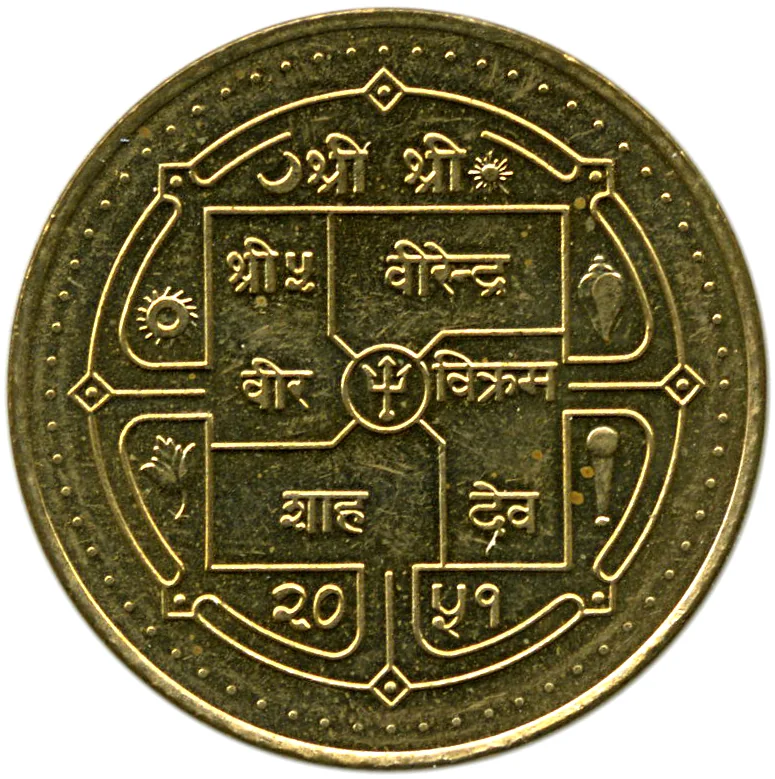
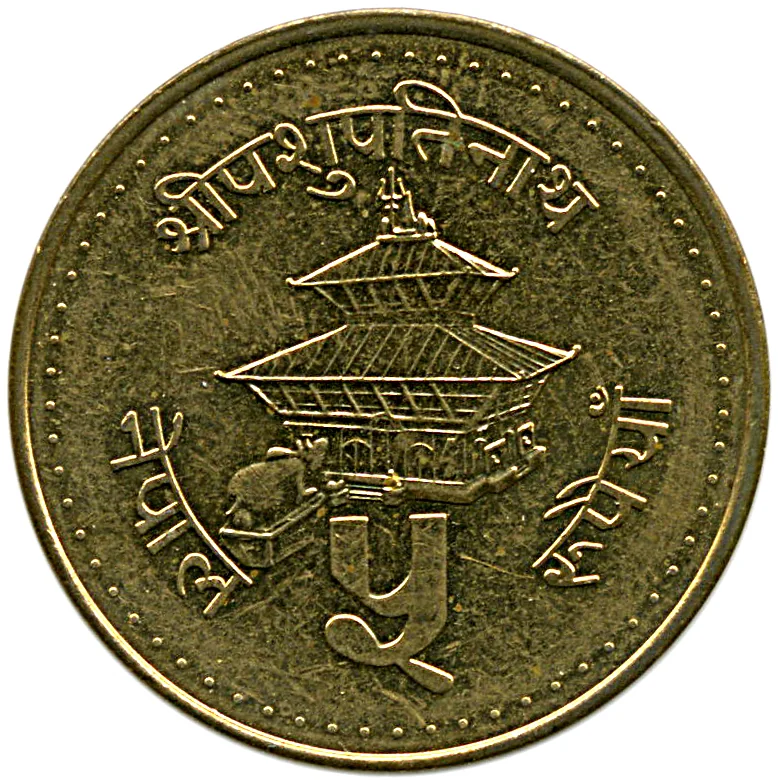
5 rupees – Nepal
Add to wishlist
Nepal
Context
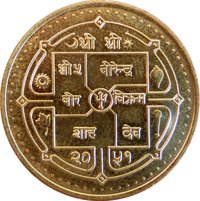
Year: 1994
Vikram Samvat Year:: 2051
Issuer: Nepal
Ruler: Birendra Bir Bikram Shah
Currency:
(since 1932)
Material
References
KM: #
Numista: #6280
Value
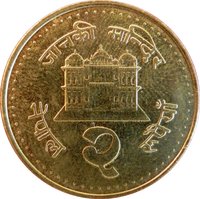
Exchange value: 5 NPR
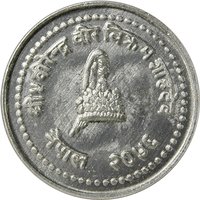
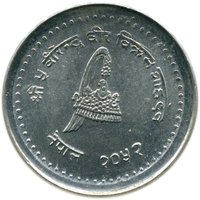
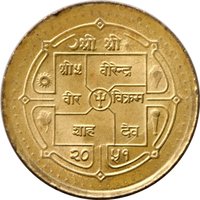
Obverse
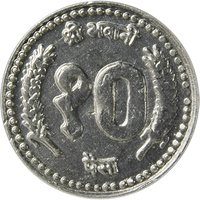
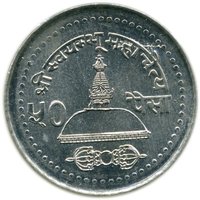
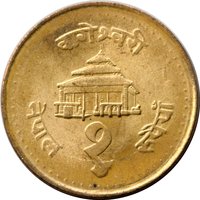
Reverse
Edge
Reeded
Mintings
| Year | Mint Mark | Mintage | Quality | Collection |
|---|---|---|---|---|
| 1994 | — | — |
Historical background
In 1994, Nepal's currency situation was characterized by a dual exchange rate system and was on the cusp of significant liberalization. The country maintained a fixed official exchange rate for the Nepalese rupee (NPR), pegged to the Indian rupee (INR) at a rate of NPR 1.60 = INR 1, which governed essential trade and government transactions. Alongside this, a more market-driven "Hundi" or parallel market rate existed, reflecting the currency's true demand and supply but also facilitating capital flight and creating distortions in the economy. This system created inefficiencies, encouraged corruption, and was a major point of contention with international financial institutions.
The year was pivotal as it followed the restoration of multi-party democracy in 1990 and preceded a major economic reform program. Under pressure from the World Bank and IMF to modernize its economy, the government was preparing to dismantle the dual exchange rate regime. The key reform, implemented in early 1995 (following decisions and groundwork in 1994), unified the exchange rates and established a floating peg system for the Nepalese rupee against the Indian rupee, while the currency's value against other currencies was determined through the INR's cross-rate with the US dollar. This move aimed to create transparency, attract foreign investment, and integrate Nepal more fully into the global economy.
Consequently, the macroeconomic environment in 1994 was one of transition and cautious optimism. The reforms were expected to stabilize the currency, reduce black-market activities, and improve the balance of payments. However, there were also concerns about potential short-term volatility, inflationary pressures from a likely devaluation, and the challenges of managing a more open financial account. Thus, 1994 stands as the final year of an outdated monetary policy, setting the stage for a new era of managed convertibility and liberalized foreign exchange in Nepal.
The year was pivotal as it followed the restoration of multi-party democracy in 1990 and preceded a major economic reform program. Under pressure from the World Bank and IMF to modernize its economy, the government was preparing to dismantle the dual exchange rate regime. The key reform, implemented in early 1995 (following decisions and groundwork in 1994), unified the exchange rates and established a floating peg system for the Nepalese rupee against the Indian rupee, while the currency's value against other currencies was determined through the INR's cross-rate with the US dollar. This move aimed to create transparency, attract foreign investment, and integrate Nepal more fully into the global economy.
Consequently, the macroeconomic environment in 1994 was one of transition and cautious optimism. The reforms were expected to stabilize the currency, reduce black-market activities, and improve the balance of payments. However, there were also concerns about potential short-term volatility, inflationary pressures from a likely devaluation, and the challenges of managing a more open financial account. Thus, 1994 stands as the final year of an outdated monetary policy, setting the stage for a new era of managed convertibility and liberalized foreign exchange in Nepal.
Series: 1994 Nepal circulation coins
🌱 Common