

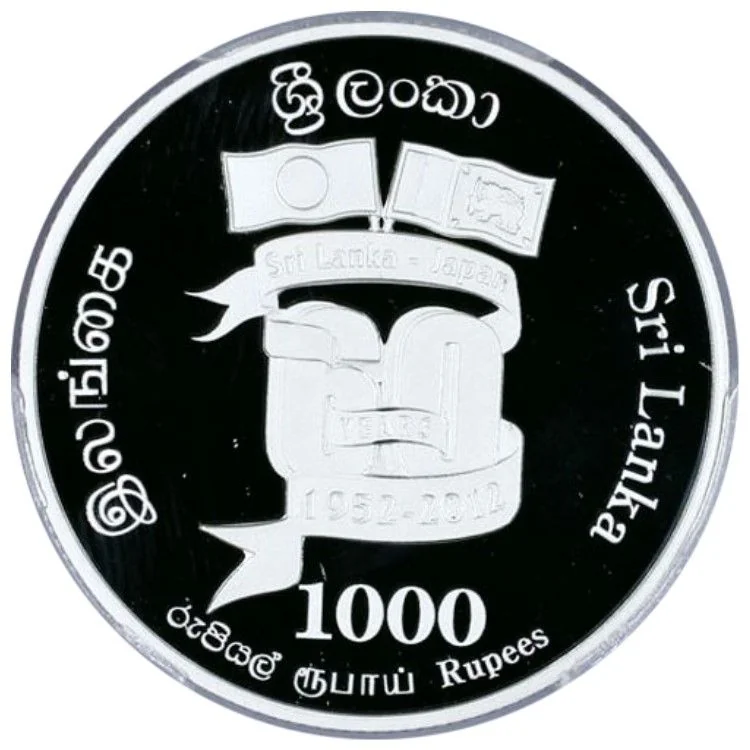
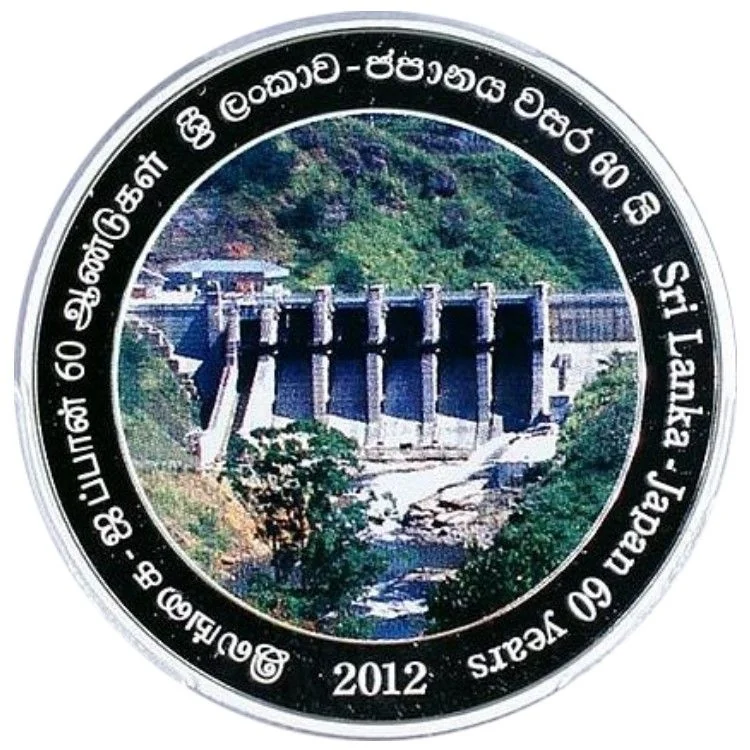
1000 rupees (Japanese-Sri Lanka Friendship) – Sri Lanka
Add to wishlist
Non-circulating coins
Commemoration: 60th Anniversary of Japanese-Sri Lanka Friendship
Sri Lanka
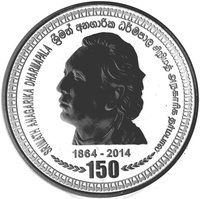
Obverse
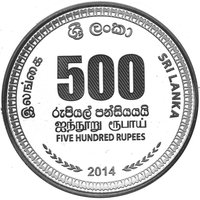
Reverse
Edge
Mints
| Name | Mark |
|---|---|
| Japan Mint | — |
Mintings
| Year | Mint Mark | Mintage | Quality | Collection |
|---|---|---|---|---|
| 2012 | — | 20,000 |
Historical background
In 2012, Sri Lanka's currency situation was defined by a severe balance of payments crisis and a dramatic depreciation of the Sri Lankan Rupee (LKR). Following the end of the civil war in 2009, the government embarked on a large-scale infrastructure drive financed heavily by foreign commercial loans and domestic credit expansion. This led to a widening trade deficit, as imports surged while exports remained stagnant. By early 2012, declining foreign exchange reserves were insufficient to cover the import bill and service foreign debt, creating intense pressure on the rupee.
In response, the Central Bank of Sri Lanka (CBSL) was forced to abandon its defence of a pegged exchange rate in February 2012. After spending over $2.6 billion in reserves in a failed attempt to maintain the peg, the CBSL allowed the rupee to float. The currency plummeted, depreciating by approximately 18% against the US dollar over the course of the year. This sharp devaluation was a core component of an IMF-supported stabilization program, aimed at correcting external imbalances by making imports more expensive and exports more competitive.
The immediate consequences for the Sri Lankan economy and public were severe. The depreciation fueled imported inflation, sharply increasing the cost of essential goods like fuel, food, and medicine. Interest rates were raised significantly to curb credit growth and attract foreign capital, which slowed economic growth and increased borrowing costs. While the devaluation was a necessary corrective measure from a macroeconomic perspective, it imposed a heavy burden on the population, marking 2012 as a year of significant economic hardship and a pivotal moment in the country's ongoing financial challenges.
In response, the Central Bank of Sri Lanka (CBSL) was forced to abandon its defence of a pegged exchange rate in February 2012. After spending over $2.6 billion in reserves in a failed attempt to maintain the peg, the CBSL allowed the rupee to float. The currency plummeted, depreciating by approximately 18% against the US dollar over the course of the year. This sharp devaluation was a core component of an IMF-supported stabilization program, aimed at correcting external imbalances by making imports more expensive and exports more competitive.
The immediate consequences for the Sri Lankan economy and public were severe. The depreciation fueled imported inflation, sharply increasing the cost of essential goods like fuel, food, and medicine. Interest rates were raised significantly to curb credit growth and attract foreign capital, which slowed economic growth and increased borrowing costs. While the devaluation was a necessary corrective measure from a macroeconomic perspective, it imposed a heavy burden on the population, marking 2012 as a year of significant economic hardship and a pivotal moment in the country's ongoing financial challenges.
✨ Legendary