

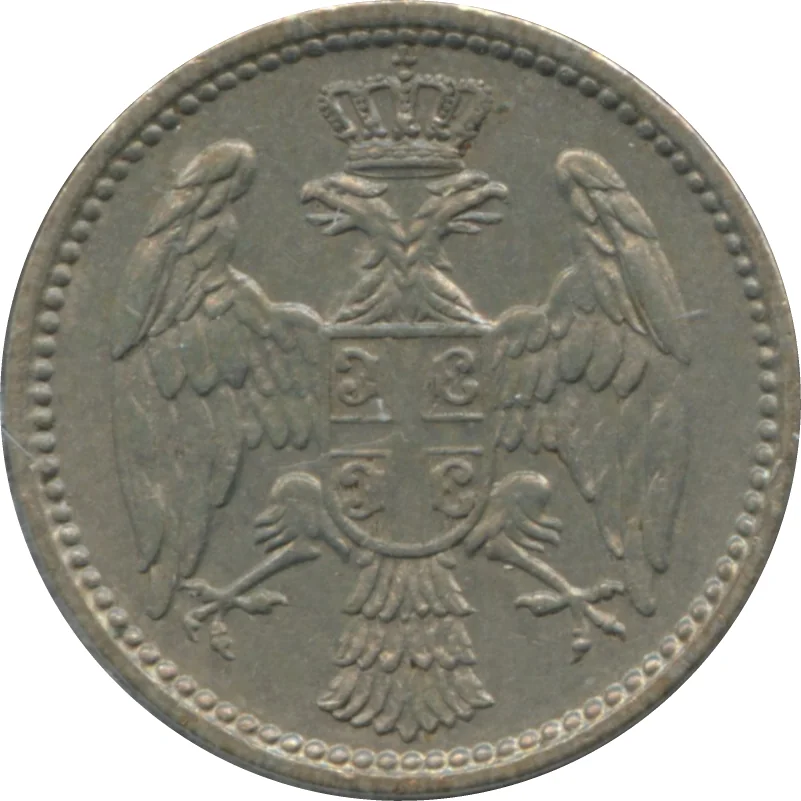
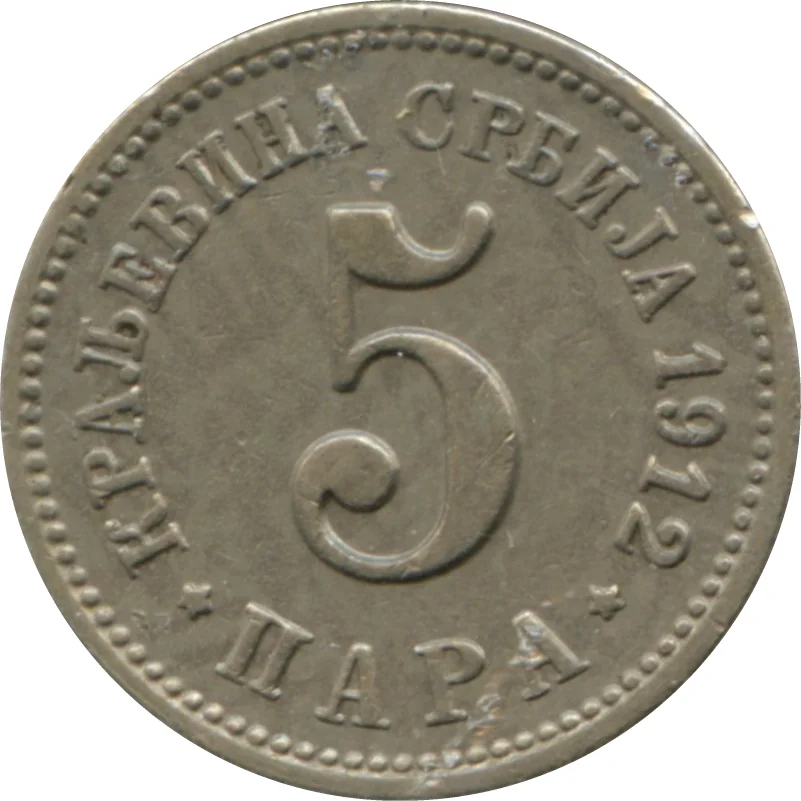
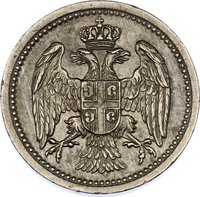
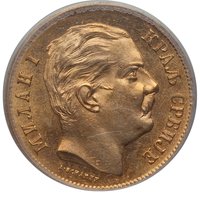
Obverse
Description:
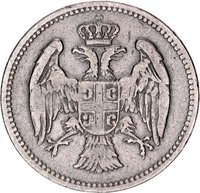
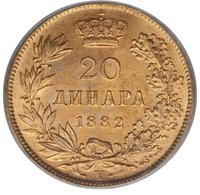
Serbian coat of arms encircled by pearls.
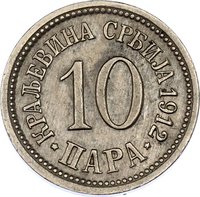
Reverse
Edge
Plain
Categories
| Symbols> Coat of Arms |
| Symbol> Double-headed eagle |
| Animal> Bird |
| Symbol> Crown |
Mintings
Historical background
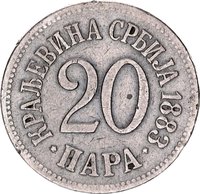
In 1883, Serbia operated under a complex and transitional monetary system. Officially, the country was on a bimetallic standard, with the Serbian dinar, subdivided into 100 paras, defined by law in terms of both silver and gold. However, the reality was a circulation dominated by foreign silver coins, particularly the Austro-Hungarian gulden (forint), which was the de facto primary medium for larger transactions and trade due to the Habsburg Empire's economic dominance in the region. The domestic coinage in circulation was limited, often of lower quality, and struggled to gain public confidence, leading to a persistent reliance on foreign currency.
This monetary fragmentation created significant economic and political challenges for the autonomous Principality of Serbia. The widespread use of foreign coinage impeded the state's monetary sovereignty and complicated fiscal policy. Furthermore, the need to maintain fixed exchange rates between silver, gold, and the various circulating coins placed a strain on the National Bank of Serbia, founded just two years prior in 1881. The bank's task was to stabilize the currency and unify the monetary system, but it operated in a difficult environment of fluctuating international precious metal prices and regional economic dependency.
The situation was a direct reflection of Serbia's broader struggle for economic independence within the sphere of great power influence, primarily from Austria-Hungary. The currency chaos of 1883 underscored the government's urgent priority to establish a stable, unified, and nationally controlled monetary system as a cornerstone of modern statehood. This drive would eventually lead to major monetary reforms, most notably the creation of a gold standard with the Law on the Minting of Gold Coins in 1878, with its full implementation taking place in the subsequent decades, solidifying the dinar as a symbol of national sovereignty.
This monetary fragmentation created significant economic and political challenges for the autonomous Principality of Serbia. The widespread use of foreign coinage impeded the state's monetary sovereignty and complicated fiscal policy. Furthermore, the need to maintain fixed exchange rates between silver, gold, and the various circulating coins placed a strain on the National Bank of Serbia, founded just two years prior in 1881. The bank's task was to stabilize the currency and unify the monetary system, but it operated in a difficult environment of fluctuating international precious metal prices and regional economic dependency.
The situation was a direct reflection of Serbia's broader struggle for economic independence within the sphere of great power influence, primarily from Austria-Hungary. The currency chaos of 1883 underscored the government's urgent priority to establish a stable, unified, and nationally controlled monetary system as a cornerstone of modern statehood. This drive would eventually lead to major monetary reforms, most notably the creation of a gold standard with the Law on the Minting of Gold Coins in 1878, with its full implementation taking place in the subsequent decades, solidifying the dinar as a symbol of national sovereignty.
🌱 Very Common