

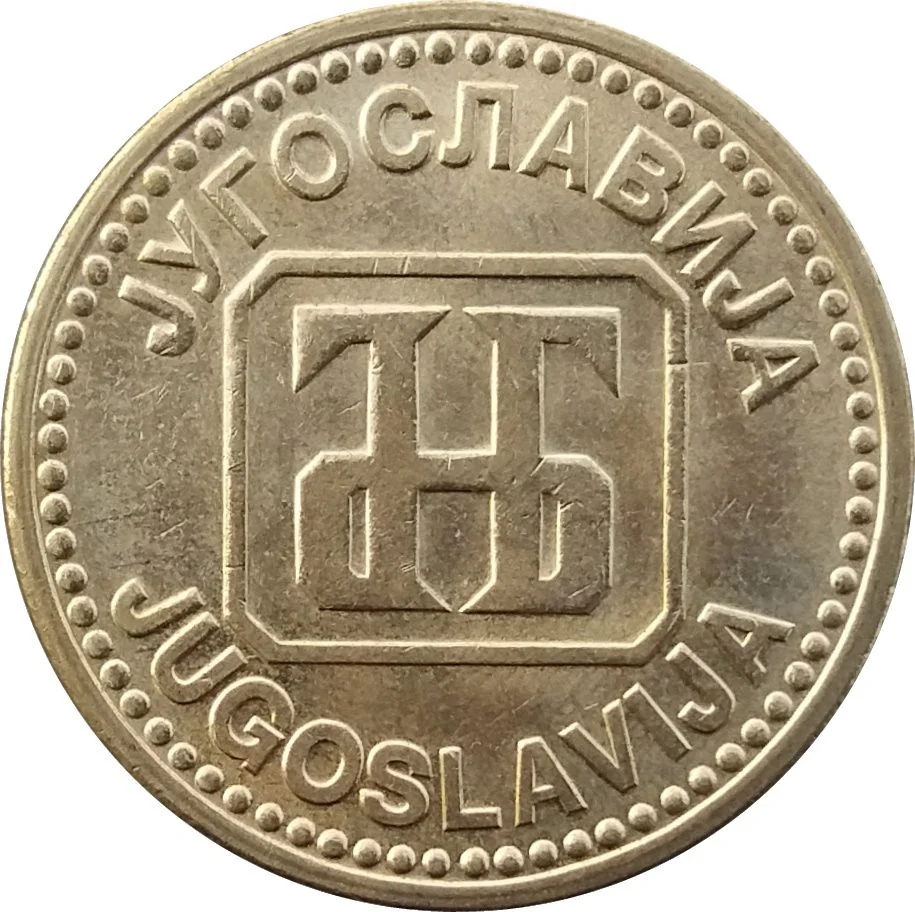
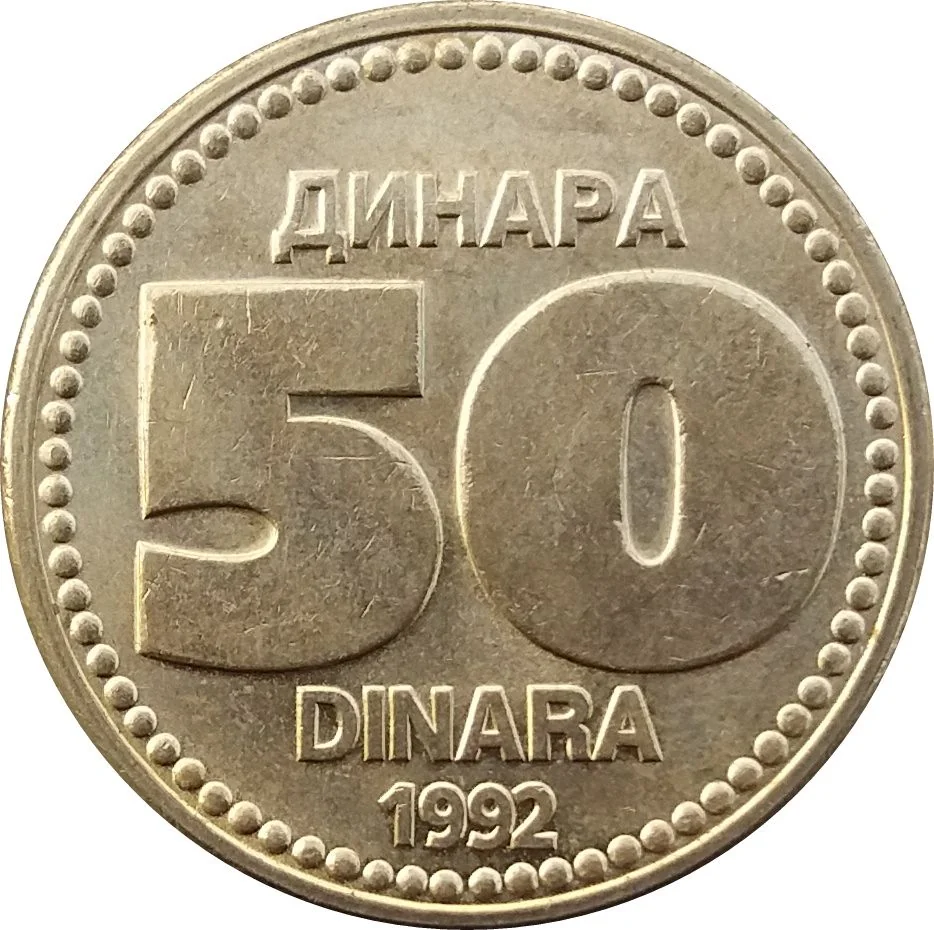
50 dinars – Yugoslavia
Add to wishlist
Context
Year: 1992
Issuer: Yugoslavia
Period:
(1992—2003)
Currency:
(1992—1993)
Demonetized: Yes
Total mintage: 50,571,000
Material
Diameter: 27 mm
Weight: 7.5 g
Shape: Round
Composition: Nickel brass
Magnetic: No
Technique: Milled
Alignment: Medal alignment
flip
References
KM: #
Numista: #6220
Value
Exchange value: 50 YUR
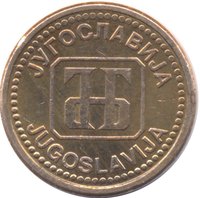
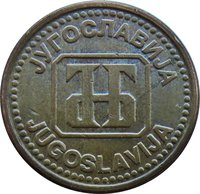
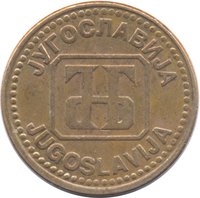
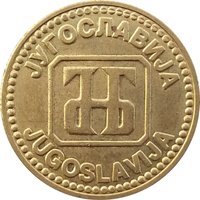
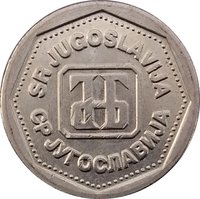
Obverse
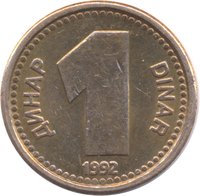
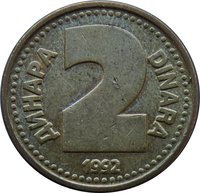
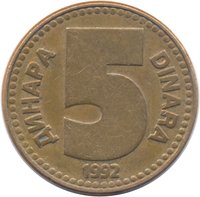
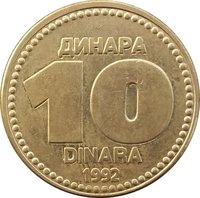
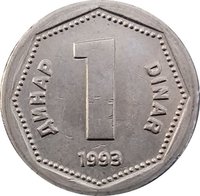
Reverse
Edge
Reeded
Mintings
| Year | Mint Mark | Mintage | Quality | Collection |
|---|---|---|---|---|
| 1992 | — | 50,571,000 |
Historical background
The currency situation in Yugoslavia in 1992 was one of catastrophic hyperinflation, directly resulting from the violent disintegration of the federal state. Following the secession of Slovenia, Croatia, Bosnia and Herzegovina, and Macedonia, the rump Federal Republic of Yugoslavia (consisting of Serbia and Montenegro) inherited the old Yugoslav dinar but faced an economic abyss. International sanctions, imposed due to the regime's role in the Balkan Wars, severed the economy from world trade, while the government of Slobodan Milošević, needing to fund both massive military expenditures and maintain social peace, resorted to the unrestrained printing of money to cover its deficits.
This monetary explosion collided with a collapsing production base, leading to a classic hyperinflationary spiral. The National Bank of Yugoslavia lost all control, issuing ever-higher denominations—from 5,000-dinar notes in early 1992 to 500 billion-dinar notes by the end of the year. Prices doubled within hours, savings were obliterated, and the economy regressed to barter. Several "currency reforms" were attempted, where new dinars were introduced, lopping zeros off the old ones, but these were merely technical adjustments that did not address the underlying fiscal crisis.
Consequently, by late 1992, the Yugoslav dinar ceased to function as a meaningful store of value or unit of account. In practice, the economy became "dollarized," with the German Deutsche Mark (and later the US dollar) serving as the stable currency for large transactions and savings, while the government-issued dinar was used only for small, immediate daily necessities. This period marked the complete breakdown of monetary sovereignty, setting the stage for even more extreme hyperinflation in 1993, which would go down as one of the worst in economic history.
This monetary explosion collided with a collapsing production base, leading to a classic hyperinflationary spiral. The National Bank of Yugoslavia lost all control, issuing ever-higher denominations—from 5,000-dinar notes in early 1992 to 500 billion-dinar notes by the end of the year. Prices doubled within hours, savings were obliterated, and the economy regressed to barter. Several "currency reforms" were attempted, where new dinars were introduced, lopping zeros off the old ones, but these were merely technical adjustments that did not address the underlying fiscal crisis.
Consequently, by late 1992, the Yugoslav dinar ceased to function as a meaningful store of value or unit of account. In practice, the economy became "dollarized," with the German Deutsche Mark (and later the US dollar) serving as the stable currency for large transactions and savings, while the government-issued dinar was used only for small, immediate daily necessities. This period marked the complete breakdown of monetary sovereignty, setting the stage for even more extreme hyperinflation in 1993, which would go down as one of the worst in economic history.
🌱 Very Common