

20 dinars – Yugoslavia
Add to wishlist
Context
Year: 1963
Issuer: Yugoslavia
Issuing organization: National Bank of Yugoslavia
Period:
(1963—1992)
Currency:
(1944—1965)
Demonetization: 31 December 1985
Total mintage: 4,503,000
Material
References
KM: #
Numista: #6215
Obverse
Description:
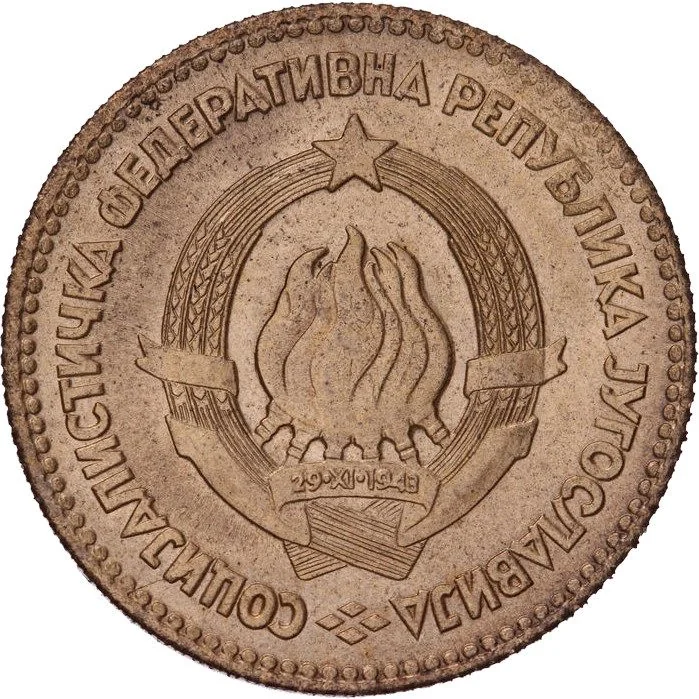
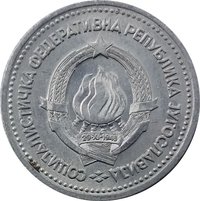
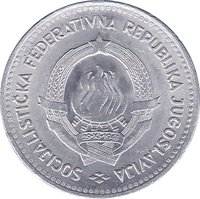
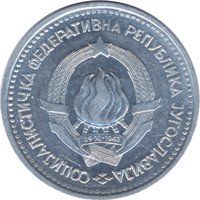
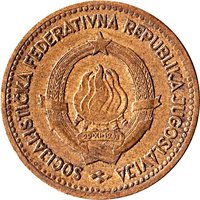
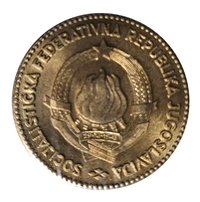
Socialist Federal Republic of Yugoslavia (1963–1992 coat of arms with six torches).
Inscription:
СОЦИЈАЛИСТИЧКА ФЕДЕРАТИВНА РЕПУБЛИКА ЈУГОСЛАВИЈА
29·XI·1943
29·XI·1943
Translation:
SOCIALIST FEDERAL REPUBLIC OF YUGOSLAVIA
29·XI·1943
29·XI·1943
Script: Cyrillic
Language: Serbian
Designer: Frano Meneghello Dinčić
Reverse
Description:
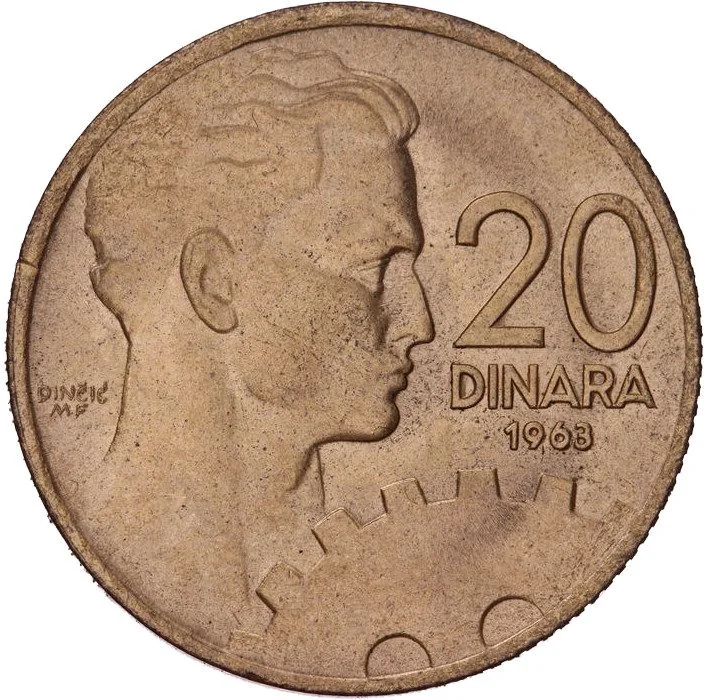
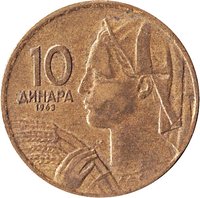
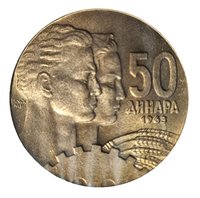
Man facing right, details on right, cogwheel below.
Inscription:
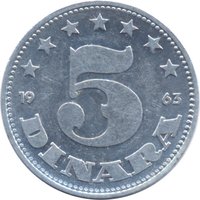
20
DINARA
1963
DINČIĆ
M·F
DINARA
1963
DINČIĆ
M·F
Translation:
Twenty Dinara
1963
Dinchich
M·F
1963
Dinchich
M·F
Script: Latin
Designer: Frano Meneghello Dinčić
Edge
Reeded
Categories
| Industry |
| Symbols> Coat of Arms |
Mints
| Name | Mark |
|---|---|
| Belgrade | — |
Mintings
| Year | Mint Mark | Mintage | Quality | Collection |
|---|---|---|---|---|
| 1963 | — | 4,503,000 |
Historical background
In 1963, Yugoslavia’s currency situation was defined by the complex and evolving framework of its unique socialist self-management system. The official currency remained the Yugoslav dinar (YUD), but its management was caught between centralized control and the increasing autonomy granted to republics and enterprises under ongoing economic reforms. The 1961 monetary reform, which introduced a "heavy dinar" at a rate of 100 old dinars to 1 new dinar and pegged it to the US dollar, was still in effect. However, this fixed parity was becoming increasingly strained due to underlying economic imbalances.
The core challenge was a growing trade deficit and persistent inflation, partly fueled by heavy investment and liberalized credit. While the official exchange rate was maintained, a system of multiple, effective exchange rates emerged through various subsidies, taxes, and retention quotas for exporters. This created a disconnect between the formal parity and the real economic value of the dinar, leading to pressures for devaluation. The economy was also marked by regional disparities, with more developed republics like Slovenia and Croatia generating surpluses, while less developed regions ran deficits, complicating national monetary policy.
Overall, 1963 represented a period of precarious stability in Yugoslavia's currency regime, sitting on the fault lines of its economic model. The fixed exchange rate served as a symbol of monetary discipline, but it was increasingly propped up by administrative measures rather than market equilibrium. These tensions would culminate in a significant devaluation just two years later, in 1965, as part of a major economic reform package aimed at addressing the very imbalances that were becoming apparent in 1963.
The core challenge was a growing trade deficit and persistent inflation, partly fueled by heavy investment and liberalized credit. While the official exchange rate was maintained, a system of multiple, effective exchange rates emerged through various subsidies, taxes, and retention quotas for exporters. This created a disconnect between the formal parity and the real economic value of the dinar, leading to pressures for devaluation. The economy was also marked by regional disparities, with more developed republics like Slovenia and Croatia generating surpluses, while less developed regions ran deficits, complicating national monetary policy.
Overall, 1963 represented a period of precarious stability in Yugoslavia's currency regime, sitting on the fault lines of its economic model. The fixed exchange rate served as a symbol of monetary discipline, but it was increasingly propped up by administrative measures rather than market equilibrium. These tensions would culminate in a significant devaluation just two years later, in 1965, as part of a major economic reform package aimed at addressing the very imbalances that were becoming apparent in 1963.
🌱 Common