

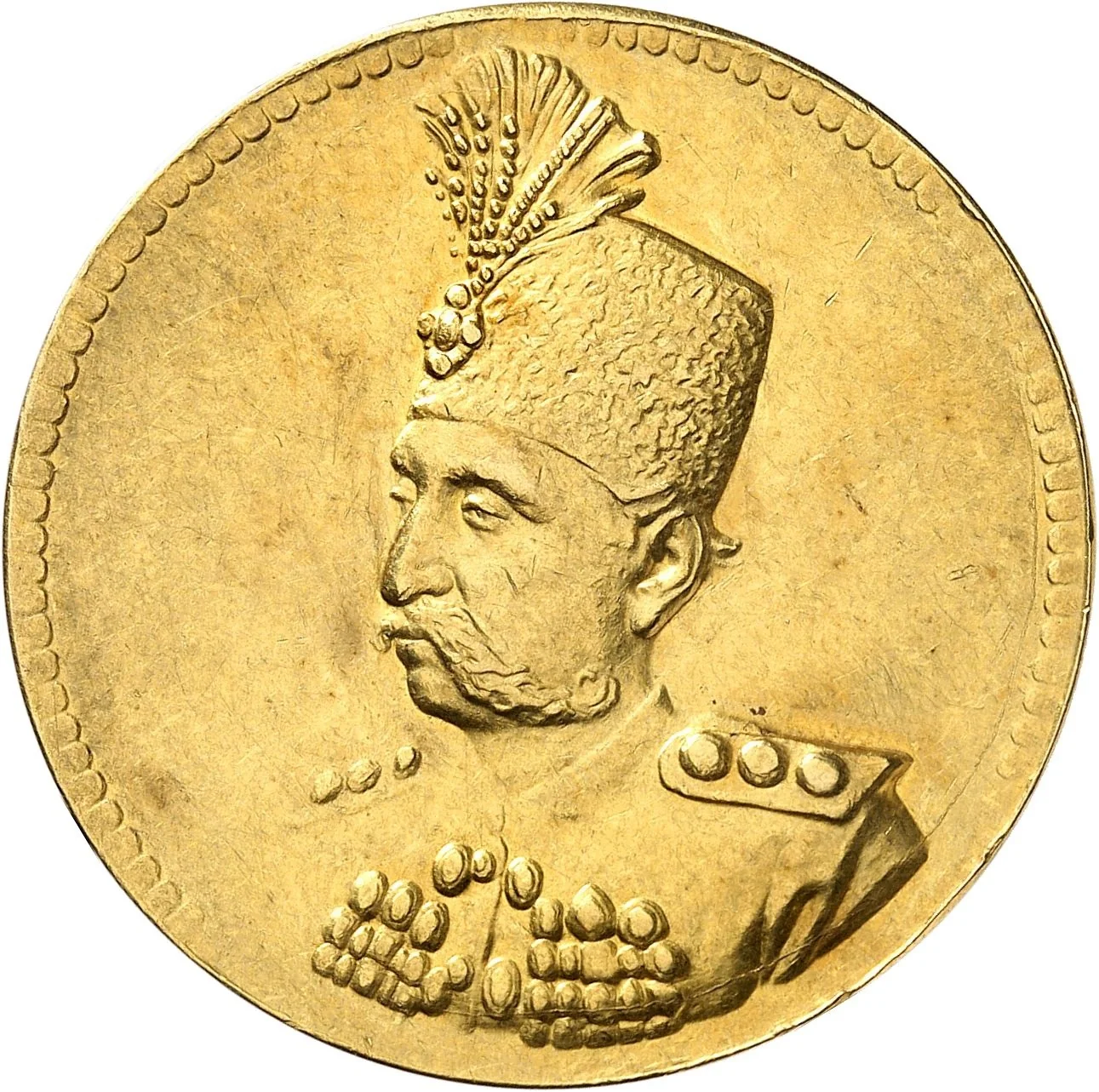
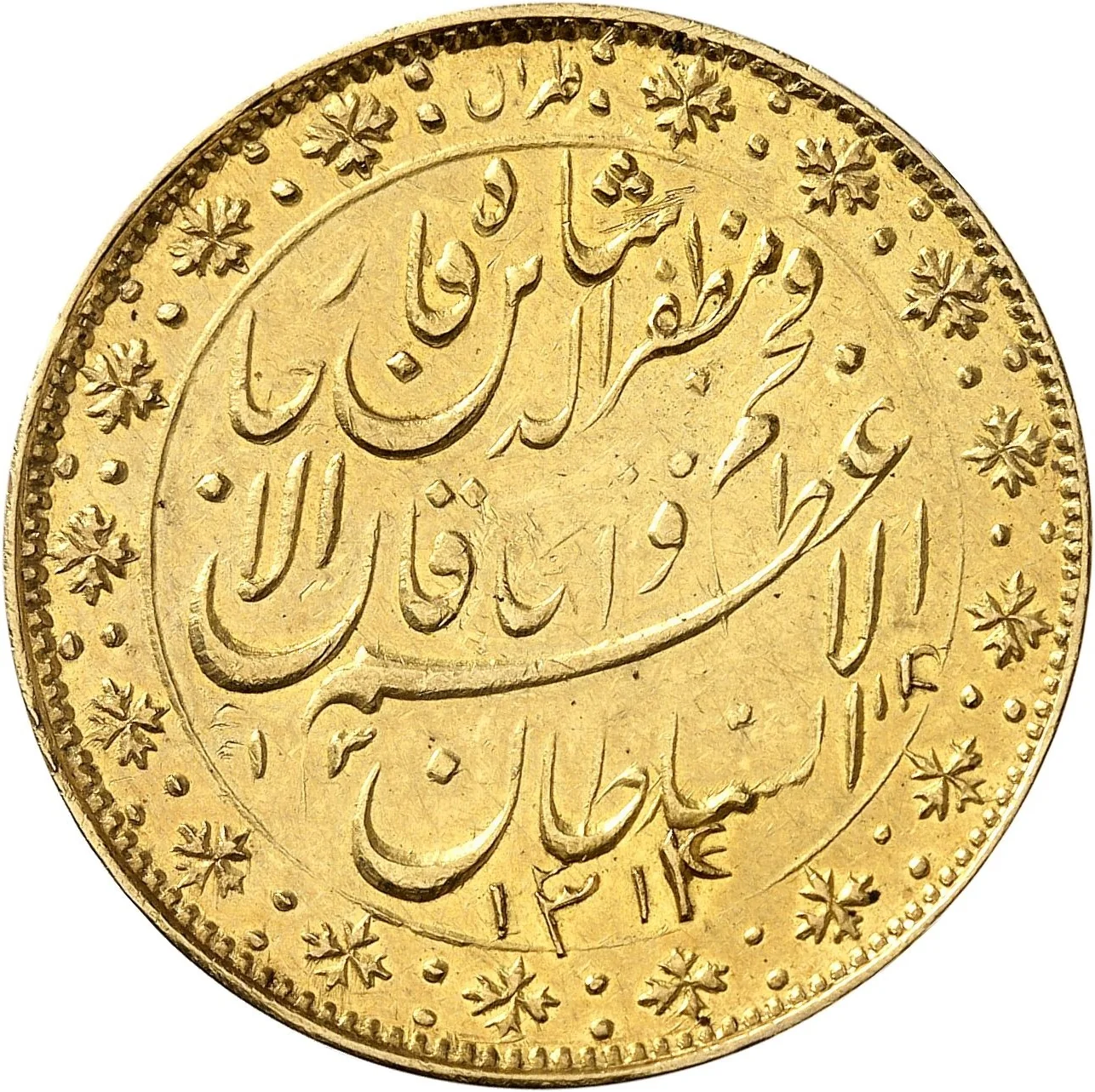
10 toman – Iran
Add to wishlist
Iran
Context
Year: 1897
Islamic (Hijri) Year:: 1314
Issuer: Iran
Ruler: Mozaffar ad-Din Shah
Currency:
(1825—1932)
Demonetization: 1907
Material
References
KM: #
Numista: #62139
Value
Bullion value: $3971.02
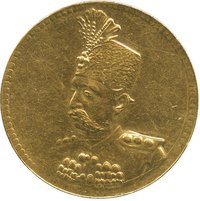
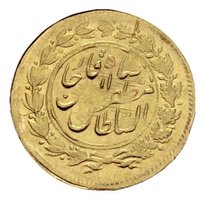
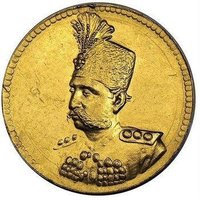
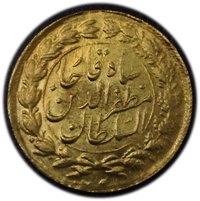
Obverse
Description:
Mozaffar al-Din Shah Qajar bust
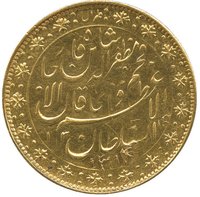
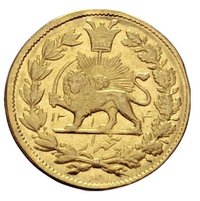
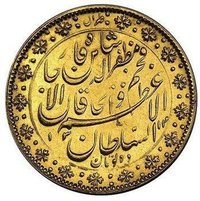
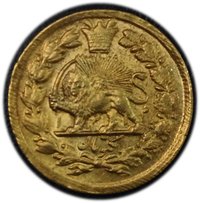
Reverse
Edge
Reeded
Mintings
| Year | Mint Mark | Mintage | Quality | Collection |
|---|---|---|---|---|
| 1897 | — | — |
Historical background
In 1897, Iran’s currency system was in a state of profound disarray, a legacy of the Qajar dynasty's long-term fiscal mismanagement and foreign interference. The monetary landscape was a chaotic patchwork of domestic and foreign coins. Domestically, the principal silver coin was the kran, but its weight and purity were not uniform, as various provincial mints produced their own versions. Alongside these, the gold toman (worth 10 krans) and copper shahis circulated, but the lack of a central, trusted standard led to widespread confusion and discounting in trade. Crucially, foreign silver coins, particularly the Russian ruble and the British Indian rupee, circulated widely, especially in the north and south respectively, undermining national monetary sovereignty and reflecting the spheres of imperial influence.
This instability was exacerbated by a severe and chronic shortage of silver, leading to the debasement of coinage. The government, perennially short of revenue and burdened by extravagant court expenditures and costly concessions to foreign powers, often minted coins with lower silver content to generate seigniorage profit. This practice destroyed public trust, causing Gresham’s Law to operate in full force: "bad" debased coins drove "good" full-bodied coins out of circulation, either into hoards or for export. The result was a volatile exchange rate between silver and gold, and rampant inflation that particularly harmed the lower and middle classes, while enriching money-changers (sarrafs) and those with access to foreign currency.
The situation in 1897 was a key pressure point that would soon force major reform. The Qajar state, recognizing that monetary chaos was stifling the economy and strengthening foreign control, was on the cusp of change. Just three years later, in 1900, the government would contract with Belgian officials to establish the Banque d'Escompte de Perse and begin a serious push for standardization. Therefore, 1897 represents the late, crisis-ridden stage of an archaic system, immediately preceding the contentious and only partially successful attempts at modern central banking and the introduction of a unified national currency in the early 20th century.
This instability was exacerbated by a severe and chronic shortage of silver, leading to the debasement of coinage. The government, perennially short of revenue and burdened by extravagant court expenditures and costly concessions to foreign powers, often minted coins with lower silver content to generate seigniorage profit. This practice destroyed public trust, causing Gresham’s Law to operate in full force: "bad" debased coins drove "good" full-bodied coins out of circulation, either into hoards or for export. The result was a volatile exchange rate between silver and gold, and rampant inflation that particularly harmed the lower and middle classes, while enriching money-changers (sarrafs) and those with access to foreign currency.
The situation in 1897 was a key pressure point that would soon force major reform. The Qajar state, recognizing that monetary chaos was stifling the economy and strengthening foreign control, was on the cusp of change. Just three years later, in 1900, the government would contract with Belgian officials to establish the Banque d'Escompte de Perse and begin a serious push for standardization. Therefore, 1897 represents the late, crisis-ridden stage of an archaic system, immediately preceding the contentious and only partially successful attempts at modern central banking and the introduction of a unified national currency in the early 20th century.
Series: 1897 Iran circulation coins

✨ Legendary