

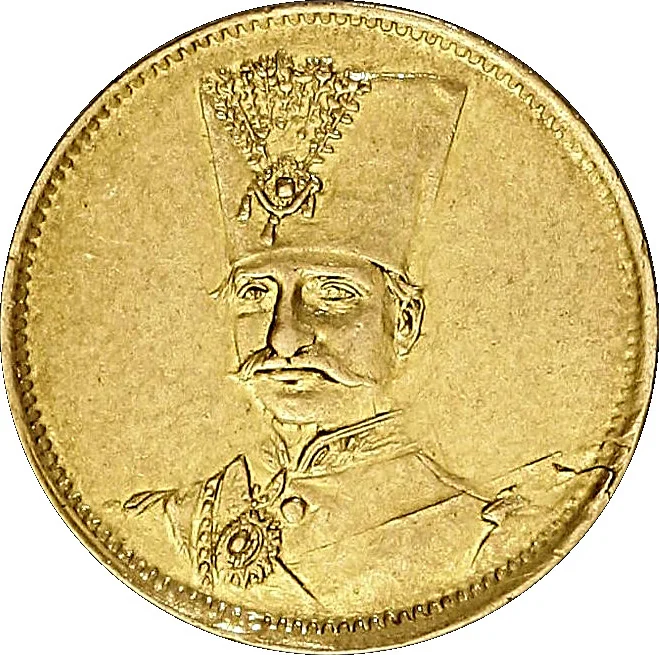
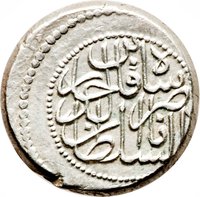
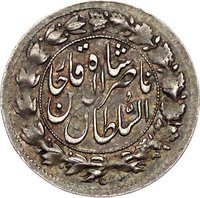
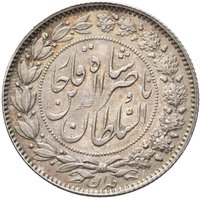
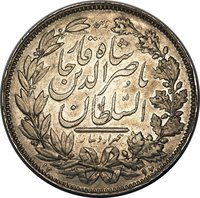
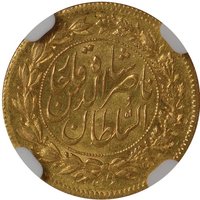
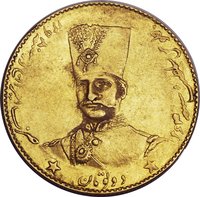
Obverse
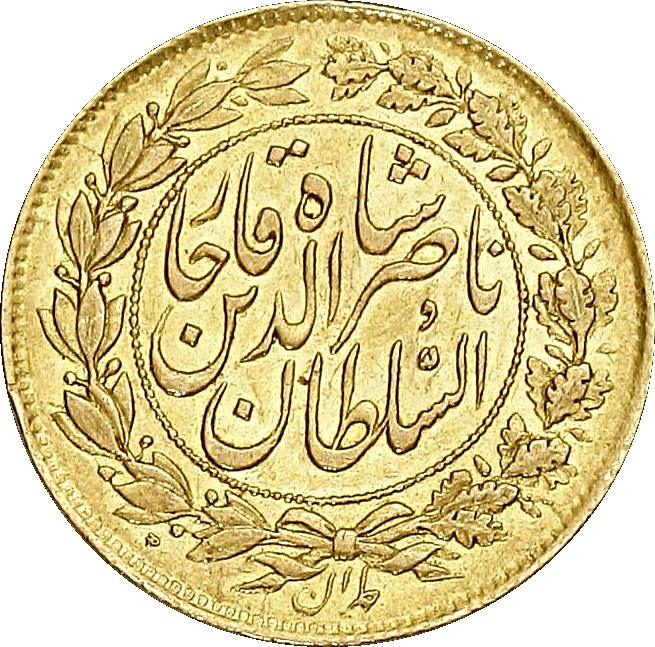
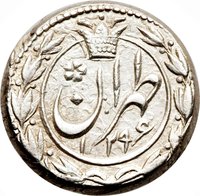
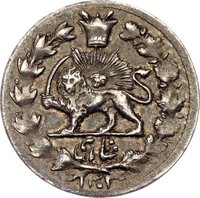
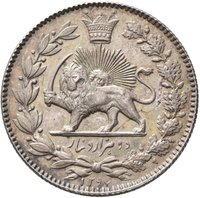
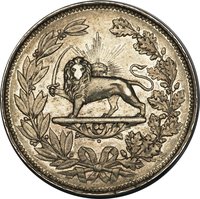
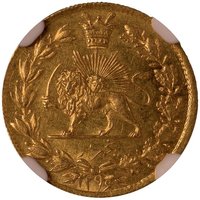
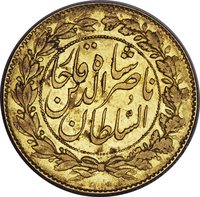
Reverse
Inscription:
السُّلطان ناصرالدین شاه قاجار
طهران
طهران
Translation:
The Sultan Naser al-Din Shah Qajar
Tehran
Tehran
Language: Arabic
Edge
Mints
| Name | Mark |
|---|---|
| Tehran | طهران |
Mintings
| Year | Mint Mark | Mintage | Quality | Collection |
|---|---|---|---|---|
| 1879 | — | — |
Historical background
In 1879, Iran's currency system was in a state of profound disarray, a legacy of the Qajar dynasty's chronic fiscal mismanagement and external pressures. The monetary landscape was a chaotic patchwork of domestic and foreign coins. The primary unit was the silver qiran (also kran), but its value and silver content had been severely debased over decades to finance royal extravagance and military expenses. Circulating alongside it were copper shahis and dinars for small transactions, and gold tomans (worth 10 qirans) for larger dealings, all with fluctuating and unreliable exchange rates. Crucially, a massive influx of foreign silver, particularly Maria Theresa thalers and Russian rubles, further complicated the economy, as these trusted foreign coins often circulated at a premium over the debased domestic currency.
This instability was exacerbated by the absence of a central bank or unified monetary authority. Coinage was minted at various provincial mints with little standardization, leading to wide variations in weight and purity, which encouraged widespread clipping and counterfeiting. The government's repeated, unsuccessful attempts to introduce new copper coins to generate seigniorage revenue had created hyperinflation in the copper currency, devastating the poor and causing social unrest. This internal fragility was compounded by Iran’s increasing integration into the global economy, with its trade deficit leading to a steady drain of silver bullion abroad.
Consequently, the year 1879 fell within a period of acute monetary crisis and transition. It directly followed the disastrous 1877-78 attempt by the reform-minded Grand Vizier Mirza Hosein Khan Moshir od-Dowleh to introduce a uniform national copper coinage, which had failed spectacularly and was abandoned. The situation demanded drastic reform, setting the stage for the pivotal changes that would follow in the 1880s, including the official devaluation of the qiran and, ultimately, the establishment of the Imperial Bank of Persia in 1889, which would introduce Iran’s first modern paper currency.
This instability was exacerbated by the absence of a central bank or unified monetary authority. Coinage was minted at various provincial mints with little standardization, leading to wide variations in weight and purity, which encouraged widespread clipping and counterfeiting. The government's repeated, unsuccessful attempts to introduce new copper coins to generate seigniorage revenue had created hyperinflation in the copper currency, devastating the poor and causing social unrest. This internal fragility was compounded by Iran’s increasing integration into the global economy, with its trade deficit leading to a steady drain of silver bullion abroad.
Consequently, the year 1879 fell within a period of acute monetary crisis and transition. It directly followed the disastrous 1877-78 attempt by the reform-minded Grand Vizier Mirza Hosein Khan Moshir od-Dowleh to introduce a uniform national copper coinage, which had failed spectacularly and was abandoned. The situation demanded drastic reform, setting the stage for the pivotal changes that would follow in the 1880s, including the official devaluation of the qiran and, ultimately, the establishment of the Imperial Bank of Persia in 1889, which would introduce Iran’s first modern paper currency.
Series: 1879 Iran circulation coins
✨ Legendary