

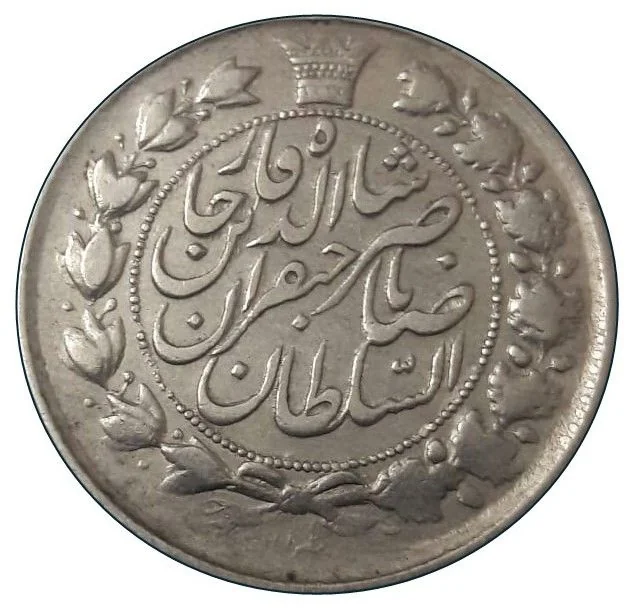
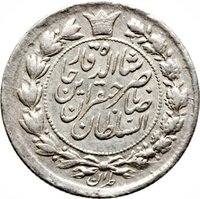
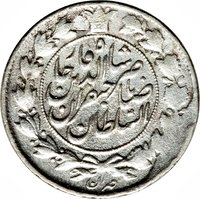
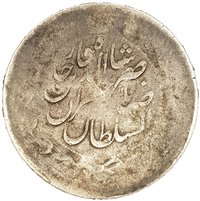
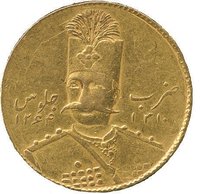
Obverse
Description:
Inscription within beaded circle, surrounded by wreath and crown.
Script: Persian
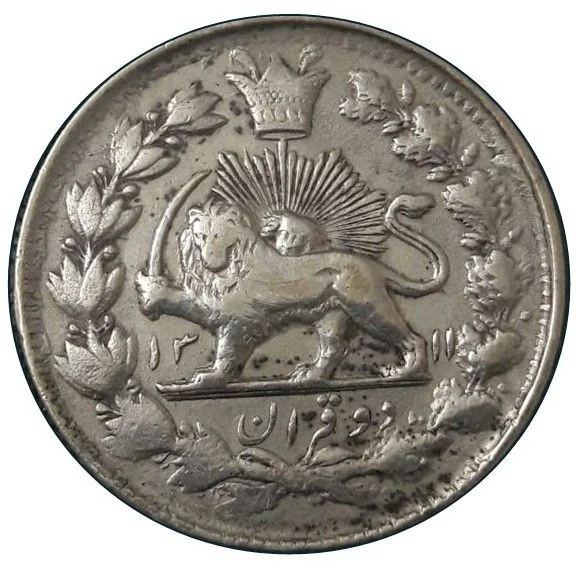
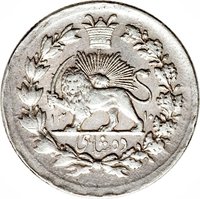
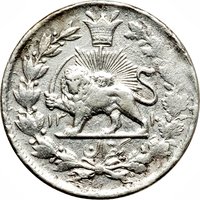
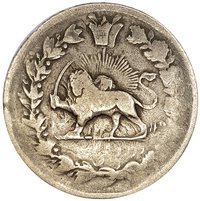
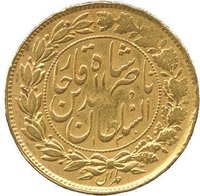
Reverse
Description:
Lion with sword before rising sun; crown above, flanked by berry and oak wreaths. Denomination below, date digits beside lion's legs.
Script: Persian
Edge
Plain
Mints
| Name | Mark |
|---|---|
| Tehran | — |
Mintings
| Year | Mint Mark | Mintage | Quality | Collection |
|---|---|---|---|---|
| 1893 | — | — | ||
| 1894 | — | — |
Historical background
In 1893, Iran’s currency system was in a state of profound crisis and transition, rooted in centuries of silver-based coinage. The primary unit was the silver qiran (also spelled kran), but the monetary landscape was chaotic. There was no standardized national coinage; instead, a multitude of foreign coins (especially Russian rubles and British sovereigns), as well as coins minted by provincial authorities and even counterfeit money, circulated alongside official issues. This lack of uniformity, combined with the government's chronic budget deficits, created a complex and unstable exchange environment that hampered both domestic trade and foreign commerce.
The situation was exacerbated by the global fall in the price of silver throughout the late 19th century. As Iran’s silver-based currency depreciated against the gold-based currencies of its major trading partners, particularly Russia and Great Britain, it caused severe economic distortions. The state’s foreign debt, much of it owed to these two powers, became more expensive to service. Furthermore, the declining value of silver led to a flight of gold from the country, draining the treasury of its most stable asset. Internal corruption and fiscal mismanagement under Naser al-Din Shah Qajar meant the government frequently resorted to debasing the coinage—reducing its silver content—to meet short-term expenses, further eroding public trust in the currency.
Recognizing the untenable nature of this system, the Qajar state took a significant step in 1893 by engaging a Belgian expert, Joseph Naus, to reorganize the customs administration. While a comprehensive monetary reform would not be fully realized until the introduction of the gold-based rial in 1932, the 1890s marked the beginning of direct foreign intervention in Iran’s fiscal affairs. The period thus represents a pivotal moment of acute monetary weakness, where internal decay and external economic pressures forced the first, hesitant moves toward a centralized and modernized financial system, largely under the influence of European powers.
The situation was exacerbated by the global fall in the price of silver throughout the late 19th century. As Iran’s silver-based currency depreciated against the gold-based currencies of its major trading partners, particularly Russia and Great Britain, it caused severe economic distortions. The state’s foreign debt, much of it owed to these two powers, became more expensive to service. Furthermore, the declining value of silver led to a flight of gold from the country, draining the treasury of its most stable asset. Internal corruption and fiscal mismanagement under Naser al-Din Shah Qajar meant the government frequently resorted to debasing the coinage—reducing its silver content—to meet short-term expenses, further eroding public trust in the currency.
Recognizing the untenable nature of this system, the Qajar state took a significant step in 1893 by engaging a Belgian expert, Joseph Naus, to reorganize the customs administration. While a comprehensive monetary reform would not be fully realized until the introduction of the gold-based rial in 1932, the 1890s marked the beginning of direct foreign intervention in Iran’s fiscal affairs. The period thus represents a pivotal moment of acute monetary weakness, where internal decay and external economic pressures forced the first, hesitant moves toward a centralized and modernized financial system, largely under the influence of European powers.
Series: 1893 Iran circulation coins

💎 Extremely Rare