

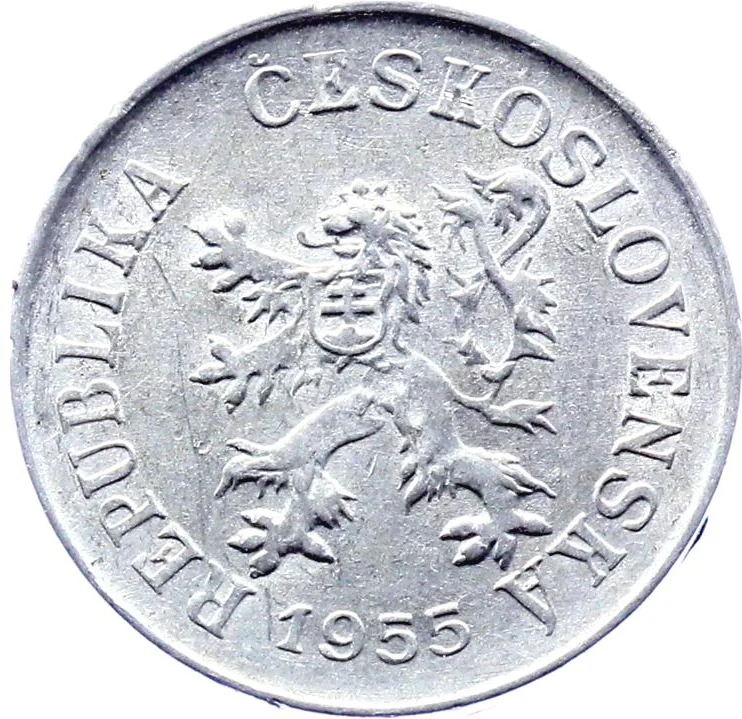
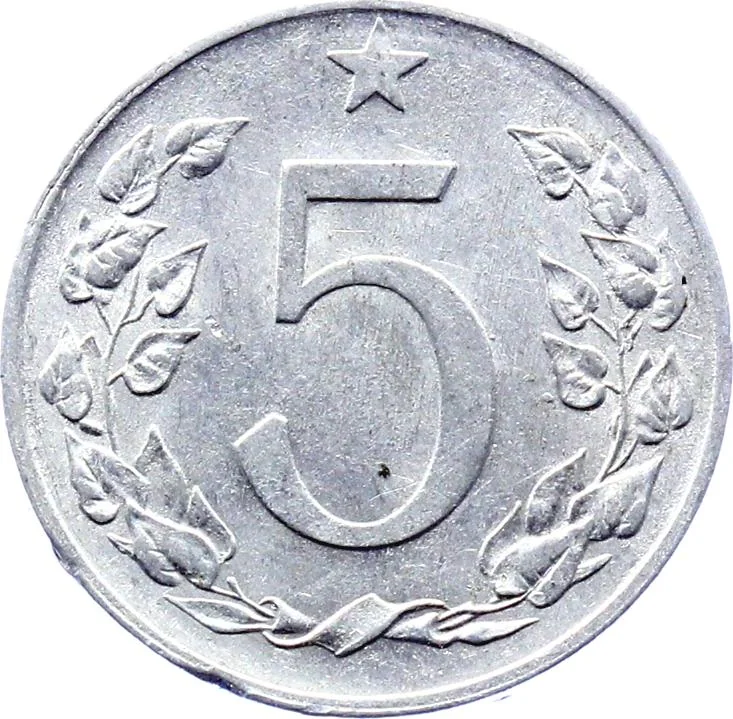
5 Haléřů / Halierov – Czechoslovakia
Context
Years: 1953–1955
Issuer: Czechoslovakia 
Issuing organization: Czechoslovak State Bank
Period:
(1948—1960)
Currency:
(1953—1992)
Demonetization: 31 December 1978
Total mintage: 160,233,000
Material
References
KM: #Click to copy to clipboard37
Numista: #6203
Value
Exchange value: 0.05 CSK
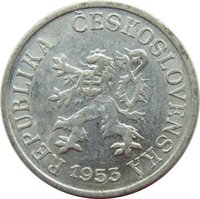
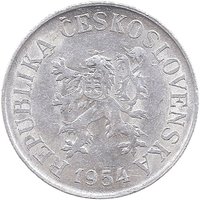
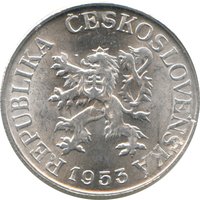
Obverse
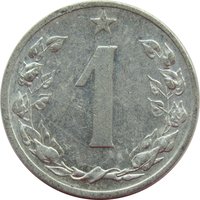
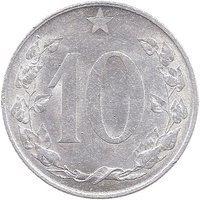
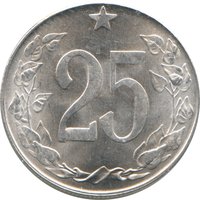
Reverse
Edge
Plain
Categories
| Symbols> Coat of Arms |
Mints
| Name | Mark |
|---|---|
| Kremnica | — |
| Saint Petersburg | — |
Mintings
| Year | Mint Mark | Mintage | Quality | Collection |
|---|---|---|---|---|
| 1953 | — | 160,233,000 | ||
| 1954 | — | — | ||
| 1955 | — | — |
Historical background
In the early 1950s, Czechoslovakia's currency, the koruna, was in a state of severe crisis, a direct result of the Stalinist economic policies imposed by the communist government. A key problem was the existence of a dual monetary system: one set of prices and currency for rationed essentials, and another, much higher, set of prices for goods in the "free" market. This led to rampant black-market activity, widespread hoarding of goods, and a massive overhang of excess cash in circulation, as the state printed money to cover its deficits while consumer goods remained scarce. The economic distortions undermined the state's planning, eroded public confidence, and created immense inflationary pressure.
On June 1, 1953, the government enacted a drastic and secretive monetary reform, announced just hours before it took effect. The core of the reform was a confiscatory currency exchange: for most of the population, existing cash savings were exchanged at a rate of 50 old korunas to 1 new koruna, effectively wiping out 90% of personal monetary wealth. At the same time, the regime abolished the rationing system, claiming to move to a unified "socialist market." While the reform technically stabilized the currency by drastically reducing the money supply, its primary social effect was the brutal expropriation of the savings of ordinary citizens, particularly peasants, small traders, and the elderly.
The reform triggered immediate and violent protests in over 100 cities and towns, most notably at the Škoda plant in Plzeň, where thousands of workers demonstrated and briefly seized the city center. The government responded with force, deploying the army and secret police, resulting in arrests, injuries, and an unknown number of fatalities. The 1953 currency reform thus stands as a pivotal moment, exposing the failure of the early communist economic model and demonstrating the regime's willingness to impose severe hardship on its population and crush dissent to maintain control, deepening the rift between the state and its citizens.
On June 1, 1953, the government enacted a drastic and secretive monetary reform, announced just hours before it took effect. The core of the reform was a confiscatory currency exchange: for most of the population, existing cash savings were exchanged at a rate of 50 old korunas to 1 new koruna, effectively wiping out 90% of personal monetary wealth. At the same time, the regime abolished the rationing system, claiming to move to a unified "socialist market." While the reform technically stabilized the currency by drastically reducing the money supply, its primary social effect was the brutal expropriation of the savings of ordinary citizens, particularly peasants, small traders, and the elderly.
The reform triggered immediate and violent protests in over 100 cities and towns, most notably at the Škoda plant in Plzeň, where thousands of workers demonstrated and briefly seized the city center. The government responded with force, deploying the army and secret police, resulting in arrests, injuries, and an unknown number of fatalities. The 1953 currency reform thus stands as a pivotal moment, exposing the failure of the early communist economic model and demonstrating the regime's willingness to impose severe hardship on its population and crush dissent to maintain control, deepening the rift between the state and its citizens.
🌱 Very Common