

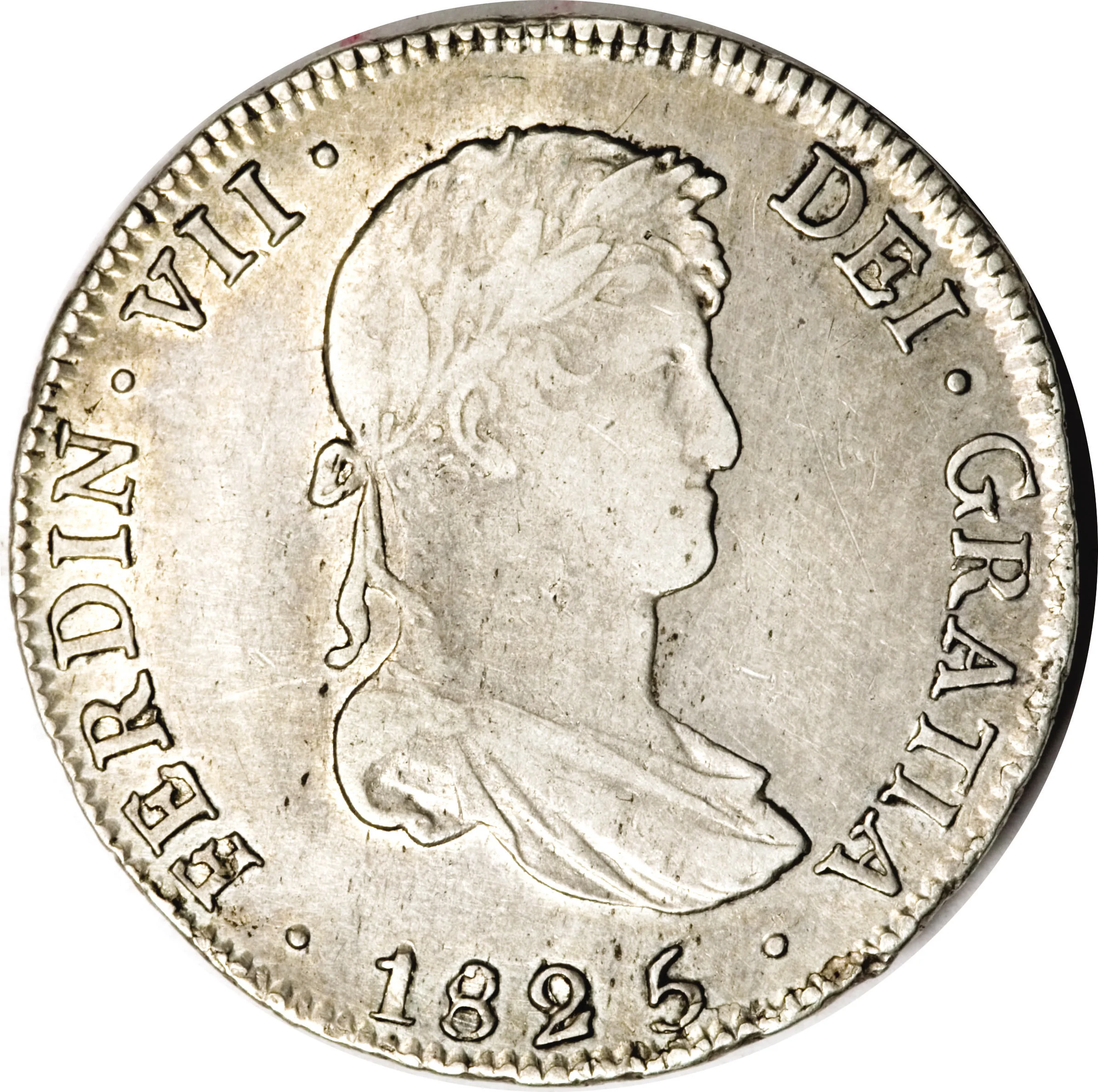
4 reales – Bolivia
Add to wishlist
Bolivia
Context
Years: 1816–1825
Issuer: Bolivia
Ruler: Ferdinand VII
Currency:
(1574—1825)
Demonetized: Yes
Total mintage: 98,000
Material
References
KM: #
Numista: #61916
Value
Bullion value: $30.86
Obverse
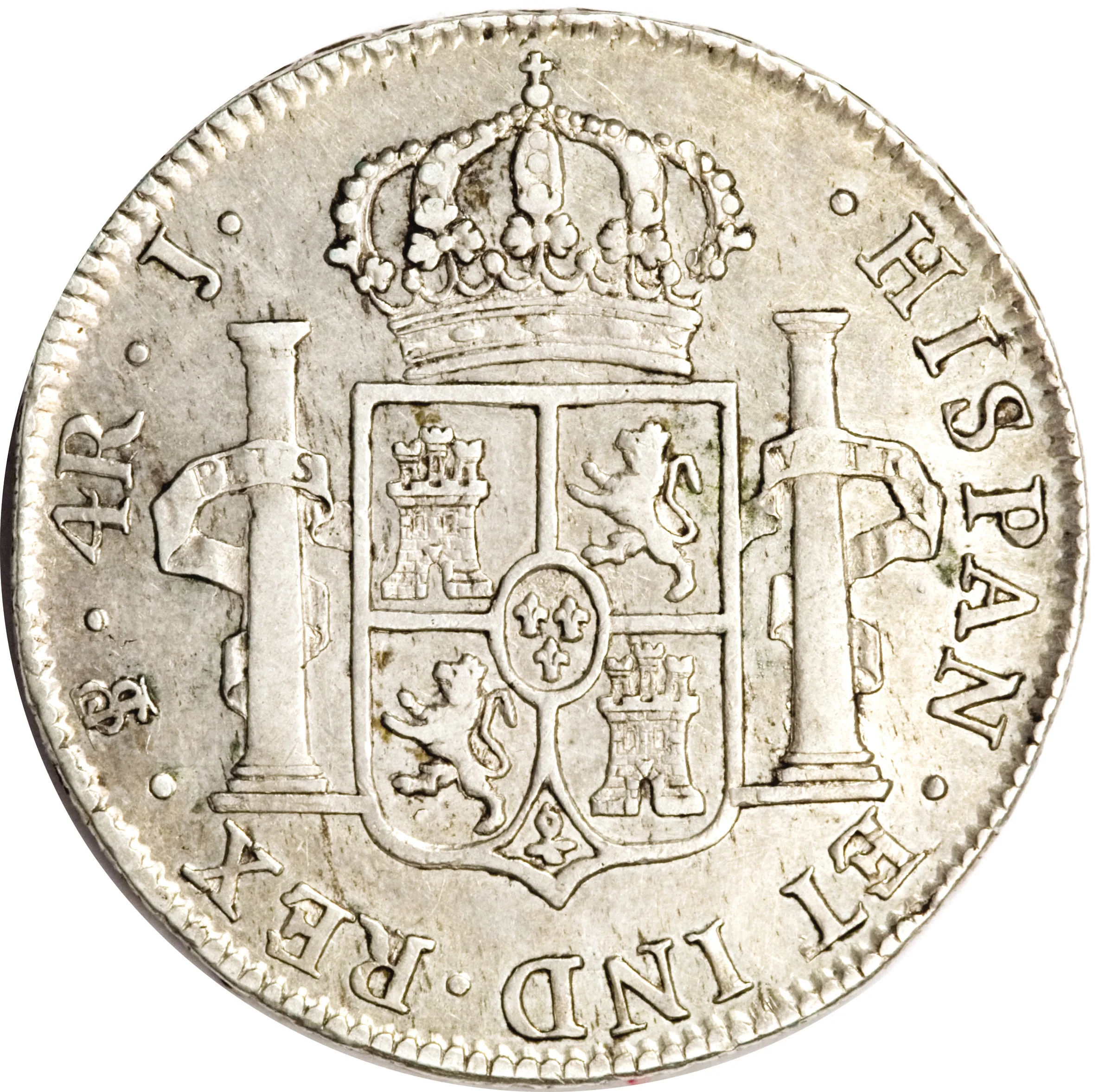
Reverse
Description:
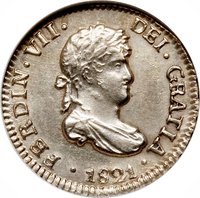
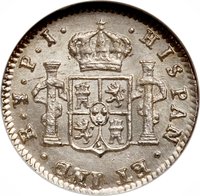
Crowned arms between pillars. Text near edge: king's title right and below; mintmark, value, and essayer's initial left.
Inscription:
PLUS ULTRA
• HISPAN • ET IND • REX • PTS • 4R • J •
• HISPAN • ET IND • REX • PTS • 4R • J •
Translation:
Further Beyond
• King of Spain and the Indies • Philip IV by the Grace of God
• King of Spain and the Indies • Philip IV by the Grace of God
Script: Latin
Edge
Mints
| Name | Mark |
|---|---|
| Potosi | — |
Mintings
| Year | Mint Mark | Mintage | Quality | Collection |
|---|---|---|---|---|
| 1816 | PJ | 31,000 | ||
| 1817 | PJ | 33,000 | ||
| 1818 | PJ | 34,000 | ||
| 1819 | PJ | — | ||
| 1820 | PJ | — | ||
| 1821 | PJ | — | ||
| 1822 | PJ | — | ||
| 1823 | PJ | — | ||
| 1824 | PJ | — | ||
| 1825 | J | — | ||
| 1825 | JL | — | ||
| 1825 | PJ | — |
Historical background
In 1816, Bolivia was not yet an independent nation but rather the Spanish colonial territory known as the Audiencia of Charcas or Upper Peru. Its currency situation was intrinsically tied to the Spanish Empire and the broader turmoil of the Wars of Independence that had been raging across South America since 1809. The region's primary source of wealth was the silver from the legendary Cerro Rico of Potosí, which for centuries had minted coins that circulated globally. The official currency was the Spanish colonial real, with coins produced by the Potosí Mint, but the stability of this system was under severe strain.
The ongoing conflict created a dual and chaotic monetary environment. Royalist forces, controlling Potosí and key cities, struggled to maintain the standard of Spanish milled dollars (pesos). At the same time, patriot forces and independentist groups, operating from makeshift bases and allied regions, issued their own crude provisional coinage and paper money to fund their campaigns. This led to widespread counterfeiting, currency debasement, and a loss of public confidence. The value and acceptance of any coin or note depended heavily on which army controlled the area and the perceived longevity of that authority.
Consequently, the economy of Upper Peru in 1816 was characterized by monetary fragmentation and inflation. Trade was disrupted, and the once-steady flow of Potosí silver was intermittent due to the siege-like conditions and shifting front lines. People resorted to barter, older Spanish coins (cobs), or foreign currencies like the Peruvian peso in daily transactions. This financial instability mirrored the political reality: a fractured territory caught between a dying colonial order and a not-yet-realized republic, with its currency serving as a tangible symbol of that protracted and uncertain struggle.
The ongoing conflict created a dual and chaotic monetary environment. Royalist forces, controlling Potosí and key cities, struggled to maintain the standard of Spanish milled dollars (pesos). At the same time, patriot forces and independentist groups, operating from makeshift bases and allied regions, issued their own crude provisional coinage and paper money to fund their campaigns. This led to widespread counterfeiting, currency debasement, and a loss of public confidence. The value and acceptance of any coin or note depended heavily on which army controlled the area and the perceived longevity of that authority.
Consequently, the economy of Upper Peru in 1816 was characterized by monetary fragmentation and inflation. Trade was disrupted, and the once-steady flow of Potosí silver was intermittent due to the siege-like conditions and shifting front lines. People resorted to barter, older Spanish coins (cobs), or foreign currencies like the Peruvian peso in daily transactions. This financial instability mirrored the political reality: a fractured territory caught between a dying colonial order and a not-yet-realized republic, with its currency serving as a tangible symbol of that protracted and uncertain struggle.
💎 Very Rare