

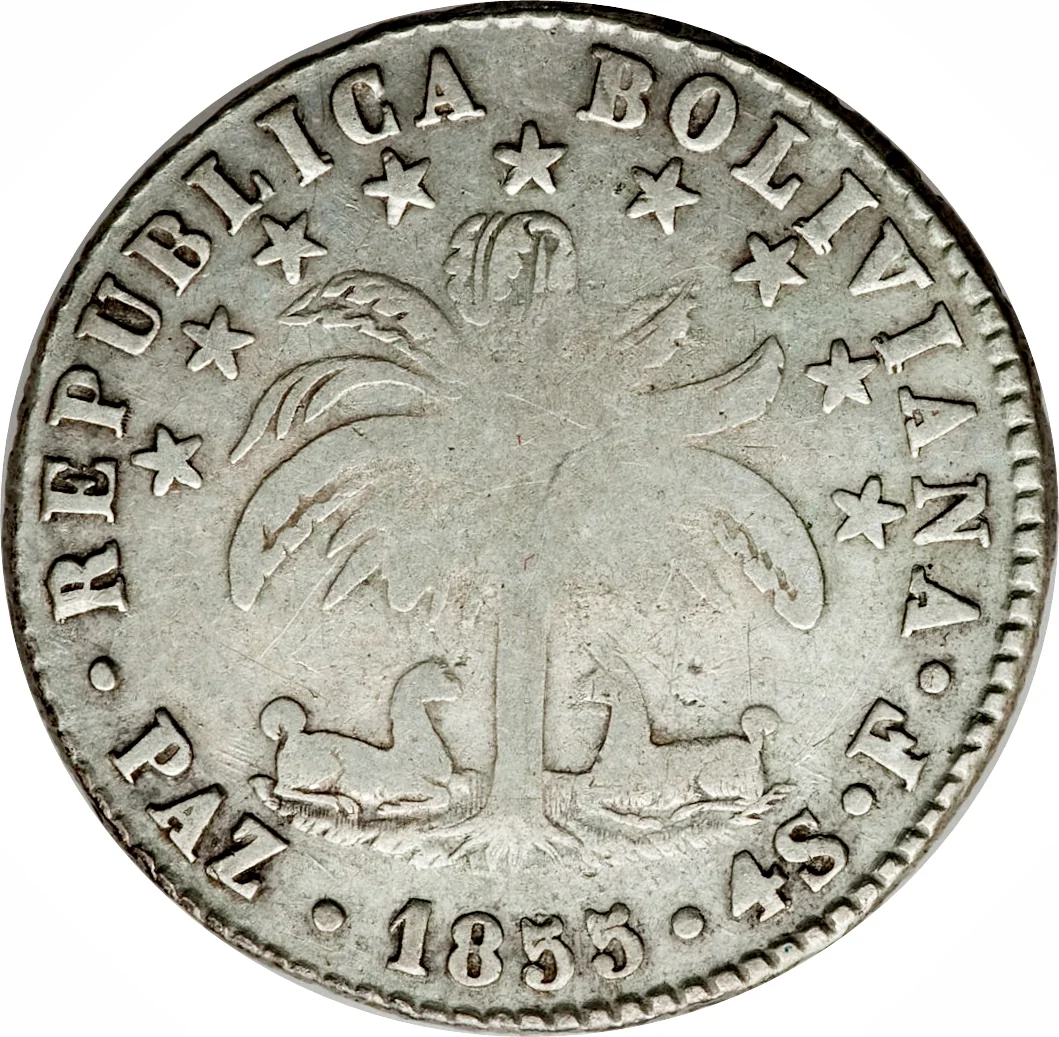
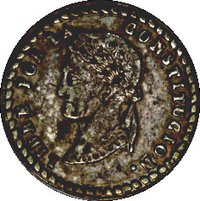
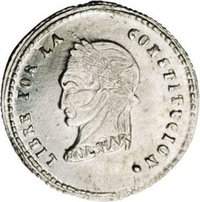
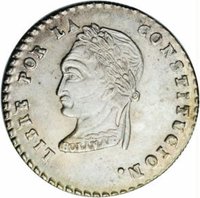
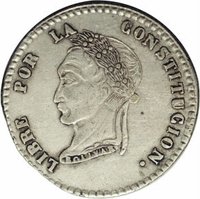
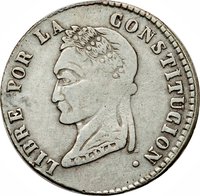
Obverse
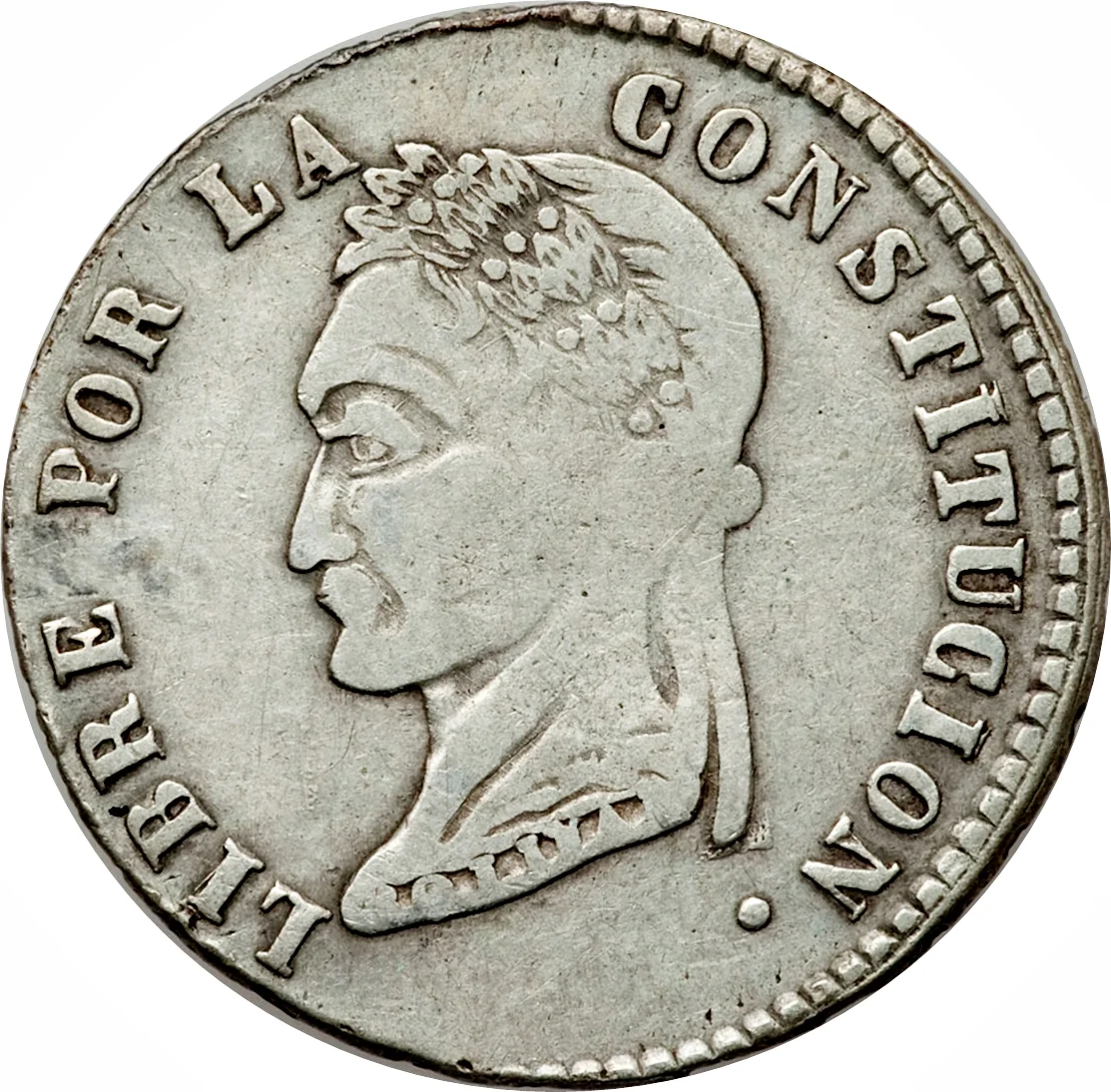
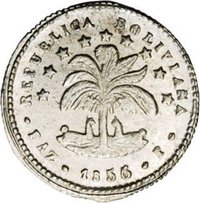
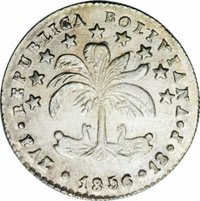
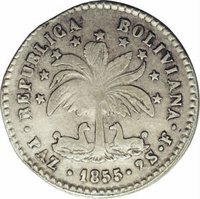
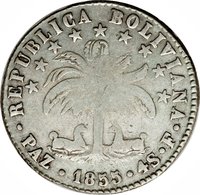
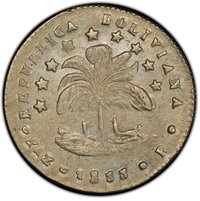
Reverse
Edge
Categories
| Animal> Camel |
| Person> Military leader |
| Person> Politician |
| Plant> Tree |
| Symbol> Wreath |
Mintings
| Year | Mint Mark | Mintage | Quality | Collection |
|---|---|---|---|---|
| 1855 | F | — | ||
| 1856 | P | — | ||
| 1857 | P | — | ||
| 1858 | P | — |
Historical background
In 1855, Bolivia’s currency situation was characterized by profound instability and fragmentation, a direct legacy of the economic devastation following the War of the Pacific (1879-1883) and earlier regional conflicts. The national treasury was depleted, and the country lacked a unified, trusted monetary system. While the Bolivian peso was the official unit of account, its value was highly unstable and it circulated alongside a confusing array of foreign coins, primarily Peruvian and Chilean silver, as well as Bolivian minted bolivianos and sueltos (fractional coinage).
This period saw severe coinage debasement and widespread counterfeiting, which eroded public confidence in the currency. The government, under President Manuel Isidoro Belzu, struggled to assert monetary authority. A significant attempt at reform had been made with the creation of the boliviano in 1864, but by 1855, the pre-reform chaos still lingered or was a recent memory, depending on the precise dating (note: 1855 predates the boliviano's introduction; the currency in use was the scudo and then the peso). The economy remained heavily reliant on silver mining, but production fluctuations directly impacted the money supply, leading to inflation and hoarding of precious metal.
Consequently, the monetary landscape was one of practical bimetallism with ineffective administration. Transactions often required weighing coins rather than counting them at face value, and barter remained common in many regions. This chaotic environment hindered domestic commerce, complicated tax collection, and reflected the broader challenges of state-building in post-independence Bolivia, where political instability and weak central institutions prevented the establishment of a sound and uniform national currency.
This period saw severe coinage debasement and widespread counterfeiting, which eroded public confidence in the currency. The government, under President Manuel Isidoro Belzu, struggled to assert monetary authority. A significant attempt at reform had been made with the creation of the boliviano in 1864, but by 1855, the pre-reform chaos still lingered or was a recent memory, depending on the precise dating (note: 1855 predates the boliviano's introduction; the currency in use was the scudo and then the peso). The economy remained heavily reliant on silver mining, but production fluctuations directly impacted the money supply, leading to inflation and hoarding of precious metal.
Consequently, the monetary landscape was one of practical bimetallism with ineffective administration. Transactions often required weighing coins rather than counting them at face value, and barter remained common in many regions. This chaotic environment hindered domestic commerce, complicated tax collection, and reflected the broader challenges of state-building in post-independence Bolivia, where political instability and weak central institutions prevented the establishment of a sound and uniform national currency.
Series: 1855 Bolivia circulation coins
⭐ Rare