

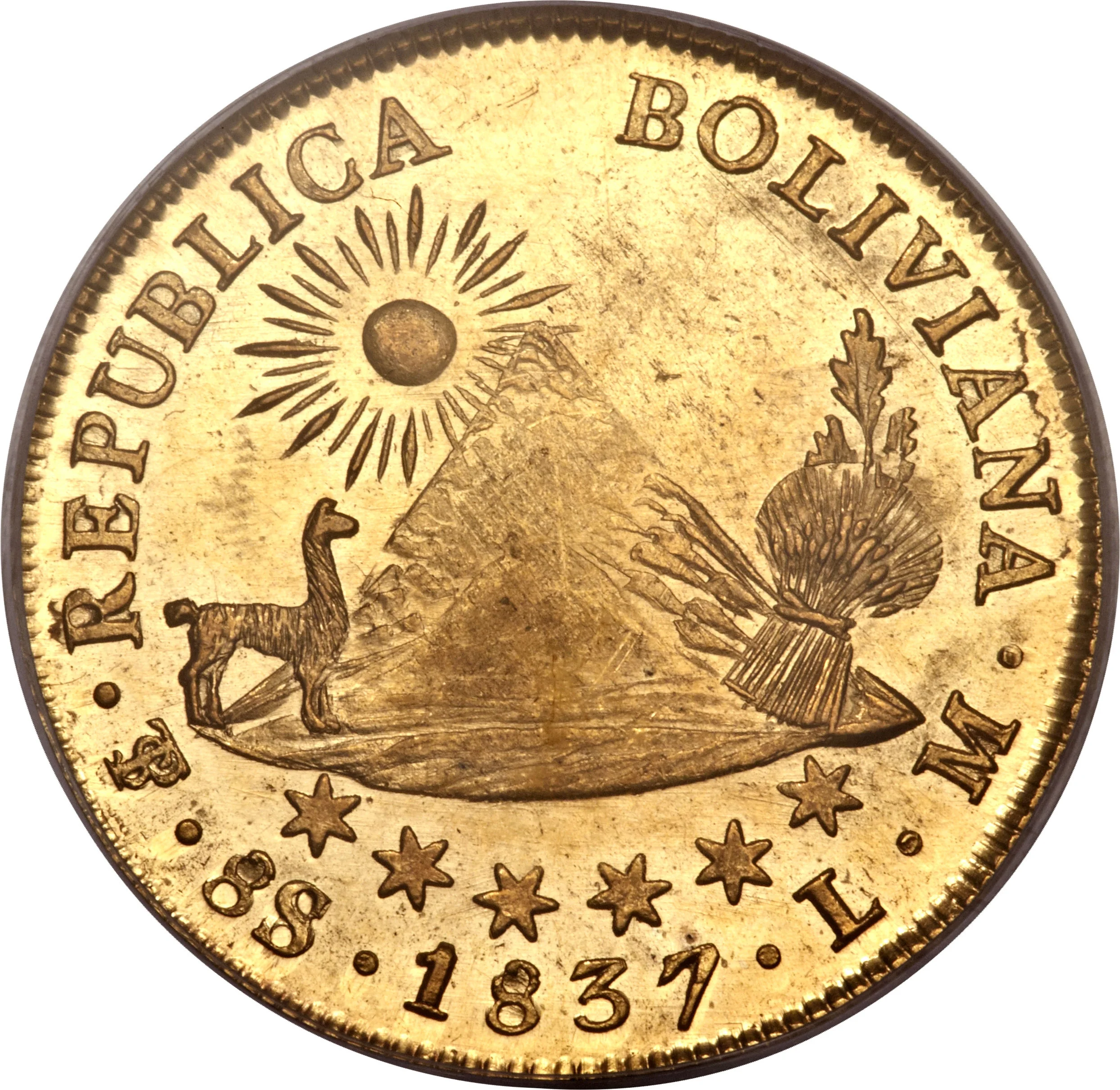
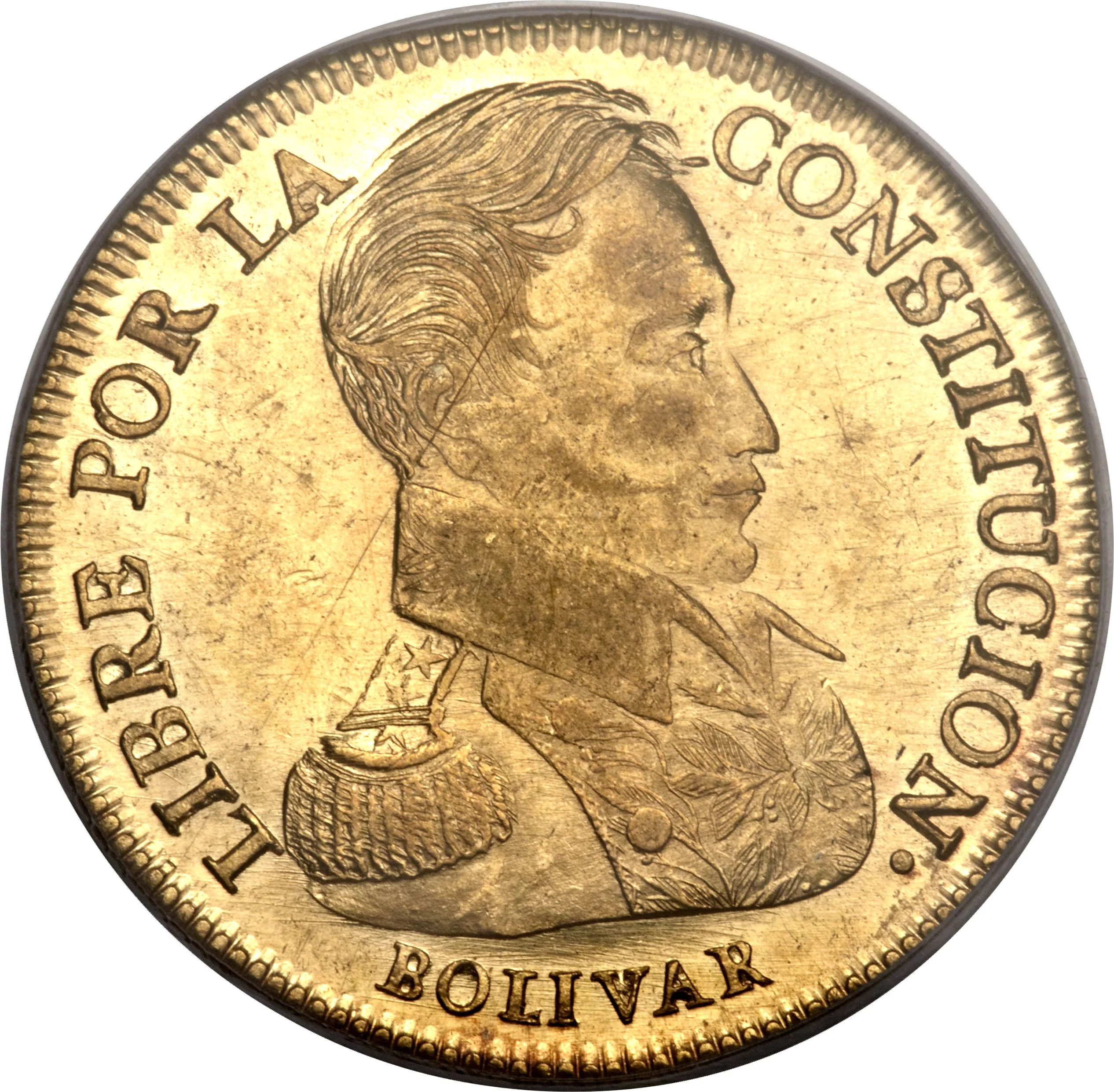
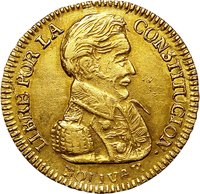
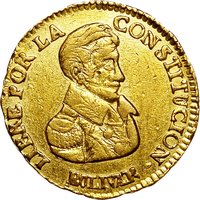
Obverse
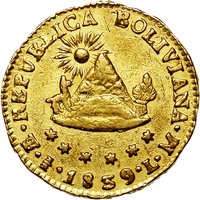
Reverse
Edge
Categories
| Symbol> Sun |
| Animal> Camel |
| Person> Military leader |
| Person> Politician |
| Geography> Mountain |
Mints
| Name | Mark |
|---|---|
| Potosi | — |
Mintings
| Year | Mint Mark | Mintage | Quality | Collection |
|---|---|---|---|---|
| 1831 | JL | — | ||
| 1832 | JL | — | ||
| 1833 | JL | — | ||
| 1833 | LM | — | ||
| 1834 | JL | — | ||
| 1834 | JM | — | ||
| 1834 | LM | — | ||
| 1835 | JM | — | ||
| 1835 | LM | — | ||
| 1836 | LM | — | ||
| 1837 | LM | — | ||
| 1838 | LM | — | ||
| 1839 | LM | — | ||
| 1840 | LR | — |
Historical background
In 1831, Bolivia was grappling with a severe and multifaceted currency crisis that crippled its early economy. Following independence from Spain in 1825, the new nation inherited a fragmented monetary system with a severe shortage of circulating coinage. The once-prolific silver mines of Potosí, the historical engine of the regional economy, were in a state of decay and could not produce the specie needed for commerce. This scarcity was compounded by the outflow of remaining Spanish colonial coins and the circulation of a bewildering variety of foreign coins from neighboring nations, leading to chaotic exchange rates and rampant counterfeiting.
President Andrés de Santa Cruz, who took power in 1829, recognized that monetary stability was foundational for national unity and economic recovery. His administration’s primary response was the creation of Bolivia’s first national mint, the Casa de la Moneda in Potosí, which began operations in 1830/1831. The mint’s task was to standardize the currency by producing new silver coins, most notably the boliviano (equal to eight soles or sueltos), which bore the national coat of arms. This was a deliberate act of economic sovereignty, aiming to replace the patchwork of foreign and colonial money with a single, trusted national currency.
However, the success of this initiative in 1831 was limited and provisional. The intrinsic value of the new silver coins often led to them being hoarded or exported, perpetuating the very shortage they were meant to solve. Furthermore, the state's fiscal weakness meant it also had to issue less-trusted copper token money for small transactions, which frequently depreciated. Thus, while 1831 represents a pivotal year of institutional foundation with the mint's establishment, Bolivia’s currency situation remained unstable, caught between the aspiration for a unified monetary system and the harsh realities of a depleted treasury and a struggling post-colonial economy.
President Andrés de Santa Cruz, who took power in 1829, recognized that monetary stability was foundational for national unity and economic recovery. His administration’s primary response was the creation of Bolivia’s first national mint, the Casa de la Moneda in Potosí, which began operations in 1830/1831. The mint’s task was to standardize the currency by producing new silver coins, most notably the boliviano (equal to eight soles or sueltos), which bore the national coat of arms. This was a deliberate act of economic sovereignty, aiming to replace the patchwork of foreign and colonial money with a single, trusted national currency.
However, the success of this initiative in 1831 was limited and provisional. The intrinsic value of the new silver coins often led to them being hoarded or exported, perpetuating the very shortage they were meant to solve. Furthermore, the state's fiscal weakness meant it also had to issue less-trusted copper token money for small transactions, which frequently depreciated. Thus, while 1831 represents a pivotal year of institutional foundation with the mint's establishment, Bolivia’s currency situation remained unstable, caught between the aspiration for a unified monetary system and the harsh realities of a depleted treasury and a struggling post-colonial economy.
✨ Legendary