

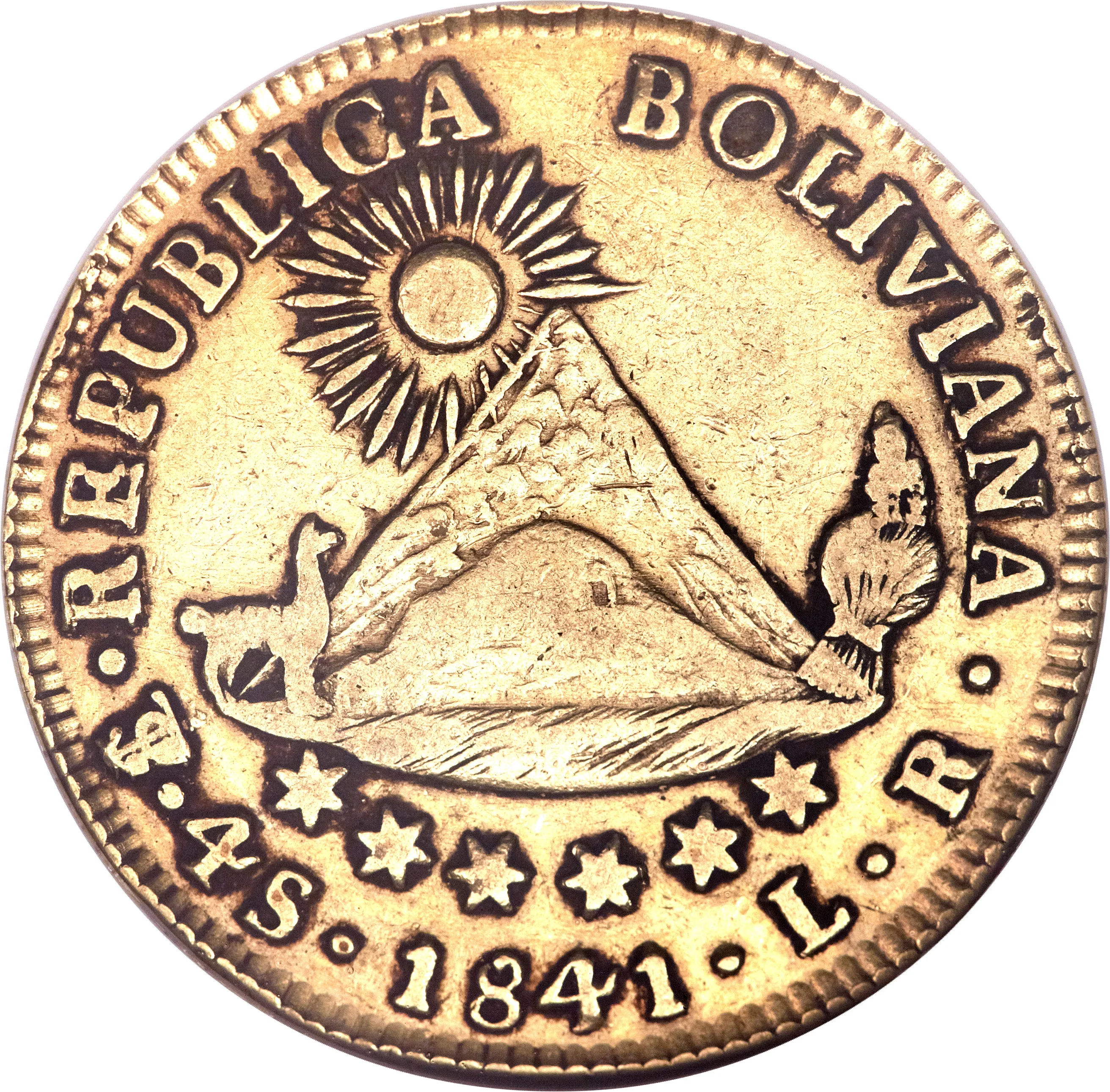
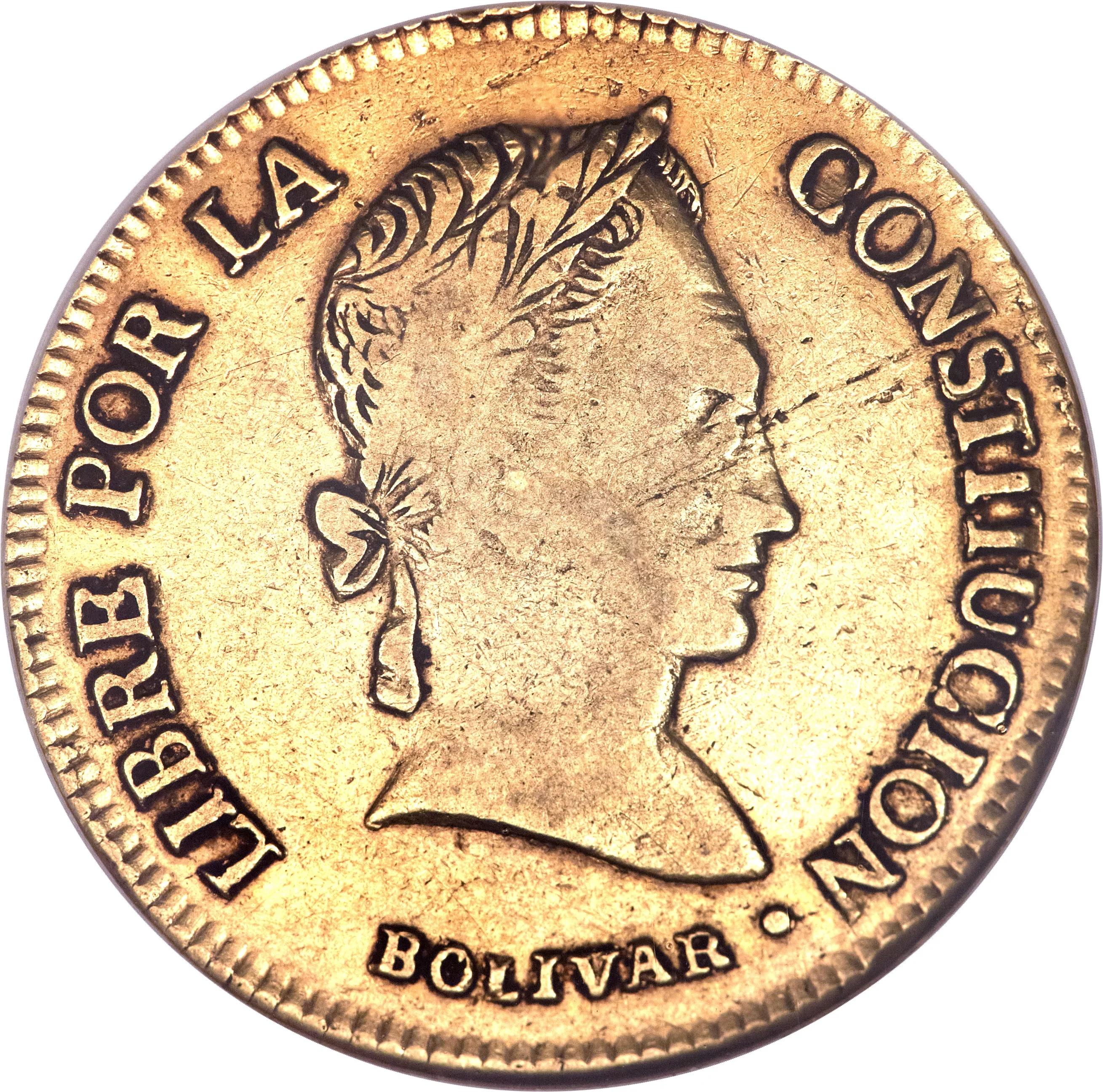
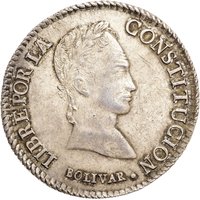
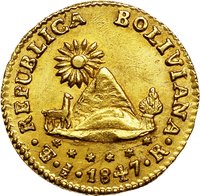
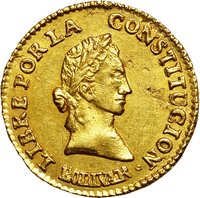
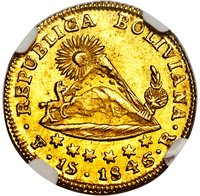
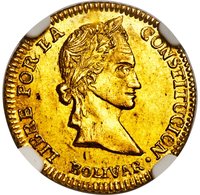
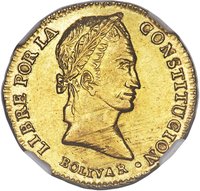
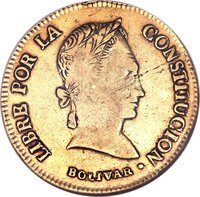
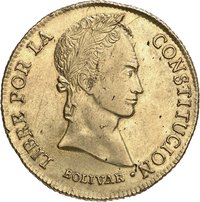
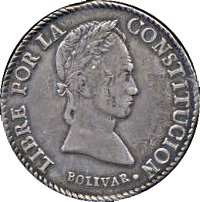
Obverse
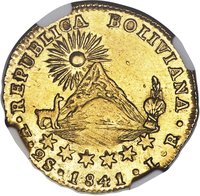
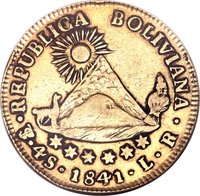
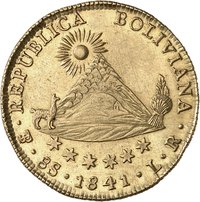
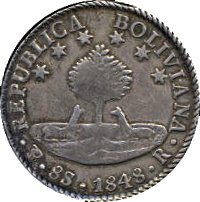
Reverse
Edge
Categories
| Person> Politician |
| Geography> Mountain |
| Animal> Camel |
| Person> Military leader |
| Symbol> Sun |
| Symbol> Wreath |
Mintings
| Year | Mint Mark | Mintage | Quality | Collection |
|---|---|---|---|---|
| 1841 | PTS | — |
Historical background
In 1841, Bolivia’s currency situation was chaotic and deeply unstable, a direct legacy of the destructive War of the Peruvian-Bolivian Confederation (1836-1839). The war had drained the national treasury, devastated the silver mining industry—the traditional source of the country's wealth—and left the government of General José Ballivián with severe fiscal deficits. With little hard currency (primarily silver pesos) in circulation, the state resorted to issuing vast quantities of billetes fiscales (fiscal notes), a form of fiat paper money not backed by specie. This led to rapid depreciation and a profound loss of public confidence, as both domestic and foreign merchants refused to accept the nearly worthless paper at its face value.
The monetary chaos was exacerbated by the simultaneous circulation of a confusing mix of currencies. Alongside the discredited paper notes, older Spanish colonial coins, Republican silver coins from Bolivia and neighboring nations, and even counterfeit coins competed in the marketplace. This created a complex and inefficient system where goods often had multiple prices depending on the medium of exchange, hindering internal trade and economic recovery. The government's attempts to mandate the acceptance of its paper money largely failed, as the economy naturally gravitated toward silver as the only trusted store of value.
Facing this crisis, the Ballivián administration recognized that restoring a sound, silver-based currency was essential for national stability. In the years immediately following 1841, this would lead to significant monetary reforms, including the demonetization of the billetes fiscales and efforts to rehabilitate the Potosí mint. Thus, the currency situation in 1841 represents the low point of Bolivia's early financial history, a moment of profound disorder that made the subsequent push for a standardized, metallic currency a central priority for the nascent republic.
The monetary chaos was exacerbated by the simultaneous circulation of a confusing mix of currencies. Alongside the discredited paper notes, older Spanish colonial coins, Republican silver coins from Bolivia and neighboring nations, and even counterfeit coins competed in the marketplace. This created a complex and inefficient system where goods often had multiple prices depending on the medium of exchange, hindering internal trade and economic recovery. The government's attempts to mandate the acceptance of its paper money largely failed, as the economy naturally gravitated toward silver as the only trusted store of value.
Facing this crisis, the Ballivián administration recognized that restoring a sound, silver-based currency was essential for national stability. In the years immediately following 1841, this would lead to significant monetary reforms, including the demonetization of the billetes fiscales and efforts to rehabilitate the Potosí mint. Thus, the currency situation in 1841 represents the low point of Bolivia's early financial history, a moment of profound disorder that made the subsequent push for a standardized, metallic currency a central priority for the nascent republic.
Series: 1841 Bolivia circulation coins
✨ Legendary