

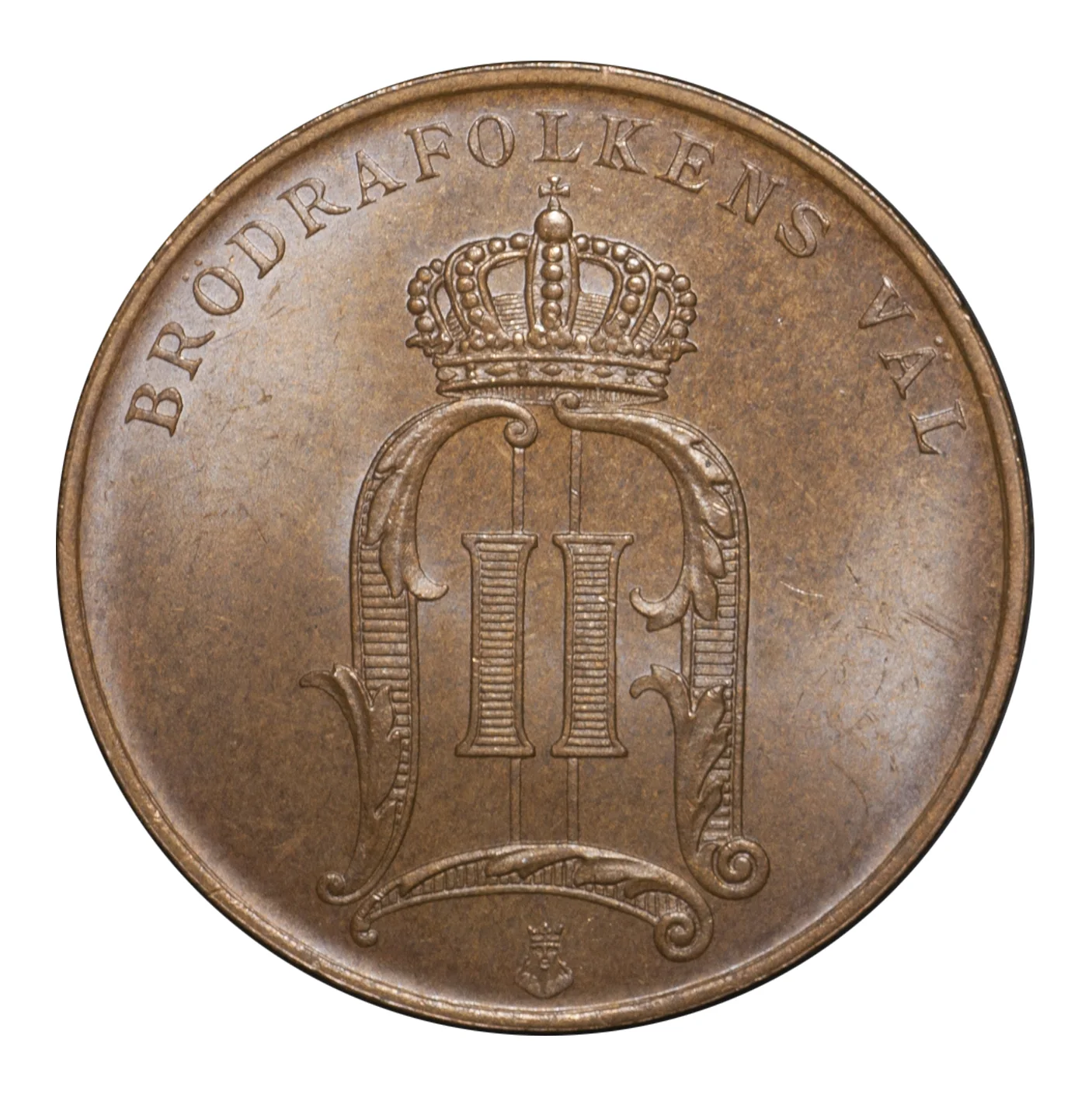
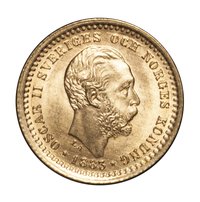
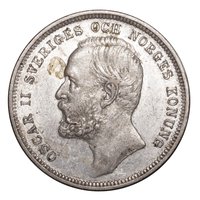
Obverse
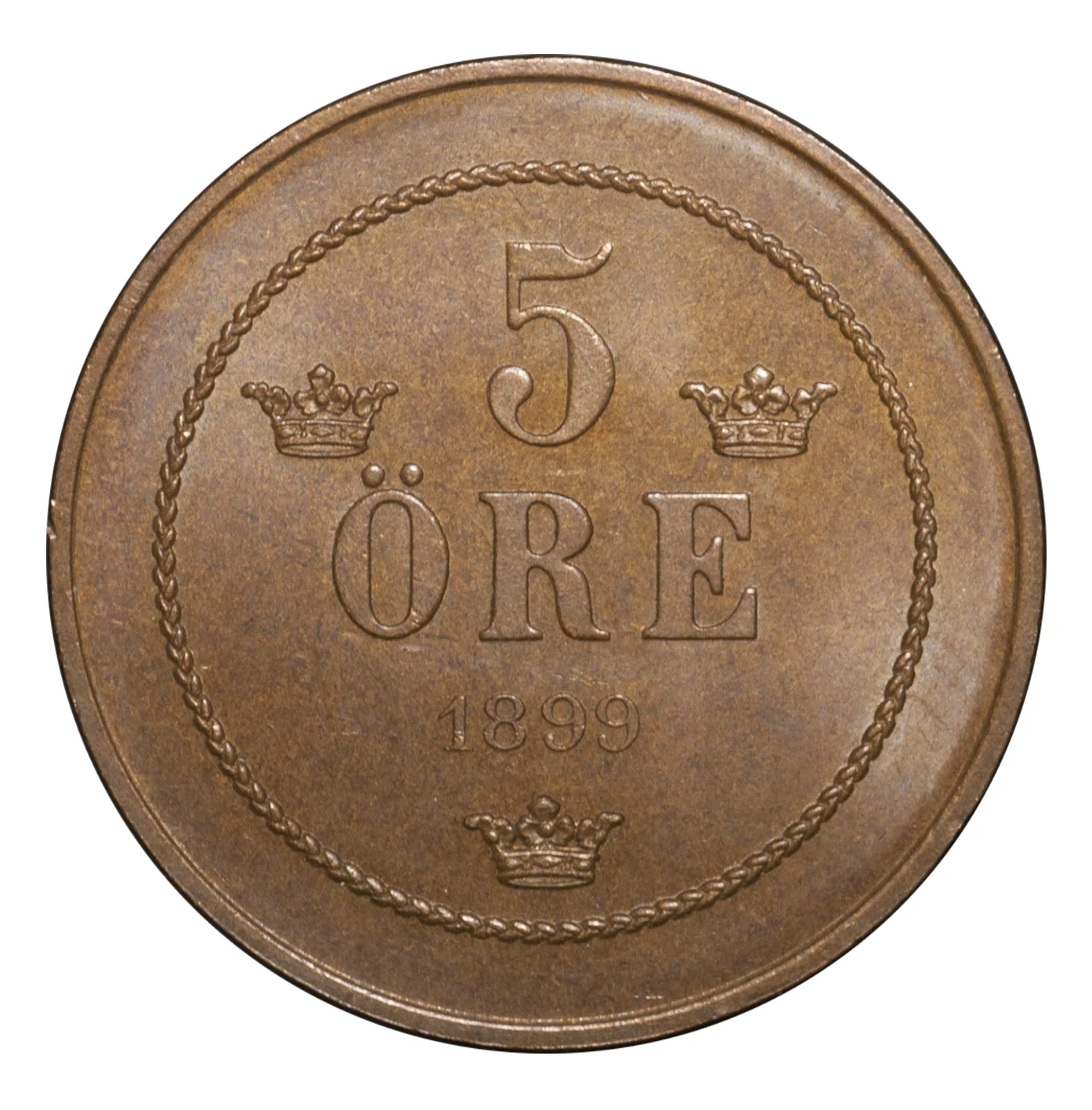
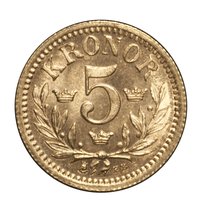
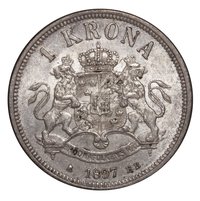
Reverse
Edge
Plain
Mints
| Name | Mark |
|---|---|
| Kungliga Myntet | — |
Mintings
| Year | Mint Mark | Mintage | Quality | Collection |
|---|---|---|---|---|
| 1888 | — | 214,411 | ||
| 1889 | — | 219,946 | ||
| 1890 | — | 338,789 | ||
| 1891 | — | 374,001 | ||
| 1892 | — | 585,751 | ||
| 1895 | — | 528,530 | ||
| 1896 | — | 308,647 | ||
| 1897 | — | 569,656 | ||
| 1898 | — | 720,940 | ||
| 1899 | — | 1,225,160 | ||
| 1900 | — | 364,580 | ||
| 1901 | — | 441,660 | ||
| 1902 | — | 652,420 | ||
| 1903 | — | 243,000 | ||
| 1904 | — | 414,240 | ||
| 1905 | — | 545,080 |
Historical background
In 1888, Sweden was in the midst of a prolonged and complex debate over its monetary standard, caught between the international shift towards the gold standard and its historical use of silver. Since 1873, it had been a member of the Scandinavian Monetary Union (with Denmark and Norway), which was nominally based on gold. However, the union's foundational agreement allowed Sweden to continue minting silver coins, and the country's currency, the krona, remained legally convertible into silver at a fixed rate. This created a de facto silver standard in practice, which isolated Sweden from the core gold-based economies.
This situation became increasingly problematic in the 1880s due to the global depreciation of silver. As the market value of silver bullion fell well below its fixed coinage value, it created a strong economic incentive to melt down Swedish silver coins and sell the metal abroad for gold. This threatened a drain on the nation's silver reserves and posed a risk to the currency's stability. The Riksbank (Sweden's central bank) was forced to take defensive measures, including the temporary suspension of silver coinage in 1876 and again in the lead-up to 1888, to protect its holdings.
Consequently, the year 1888 was a critical juncture of political and economic pressure. The pro-gold Riksdag, backed by influential industrialists and bankers who wanted full integration with the international financial system, was pushing for a clean and unambiguous adoption of the gold standard. They argued this was essential for stable trade and investment. The debate culminated in the pivotal decision of 1888, where the Swedish parliament voted to suspend the free minting of silver indefinitely, a decisive step that legally severed the krona's link to silver and firmly committed Sweden to the gold standard, a move that was formally cemented in new legislation the following year.
This situation became increasingly problematic in the 1880s due to the global depreciation of silver. As the market value of silver bullion fell well below its fixed coinage value, it created a strong economic incentive to melt down Swedish silver coins and sell the metal abroad for gold. This threatened a drain on the nation's silver reserves and posed a risk to the currency's stability. The Riksbank (Sweden's central bank) was forced to take defensive measures, including the temporary suspension of silver coinage in 1876 and again in the lead-up to 1888, to protect its holdings.
Consequently, the year 1888 was a critical juncture of political and economic pressure. The pro-gold Riksdag, backed by influential industrialists and bankers who wanted full integration with the international financial system, was pushing for a clean and unambiguous adoption of the gold standard. They argued this was essential for stable trade and investment. The debate culminated in the pivotal decision of 1888, where the Swedish parliament voted to suspend the free minting of silver indefinitely, a decisive step that legally severed the krona's link to silver and firmly committed Sweden to the gold standard, a move that was formally cemented in new legislation the following year.
🌱 Very Common