

2 Öre – Sweden
Sweden
Context
Years: 1860–1872
Issuer: Sweden 
Ruler: Charles XV
Currency:
(1855—1873)
Demonetized: Yes
Total mintage: 8,076,850
Material
References
KM: #Click to copy to clipboard706
Numista: #6146
Obverse
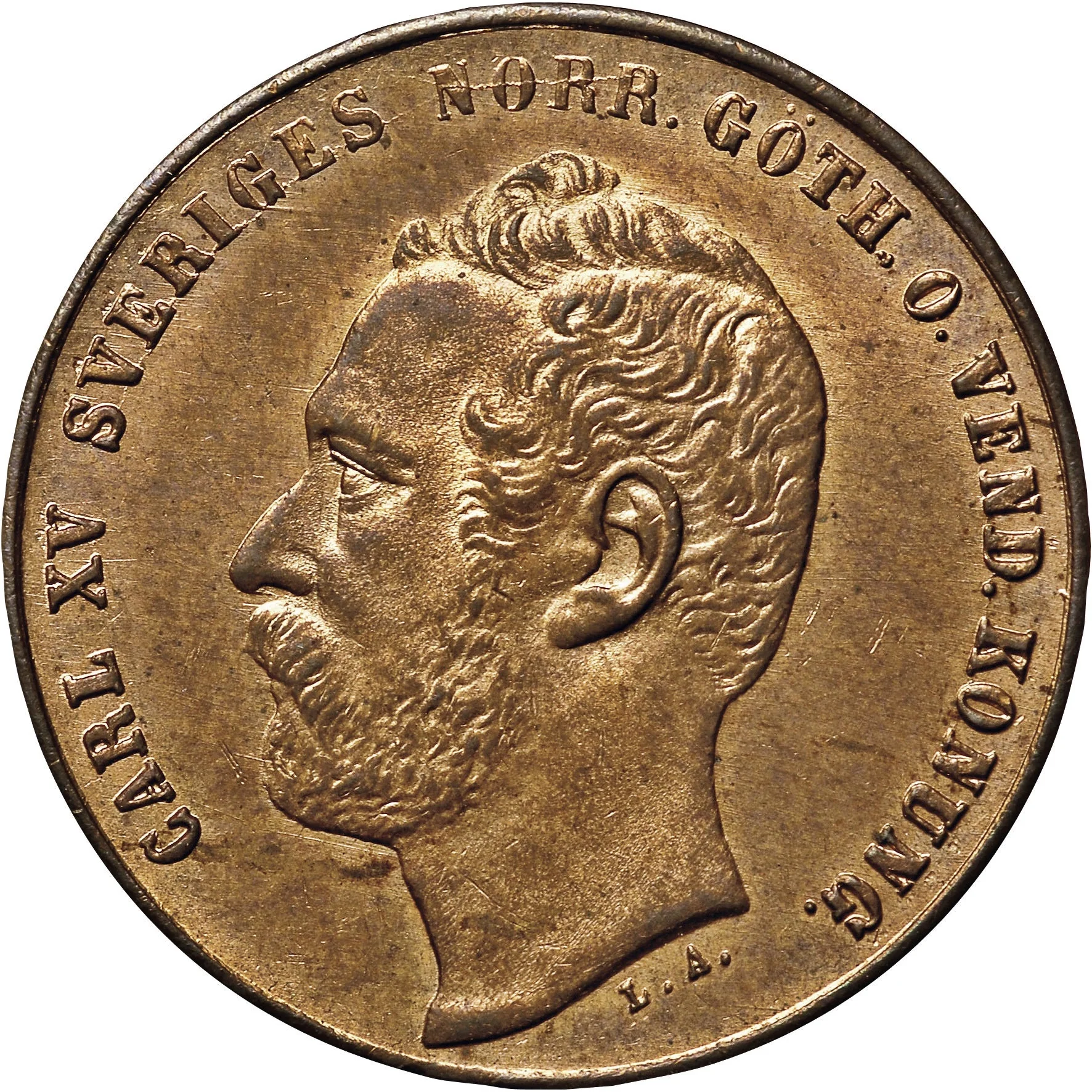
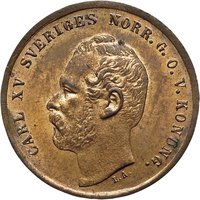
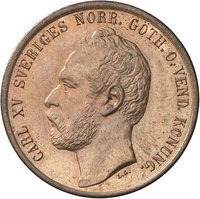
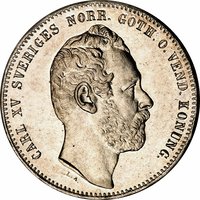
Description:
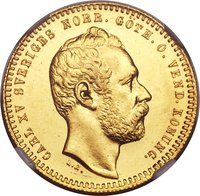
King's head left, within inscription. Engraver's initials below neck.
Inscription:
CARL XV SVERIGES NORR. GÖTH. O. VEND. KONUNG.
L.A.
L.A.
Translation:
CARL XV SWEDEN'S NORR. GÖTH. AND VEND. KING.
L.A.
L.A.
Script: Latin
Language: Swedish
Engraver: Lea Ahlborn
Reverse
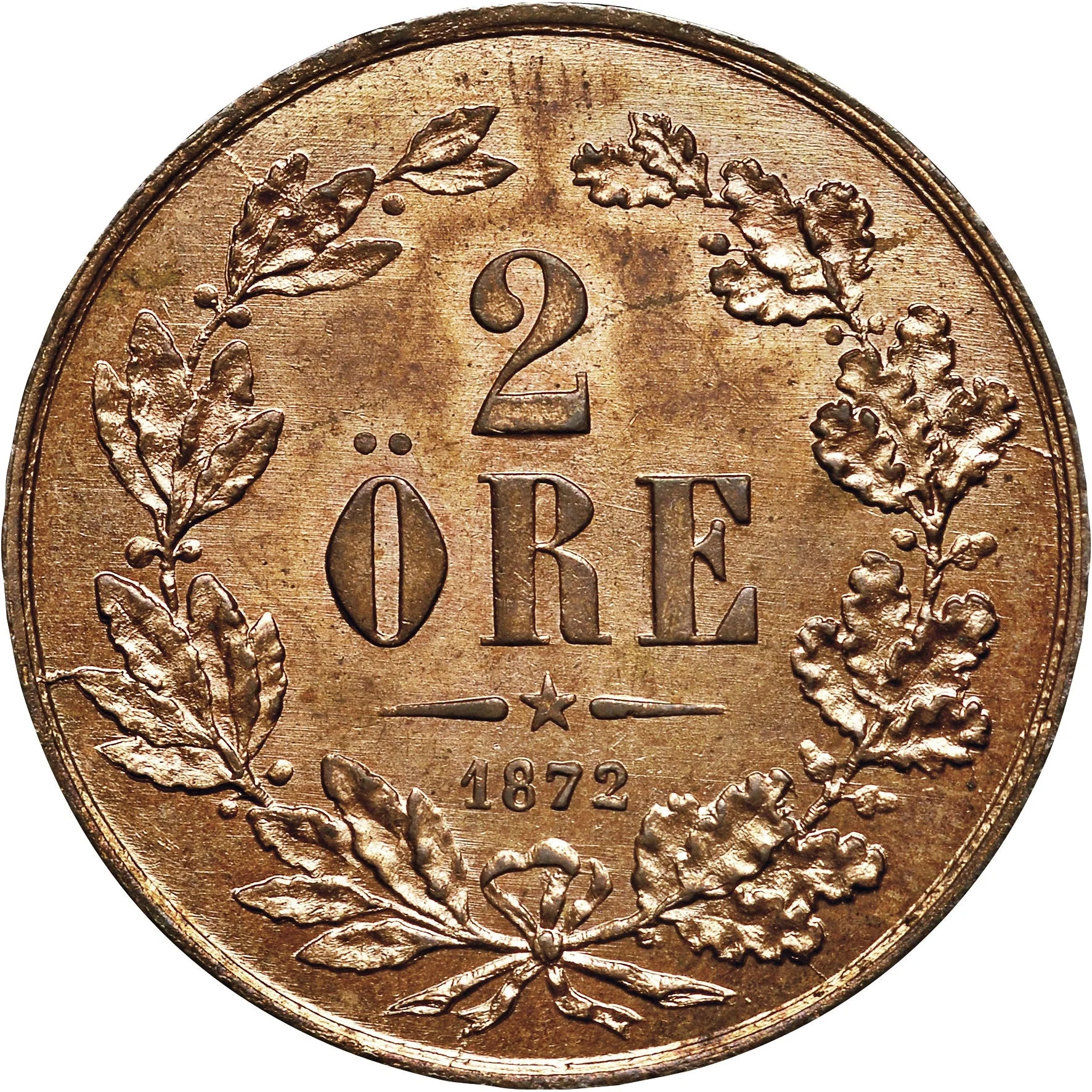
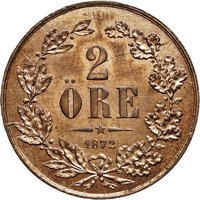
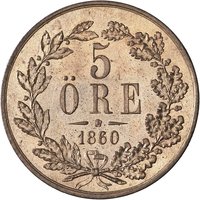
Description:
Value and date encircled by laurel and oak branches.
Inscription:
2
ÖRE
1872
ÖRE
1872
Translation:
ÖRE
1872
1872
Script: Latin
Language: Swedish
Engraver: Lea Ahlborn
Edge
Plain
Mints
| Name | Mark |
|---|---|
| Kungliga Myntet | — |
Mintings
| Year | Mint Mark | Mintage | Quality | Collection |
|---|---|---|---|---|
| 1860 | — | 196,875 | ||
| 1861 | — | 1,626,075 | ||
| 1862 | — | 212,750 | ||
| 1863 | — | 1,621,300 | ||
| 1864 | — | 600,000 | ||
| 1865 | — | 628,650 | ||
| 1866 | — | 399,550 | ||
| 1867 | — | 428,012 | ||
| 1871 | — | 717,638 | ||
| 1872 | — | 1,646,000 |
Historical background
In 1860, Sweden operated under a complex and fragmented currency system, a legacy of its silver-based monetary history. The official unit was the Riksdaler Riksmynt, which was divided into 100 öre. However, this system coexisted with the older Riksdaler Specie, valued at 4 Riksdaler Riksmynt, creating confusion in accounting and trade. Furthermore, the actual circulation consisted of a mix of silver coins, paper notes issued by the private Riksens Ständers Bank (predecessor of the Riksbank), and a limited supply of smaller copper coins, leading to practical inconveniences in everyday transactions.
This period was one of transition toward a more modern and unified monetary standard. The international shift from bimetallism (gold and silver) to the gold standard was influencing Swedish economic thought. Domestically, the growing industrial economy and increasing international trade exposed the inefficiencies of the existing system. The disparity between the two Riksdaler units and the need for a more stable, uniform currency to facilitate commerce and investment were becoming pressing concerns for both the government and the business community.
Consequently, the 1860s set the stage for significant monetary reform. The decade following 1860 would see intense debate culminating in the landmark 1873 Scandinavian Monetary Union, formed with Denmark. This union established a new, common gold standard currency, the Krona, replacing the Riksdaler entirely. Therefore, the situation in 1860 represents the final chapter of Sweden's old monetary order, characterized by fragmentation and the clear, gathering momentum for the sweeping changes that would arrive just over a decade later.
This period was one of transition toward a more modern and unified monetary standard. The international shift from bimetallism (gold and silver) to the gold standard was influencing Swedish economic thought. Domestically, the growing industrial economy and increasing international trade exposed the inefficiencies of the existing system. The disparity between the two Riksdaler units and the need for a more stable, uniform currency to facilitate commerce and investment were becoming pressing concerns for both the government and the business community.
Consequently, the 1860s set the stage for significant monetary reform. The decade following 1860 would see intense debate culminating in the landmark 1873 Scandinavian Monetary Union, formed with Denmark. This union established a new, common gold standard currency, the Krona, replacing the Riksdaler entirely. Therefore, the situation in 1860 represents the final chapter of Sweden's old monetary order, characterized by fragmentation and the clear, gathering momentum for the sweeping changes that would arrive just over a decade later.
Series: 1860 Sweden circulation coins
🌱 Common