

Obverse
Description:
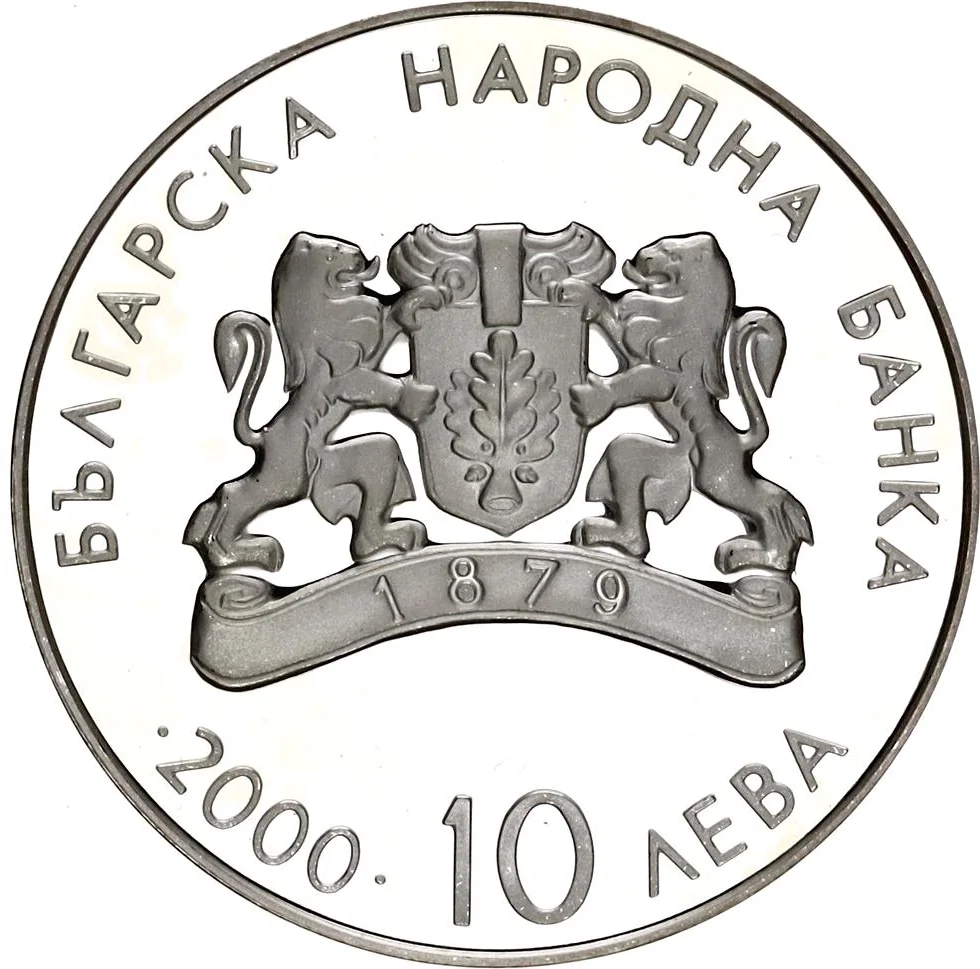
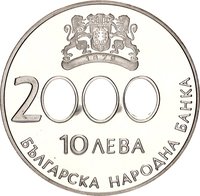
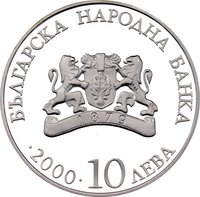
Bulgarian National Bank coat of arms with date and denomination.
Inscription:
БЪЛГАРИЯ НАРОДНА БАНКА
2000 10 ЛЕВА
2000 10 ЛЕВА
Translation:
BULGARIA PEOPLE'S BANK
2000 10 LEVA
2000 10 LEVA
Script: Cyrillic
Language: Bulgarian
Engravers: Elena Todorova, Ivan Todorov
Reverse
Description:
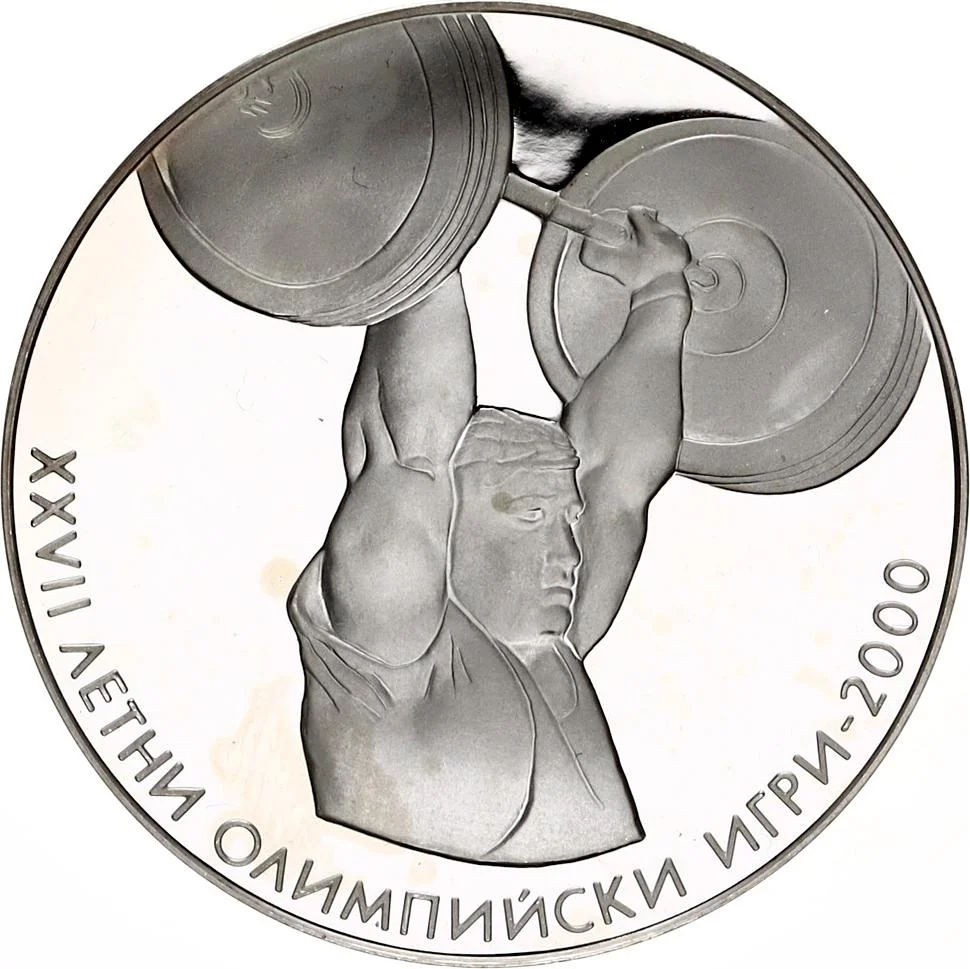
Strength athlete.
Inscription:
XXVII ЛЕТНИ ОЛИМПИЙСКИ ИГРИ-2000
Translation:
XXVII Summer Olympic Games-2000
Script: Cyrillic
Language: Bulgarian
Engravers: Elena Todorova, Ivan Todorov
Edge
Plain
Categories
| Sport> Summer Olympic Games |
Mints
| Name | Mark |
|---|---|
| Bulgarian Mint | — |
Mintings
| Year | Mint Mark | Mintage | Quality | Collection |
|---|---|---|---|---|
| 2000 | — | 20,000 | Proof |
Historical background
In the year 2000, Bulgaria was in the midst of a crucial period of monetary stability under a unique currency board arrangement, established in July 1997 in response to a severe financial and hyperinflation crisis. This system strictly pegged the Bulgarian lev (BGN) to the German Deutsche Mark at a rate of 1,000 lev = 1 DM (later redenominated to 1 lev = 1 DM). The currency board mandated that every lev in circulation be fully backed by foreign reserves, eliminating the central bank's ability to print money for budgetary purposes and imposing strict fiscal discipline. By 2000, this had successfully tamed inflation, restored confidence in the national currency, and laid the groundwork for economic recovery.
The macroeconomic situation in 2000 was one of consolidation and growth. Inflation had plummeted from hyperinflationary levels to a single-digit rate (11.4% at year-end, though still relatively high), and the country was experiencing steady GDP growth after the contraction of the crisis years. The fixed exchange rate provided a stable environment for trade and investment, but it also meant Bulgaria had relinquished control over its independent monetary policy. Interest rates were largely determined by the European Central Bank (as the Deutsche Mark was part of the Eurozone), and the economy's adjustment to shocks had to occur through fiscal policy and internal wage flexibility rather than currency devaluation.
Looking forward, the currency board's success in 2000 was seen as the foundational step toward Bulgaria's larger strategic goal: integration with the European Union and eventual adoption of the euro. The peg was seamlessly transferred to the euro in 1999 at a fixed rate of 1.95583 lev to 1 euro, solidifying the commitment to stability. While the system brought undeniable credibility, debates continued about its rigidity, particularly regarding the banking sector's vulnerability and the need for sustained structural reforms to improve competitiveness within the unchangeable exchange rate constraint.
The macroeconomic situation in 2000 was one of consolidation and growth. Inflation had plummeted from hyperinflationary levels to a single-digit rate (11.4% at year-end, though still relatively high), and the country was experiencing steady GDP growth after the contraction of the crisis years. The fixed exchange rate provided a stable environment for trade and investment, but it also meant Bulgaria had relinquished control over its independent monetary policy. Interest rates were largely determined by the European Central Bank (as the Deutsche Mark was part of the Eurozone), and the economy's adjustment to shocks had to occur through fiscal policy and internal wage flexibility rather than currency devaluation.
Looking forward, the currency board's success in 2000 was seen as the foundational step toward Bulgaria's larger strategic goal: integration with the European Union and eventual adoption of the euro. The peg was seamlessly transferred to the euro in 1999 at a fixed rate of 1.95583 lev to 1 euro, solidifying the commitment to stability. While the system brought undeniable credibility, debates continued about its rigidity, particularly regarding the banking sector's vulnerability and the need for sustained structural reforms to improve competitiveness within the unchangeable exchange rate constraint.
Series: 2000 Summer Olympics, Sydney
💎 Very Rare