

1⁄12 shilling – Jersey
Add to wishlist
Circulating commemorative coins
Commemoration: Liberation of Jersey 1945
Context
Years: 1949–1952
Country: British Crown dependencies
Issuer: Jersey
Ruler: George VI
Currency:
(1813—1971)
Demonetization: 27 December 1971
Total mintage: 1,200,000
Material
References
KM: #
Numista: #6082
Obverse
Description:
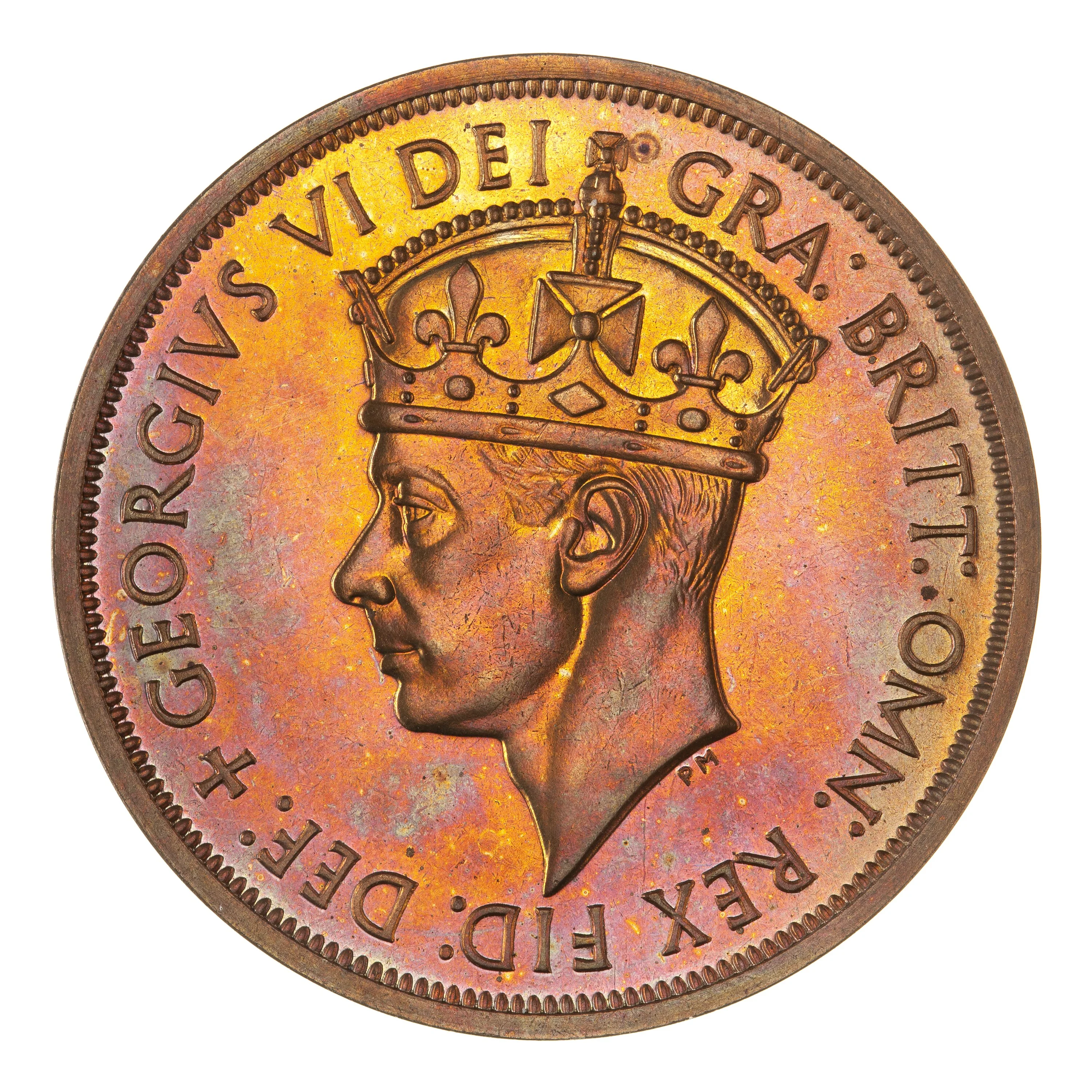
King George VI crowned portrait left, legend surrounding.
Inscription:
+ GEORGIVS VI DEI GRA:BRITT.OMN:REX FID:DEF:
PM
PM
Translation:
George VI by the Grace of God King of all the Britains Defender of the Faith
Script: Latin
Language: Latin
Engraver: Percy Metcalfe
Reverse
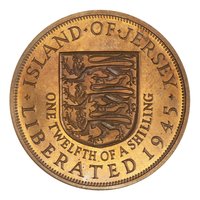
Description:
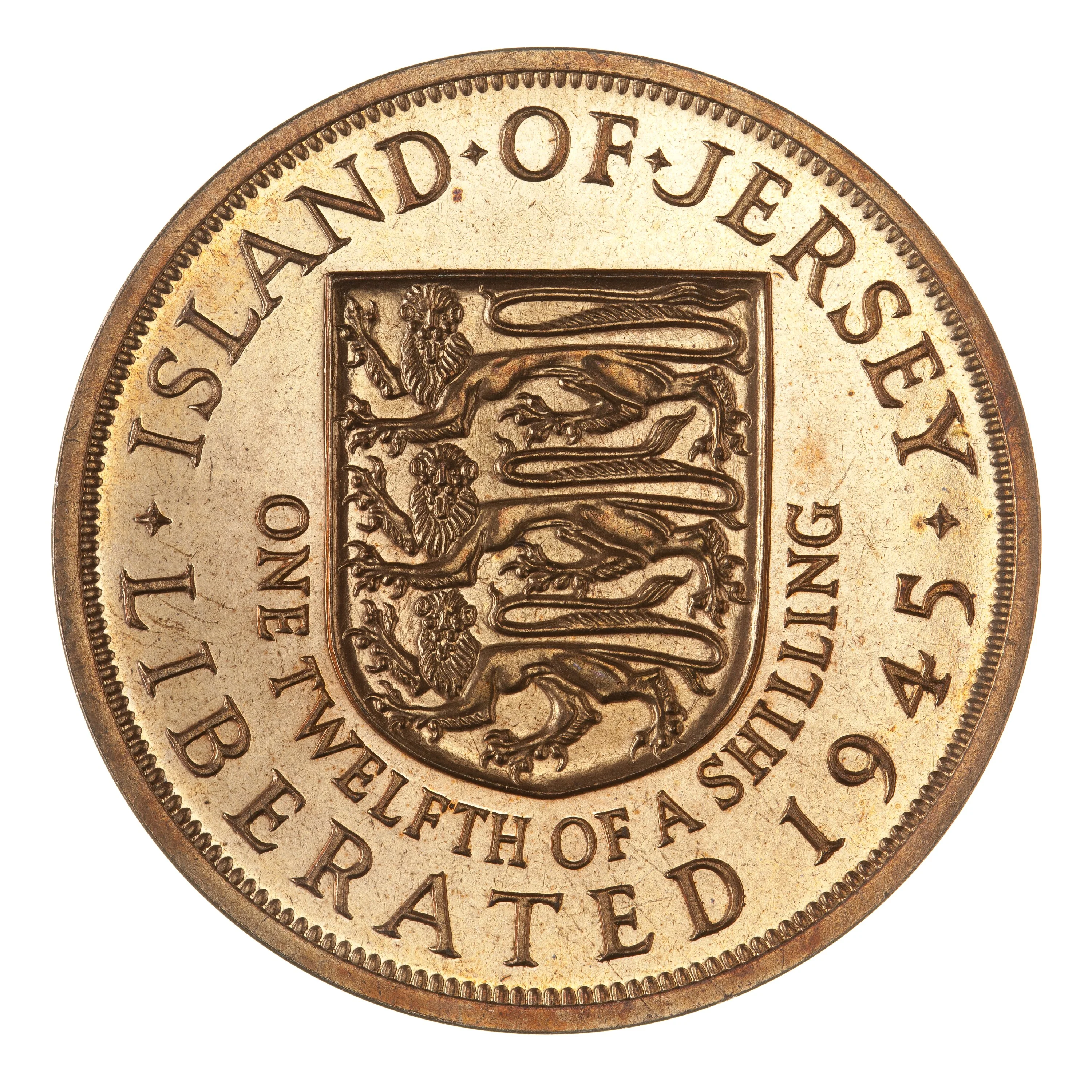
Arms divide date, legend above, denomination below.
Inscription:
ISLAND·OF·JERSEY
ONE TWELFTH OF A SHILLING
·LIBERATED 1945·
ONE TWELFTH OF A SHILLING
·LIBERATED 1945·
Script: Latin
Engraver: George Kruger Gray
Edge
Plain
Categories
| Symbols> Coat of Arms |
Mints
| Name | Mark |
|---|---|
| Royal Mint (Tower Hill) | — |
Mintings
| Year | Mint Mark | Mintage | Quality | Collection |
|---|---|---|---|---|
| — | — | 1,200,000 | ||
| — | — | — | Proof |
Historical background
In 1949, the currency situation in Jersey was one of transition and alignment with the United Kingdom, while still retaining a strong element of local identity. Following the liberation from German occupation in 1945, the island continued to use a mix of British sterling and its own, locally issued banknotes. These Jersey notes were not legal tender in the UK but were fully backed by sterling reserves held in London, ensuring parity and convertibility. The island's economy was heavily dependent on the British mainland, making this monetary link essential for trade and stability.
The key development in the immediate post-war period was the passage of the Currency Notes (Jersey) Law 1949. This legislation formally consolidated the States of Jersey's authority to issue its own currency, replacing earlier laws dating back to the 19th century. It provided a modern legal framework, specifying the security and reserve requirements for the local notes. Crucially, the law reaffirmed that the Jersey pound was at parity with the British pound sterling, a fixed 1:1 relationship that was a cornerstone of the island's financial system.
Therefore, the background of 1949 is not one of crisis but of formalisation. The situation was stable, with Jersey operating a successful currency board system under the umbrella of sterling. The year's legislative action served to strengthen the institutional foundations of this arrangement, ensuring that Jersey could continue to issue its own distinctive banknotes while remaining fully integrated into the wider British monetary area during the period of post-war reconstruction and austerity.
The key development in the immediate post-war period was the passage of the Currency Notes (Jersey) Law 1949. This legislation formally consolidated the States of Jersey's authority to issue its own currency, replacing earlier laws dating back to the 19th century. It provided a modern legal framework, specifying the security and reserve requirements for the local notes. Crucially, the law reaffirmed that the Jersey pound was at parity with the British pound sterling, a fixed 1:1 relationship that was a cornerstone of the island's financial system.
Therefore, the background of 1949 is not one of crisis but of formalisation. The situation was stable, with Jersey operating a successful currency board system under the umbrella of sterling. The year's legislative action served to strengthen the institutional foundations of this arrangement, ensuring that Jersey could continue to issue its own distinctive banknotes while remaining fully integrated into the wider British monetary area during the period of post-war reconstruction and austerity.
🌱 Very Common